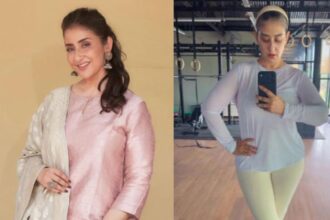









Saina Nehwal’s 29-day plank challenge is putting a familiar bodyweight exercise back in the fitness spotlight.
The former badminton champion has taken on a month-long plank challenge, highlighting an exercise that requires little equipment and can easily be incorporated into a home workout.
A plank primarily challenges the muscles responsible for stabilising the trunk, while maintaining the position also requires coordination from the shoulders, legs and glutes. But there is an important distinction between holding a plank for longer and performing one well.
For most people, good technique and consistency matter more than chasing a record hold.
See more of our coverage in your search results.
Add Hunterfly on GoogleIf Saina’s challenge has encouraged you to work on your own core routine, a few simple fitness accessories can make exercising at home more comfortable and give you more options beyond planks.
Here are six practical picks to consider.
1. Lifelong Yoga Mat: Create a More Comfortable Workout Surface
A yoga or exercise mat is arguably the most useful item on this list.
Planks place pressure on your hands or forearms, depending on the variation, and performing them directly on a hard floor can become uncomfortable. A suitable exercise mat provides cushioning while also giving you a dedicated, non-slip workout surface.
The Lifelong EVA Yoga Mat is designed for activities including yoga and home exercise and can be rolled up for storage.
See more of our coverage in your search results.
Add Hunterfly on GoogleBeyond planks, you can use a mat for crunches, mountain climbers, stretches, glute exercises and mobility work.
Why it’s useful: A stable, cushioned surface can make floor-based workouts more comfortable and help you concentrate on maintaining your position.
2. Boldfit Resistance Bands: Add More Variety to Your Routine
Resistance bands aren’t necessary for a standard plank, but they can be useful when you want to build a broader workout around your core exercises.
See more of our coverage in your search results.
Add Hunterfly on GoogleThe Boldfit Resistance Bands can be incorporated into exercises for the lower body, glutes and upper body. That makes them particularly useful for people who want their home workout to involve more than one movement.
For example, you could combine plank variations with band-based exercises such as lateral walks or glute-focused movements.
The advantage is that bands take up very little storage space while offering several ways to add resistance to basic exercises.
Why it’s useful: One compact set can expand your home workout beyond bodyweight core exercises.
3. Pebble Qore Fitness Band: Keep Track of Your Activity
A 29-day challenge is ultimately about consistency.
A fitness tracker won’t tell you whether your plank technique is correct, but it can help you monitor aspects of your wider activity routine.
The Pebble Qore Fitness Band is designed with activity-tracking features and can be used to monitor everyday movement and fitness-related metrics.
Instead of treating the device as a measure of how successful your plank is, use it as a broader accountability tool.
You could track your daily activity, establish a regular workout schedule and use the information to build a more consistent routine.
Why it’s useful: Tracking your overall activity can make a month-long fitness challenge feel more structured and measurable.
4. BAOER Digital Stopwatch: Structure Your Plank Holds
Timing can be helpful when you’re following a structured workout.
Rather than holding a plank until you can no longer maintain proper form, you can use shorter intervals followed by rest and adjust the duration according to your fitness level.
The BAOER Digital Stopwatch Timer can be used to time plank holds, recovery periods and other exercises.
A dedicated timer can also reduce the temptation to repeatedly check your smartphone in the middle of a workout.
The important point is not to treat a particular number of seconds as a universal target. Your appropriate duration depends on your fitness level and ability to maintain good technique.
Why it’s useful: A timer can help organise work and rest intervals while keeping your workout simple.
5. Amazon Basics Ab Roller: A More Challenging Core Option
Once basic core exercises become comfortable, you may want to introduce movements that demand greater control.
An ab roller is one such option. The Amazon Basics Ab Roller features a wheel and handles designed for rollout exercises that challenge the core.
However, this should not be viewed as a beginner’s substitute for planks.
Ab-wheel rollouts can be demanding and require sufficient control through the trunk and shoulders. If you’re new to core training, start with simpler movements and focus on technique before attempting more challenging rollout variations.
Why it’s useful: It can provide progression for people who have already developed a foundation of core control.
6. Borosil Hydra Trek Stainless Steel Water Bottle: Keep Water Within Reach
Not every useful workout accessory needs to be directly related to exercise.
A water bottle is a practical addition to almost any fitness setup, whether you’re exercising at home, going to the gym or heading outdoors.
The Borosil Hydra Trek stainless steel water bottle is a vacuum-insulated option designed for everyday use. Keeping a bottle beside your workout space can make it easier to have water available during and after exercise.
How much fluid you need depends on factors such as your activity, environment and individual needs, so there is no single hydration target that applies to everyone.
Why it’s useful: It’s a simple everyday essential that works beyond your workout routine.
How to Do a Plank With Better Form
If you’re inspired by Saina Nehwal’s plank challenge, don’t make the stopwatch your only goal.
Start with your forearms on the mat and elbows positioned approximately underneath your shoulders. Extend your legs behind you and lift your body into a position where your head, torso and legs remain aligned.
Keep your abdominal muscles engaged and avoid allowing your hips to drop towards the floor or rise excessively.
Your neck should remain in a neutral position rather than being pushed forward.
Most importantly, keep breathing.
If you can no longer maintain your position with reasonable control, end the set and rest. A shorter plank performed with good technique is more useful than extending the hold after your form has deteriorated.
Does Holding a Plank Longer Mean a Better Workout?
Not necessarily.
Plank challenges can make fitness feel measurable because the exercise is easy to time. But increasing the duration indefinitely isn’t the only way to progress.
Once you can perform a basic plank comfortably, progression could involve improving technique, adding controlled variations or incorporating other exercises that train the core and the rest of the body.
A balanced home routine might combine core work with resistance exercises, mobility work and appropriate cardiovascular activity.
The objective should be gradual progression rather than simply surviving a longer hold.
Build a Simple Home Workout Around the Plank
One reason the plank remains popular is its simplicity.
You don’t need a large gym, expensive machine or complicated setup to practise a basic plank. A mat can provide a more comfortable surface, while resistance bands and other equipment can expand the range of exercises available to you.
The most useful fitness kit is therefore not necessarily the biggest one.
Start with what you will actually use. A good mat, a timer and a water bottle may be enough for someone beginning a home routine. As your experience grows, resistance bands or more challenging equipment can be added according to your goals.
Saina Nehwal’s 29-day challenge offers a useful reminder that fitness routines don’t always need to be complicated.