








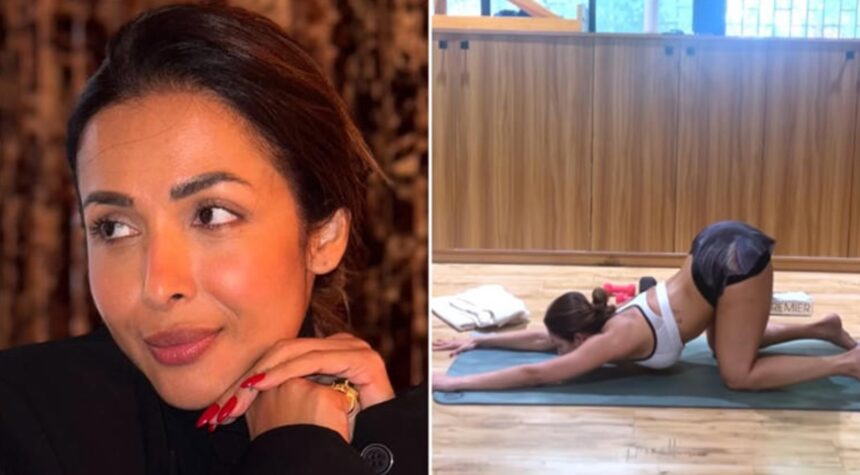
Malaika Arora has built a reputation for disciplined fitness, but her latest yoga routine is a reminder that staying active does not always have to mean intense workouts. The actor and fitness enthusiast recently shared six gentle stretches designed to improve mobility, ease stiffness and help the body feel more relaxed.
At 51, Malaika Arora continues to make movement a visible part of her lifestyle. While her fitness routines have often included strength training, dance and yoga, one of the most useful takeaways from her latest post is its emphasis on simple, controlled movement rather than intensity.
Sharing a sequence of six yoga stretches on Instagram, Malaika described them as “6 gentle moves your body will thank you for.”
The routine focuses on several areas that commonly become stiff during the day, particularly the spine, hips, shoulders and lower body.
See more of our coverage in your search results.
Add Hunterfly on GoogleThe six movements highlighted by Malaika are cat-cow, 90-90 hip stretch, puppy pose, pigeon forward stretch, cobra stretch and frog stretch.
Rather than treating the sequence as a celebrity fitness challenge, it is more useful to view it as an example of how short mobility sessions can be incorporated into an everyday routine.
1. Cat-Cow to Mobilise the Spine
The cat-cow movement is one of the simplest ways to introduce gentle spinal movement into a yoga session.
Performed on hands and knees, the exercise alternates between rounding and extending the spine. The movement is coordinated with breathing, encouraging controlled mobility rather than forcing the back into a deep stretch.
This can be particularly useful after prolonged periods of sitting.
See more of our coverage in your search results.
Add Hunterfly on GoogleSpending hours at a desk, driving or using a phone can leave the back feeling stiff. Gentle spinal movement can help break up that feeling of immobility.
The important point is to perform the movement slowly. There is little benefit in forcing the spine through an uncomfortable range of motion.
2. The 90-90 Hip Stretch for Mobility
The 90-90 hip stretch is commonly used in mobility training because it challenges the hips through different angles of rotation.
See more of our coverage in your search results.
Add Hunterfly on GoogleThe position involves sitting with both legs bent and arranged so that the hips and knees form approximately right angles.
For people who spend much of their day sitting, hip mobility can become an important part of maintaining comfortable movement.
The stretch can also encourage awareness of how the hips rotate rather than simply focusing on flexibility.
However, people with existing hip, knee or lower-back problems should modify the position or seek professional guidance before adding unfamiliar mobility exercises to their routine.
3. Puppy Pose Opens the Chest and Shoulders
Malaika’s sequence also includes puppy pose, a posture that combines elements of shoulder mobility and a gentle upper-body stretch.
The position involves keeping the hips elevated while extending the arms forward.
It can create a noticeable stretch across the shoulders, upper back and chest.
This is particularly relevant for modern lifestyles because prolonged desk work and device use can encourage people to remain in rounded positions for extended periods.
A gentle chest and shoulder-opening movement can provide a useful counterpoint to that static posture.
The objective, however, should be controlled movement rather than attempting to force the shoulders toward the floor.
4. Pigeon Forward Stretch Targets the Hips and Glutes
The pigeon forward stretch is a more demanding hip-opening posture than some of the other movements in the sequence.
It can create a stretch around the hip and gluteal region, depending on an individual’s anatomy and positioning.
Because people have different hip structures and levels of mobility, pigeon pose does not need to look identical for everyone.
Using props such as a folded blanket or yoga block can make the position more comfortable and stable.
Anyone experiencing sharp pain in the knee or hip should stop rather than trying to push deeper into the posture.
5. Cobra Stretch Encourages Spinal Extension
The cobra stretch introduces controlled spinal extension.
Beginning from a prone position, the upper body is gently lifted while the pelvis remains grounded.
The movement can engage the muscles around the back while opening the front of the torso.
The key is to avoid treating cobra as a competition to achieve the highest possible lift. A smaller, comfortable range can be more appropriate than forcing the lower back into excessive extension.
For people with existing spinal conditions or persistent back pain, professional advice is preferable before beginning a new exercise routine.
6. Frog Stretch for the Inner Hips
The final movement in Malaika’s sequence is the frog stretch, which focuses heavily on the inner thighs and hips.
It involves moving the knees outward while maintaining control of the pelvis and torso.
For someone with limited hip mobility, frog pose can feel quite intense even though it is classified as a stretch.
That makes gradual progression especially important.
The goal should be to breathe comfortably and remain within a manageable range rather than attempting to reach an extreme position.
How Can Gentle Stretching Support the Spine?
According to Sadhna Singh, senior fitness and lifestyle consultant at HereNow Official, gentle movements such as cat-cow and cobra can encourage spinal mobility and circulation around the back muscles.
She explained that such movements can help counter some of the stiffness associated with prolonged sitting while supporting the body’s natural movement patterns.
Regular mobility work may also make everyday movements feel more comfortable.
That does not mean stretching can “fix” every form of back pain, however. Persistent or severe pain requires proper assessment rather than relying exclusively on yoga.
Why Hip Mobility Matters
The hips play an important role in walking, sitting, squatting, running and many other everyday movements.
Limited hip movement can make certain activities feel restricted, while prolonged sitting can leave the surrounding muscles feeling tight.
Singh noted that movements such as the 90-90 stretch, pigeon and frog stretch target the hip and gluteal region and may help improve range of motion when practised consistently.
The emphasis should be on mobility rather than chasing extreme flexibility.
Being able to move comfortably through an appropriate range is generally more useful for everyday life than simply being able to achieve a visually impressive stretch.
Can 10–15 Minutes of Stretching Help With Stress?
One of the more interesting aspects of Malaika’s routine is that it does not require a lengthy workout.
Singh suggests that even a short period of mindful stretching can help people slow down and focus on their breathing.
Gentle movement combined with slower breathing can provide a transition between periods of work and rest. It may also help people become more aware of areas where they are holding physical tension.
A brief routine can therefore function as more than a flexibility session. It can become a simple movement break during a sedentary day.
That does not mean stretching is a treatment for anxiety, depression or other mental-health conditions. But incorporating regular movement and relaxation practices can be one component of a broader healthy lifestyle.
Malaika Arora’s Approach Is More About Consistency Than Intensity
Celebrity fitness routines can sometimes appear intimidating because they are associated with demanding workouts, specialised trainers and highly structured schedules.
Malaika’s latest sequence offers a different message.
Six relatively simple movements can be incorporated into a morning routine, a post-work movement break or a gentle evening session.
The value comes from regularity and appropriate technique, not from trying to replicate a celebrity’s exact flexibility.
For someone who spends most of the day sitting, even periodically standing up, walking around and performing comfortable mobility exercises can be a practical starting point.
A Simple Way to Use the Six-Move Sequence
Those who are already comfortable with these movements could structure the routine as follows:
- Cat-cow — gentle spinal mobility.
- 90-90 hip stretch — controlled hip rotation.
- Puppy pose — shoulders and chest.
- Pigeon forward stretch — hips and glutes.
- Cobra — gentle spinal extension.
- Frog stretch — inner thighs and hips.
There is no requirement to hold every posture for a particular length of time unless instructed by a qualified professional. Beginners can start with short, comfortable holds and gradually increase duration as their mobility improves.
Most importantly, stretching should create a manageable sensation of tension rather than sharp, shooting or worsening pain.
The Bigger Fitness Lesson From Malaika’s Routine
Malaika Arora’s latest yoga post is less about achieving a particular celebrity physique and more about maintaining movement.
At any age, flexibility and mobility can influence how comfortably a person performs everyday activities. A body that is regularly moved through safe and appropriate ranges can be easier to manage than one that remains sedentary for most of the day.
The routine also highlights an often-overlooked part of fitness: recovery and mobility deserve attention alongside strength and cardiovascular exercise.
For people beginning a new routine, the best approach is to start gently, remain consistent and adapt movements to individual ability.
And while Malaika’s fitness journey may inspire people to move more, there is no need to copy her level of training. The most sustainable routine is one that fits comfortably into your own life.