







Actor Swara Bhasker has issued a clarification following online criticism over her recent remarks about the Jauhar sequence in Sanjay Leela Bhansali’s 2018 period drama Padmaavat.
The controversy emerged after a clip from a talk titled Woman, Life, Freedom, held at the India International Centre in Delhi on August 31, circulated widely on social media.
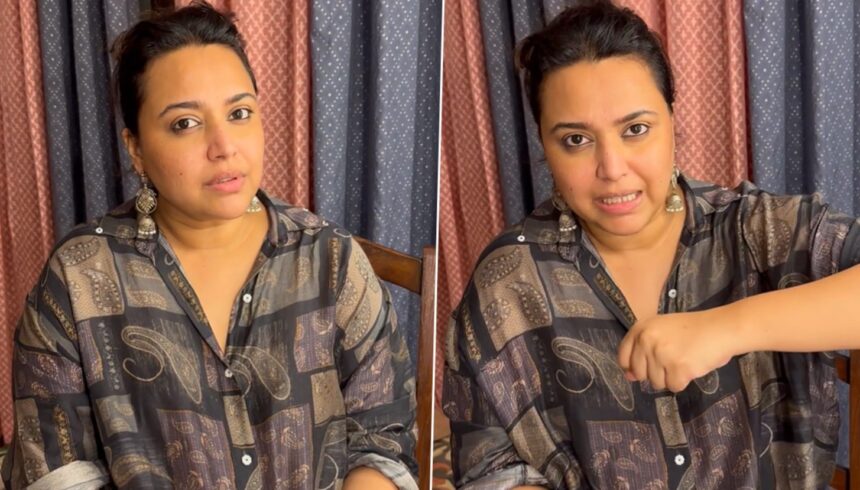
Bhasker had discussed her long-standing criticism of the film’s climax, a subject she had also addressed publicly following the release of Padmaavat. After the clip triggered criticism and allegations about the meaning of her comments, the actor shared a video statement on Instagram to clarify her position.
She denied characterising Rani Padmaavati or the women depicted in the Jauhar sequence as cowards and said her comments had been interpreted in a way that did not reflect her intended argument.
See more of our coverage in your search results.
Add Hunterfly on GoogleSwara Bhasker Responds to the Backlash
In her clarification, Bhasker said her remarks were focused on her interpretation of the social implications of the film’s narrative rather than on passing judgment on the historical figures or women depicted in the story.
According to Bhasker, her criticism centred on what she believed could be the message received by viewers, particularly in relation to women who have survived sexual violence.
She argued that the way such themes are presented in popular culture can influence wider social attitudes and expressed concern about narratives that could be interpreted as placing a woman’s perceived honour or sexual purity above her life.
Bhasker said she had not described the women involved in Jauhar as cowards, rejecting claims circulating online that attributed that view to her.
Her Concern About the Film’s Message
Bhasker said that her reaction to the climax was connected to how she interpreted the film’s treatment of sexual violence and survival.
See more of our coverage in your search results.
Add Hunterfly on GoogleShe argued that certain narratives can create or reinforce harmful ideas about the value of a survivor’s life after sexual assault. In her view, cultural messaging should not suggest that death is preferable to surviving sexual violence.
The actor referred to the importance of recognising the will to live and questioned whether modern storytelling should reinforce the idea that a woman’s worth is determined by her perceived purity.
Her comments represent her interpretation and criticism of the film’s themes and do not constitute a universally accepted reading of Padmaavat.
See more of our coverage in your search results.
Add Hunterfly on GoogleReference to the Nirbhaya Case
During her discussion of sexual violence and survival, Bhasker also referred to the broader public conversation surrounding the Nirbhaya case.
Her argument, as described in her clarification, was centred on rejecting the idea that a survivor’s life loses value after sexual violence.
She emphasised the importance of survival and challenged social attitudes that attach shame or dishonour to victims and survivors of sexual crimes.
The actor’s comments were part of a wider discussion about how films and cultural narratives can influence public understanding of gender, violence and social expectations.
The Earlier Padmaavat Controversy
Bhasker’s recent comments are connected to her earlier criticism of Padmaavat following the film’s release in 2018.
At the time, she publicly expressed her concerns about the depiction of the Jauhar sequence, including a scene involving a pregnant woman.
Bhasker had questioned the symbolism and implications she associated with the scene. Her interpretation generated criticism from those who viewed Jauhar through a different historical and cultural lens.
For some, the historical accounts and cultural memory surrounding Jauhar have been interpreted as acts of resistance or defiance in the face of invasion. Others have raised questions about the social conditions and systems of honour that surrounded the practice.
The historical interpretation of Jauhar therefore remains a subject of debate, and different groups may understand or represent it in different ways.
Why the Latest Clip Triggered Debate
The recent circulation of a short video clip contributed to renewed debate over Bhasker’s views.
Online controversies can intensify when comments from longer speeches or discussions are circulated in shortened form without their full context. Bhasker’s latest statement appears to be an effort to explain the distinction she intended to make between criticism of a film’s narrative and criticism of the women represented within that narrative.
She has maintained that her concern was with what she viewed as the broader social messaging around sexual violence, survival and a woman’s perceived honour.
Padmaavat and Its Continuing Cultural Debate
Released in 2018, Padmaavat starred Deepika Padukone in the titular role, with Shahid Kapoor and Ranveer Singh in major roles.
Directed by Sanjay Leela Bhansali, the film attracted significant discussion and controversy before and after its release, including debates over historical representation and creative interpretation.
Years later, its themes continue to generate public discussion, particularly when public figures revisit its portrayal of women, honour and Jauhar.
Bhasker’s latest clarification adds another chapter to that ongoing conversation.
A Debate About Representation and Interpretation
At the centre of the latest controversy is a difference in interpretation.
Bhasker has maintained that she was questioning what she believed the film’s narrative could communicate about women and sexual violence. Her critics, meanwhile, have objected to her interpretation of the Jauhar sequence and its historical or cultural significance.
Her clarification seeks to distinguish her criticism of the film’s thematic messaging from any alleged criticism of the women who participated in or were depicted in the historical practice.
As the discussion continues online, the controversy reflects the broader challenge of discussing historical subjects, cinematic representation and sensitive issues such as sexual violence in a public and social-media-driven environment.