







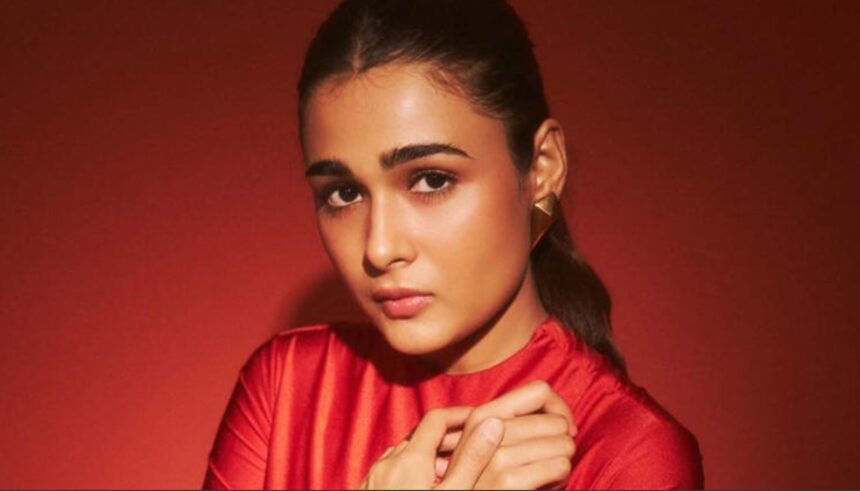
Actor Shalini Pandey has condemned the circulation of an alleged fake AI-generated video featuring her, saying the material is “completely fabricated” and urging people not to share, download or engage with it.
Actor Shalini Pandey has spoken out against the circulation of a fake AI-generated video that she says falsely uses her likeness.
In a statement shared on Instagram, the Arjun Reddy actor firmly clarified that the video was fabricated and did not depict her. She also expressed concern about the growing misuse of artificial intelligence to target individuals, particularly women.
Pandey urged social media users not to contribute to the circulation of the material and instead asked them to report it.
See more of our coverage in your search results.
Add Hunterfly on Google“I want to address a fake AI-generated video of me that is currently being circulated online,” Shalini wrote. “The video is completely fabricated and does not depict me.”
She added that it was deeply disturbing to see technology being used in ways that could harm individuals.
Shalini Pandey Condemns Misuse of AI
In her statement, Shalini Pandey described the alleged video as an example of technology being misused to target people.
“It is deeply disturbing to see technology being misused in this way to target and harm individuals, especially women,” she wrote.
The actor also made a direct appeal to people who may encounter the content online.
See more of our coverage in your search results.
Add Hunterfly on Google“I strongly condemn this kind of abuse and believe this kind of misuse of technology should never be normalised,” she said.
Rather than discussing, reposting or interacting with the material, Pandey asked people to avoid giving it additional reach.
Her message was clear: do not share or engage with the alleged fake content.
See more of our coverage in your search results.
Add Hunterfly on GoogleActor Urges People Not to Share or Download the Video
Shalini specifically requested that social media users take a responsible approach if they come across the material.
“If you come across this video, please do not share, forward, download, or engage with it,” she wrote. “Instead, please report it immediately.”
She also appealed to users to be mindful of the consequences of sharing manipulated or unauthorised content online.
“I request everyone to be responsible and mindful, and help stop its circulation rather than giving it further reach,” the actor added.
The statement highlights an increasingly important issue in the age of generative artificial intelligence: the ease with which convincing digital content can potentially be created, manipulated and circulated without the consent of the person whose identity or likeness is being used.
For public figures, the challenge is particularly significant because misleading content can spread rapidly across social media platforms before viewers have an opportunity to verify its authenticity.
Shalini Pandey Joins Growing List of Public Figures Speaking Out
Shalini Pandey’s statement comes amid wider concerns over the misuse of AI-generated and manipulated content involving celebrities and public figures.
Several Indian celebrities have previously spoken publicly about deepfake content or unauthorised digital manipulation involving their likenesses. Public discussions surrounding such incidents have also drawn attention to issues including consent, privacy, reputation and digital safety.
Among the prominent figures who have been linked to previous conversations about manipulated AI content are Rashmika Mandanna, Alia Bhatt, Deepika Padukone, Katrina Kaif, Aamir Khan, Ranveer Singh and Sachin Tendulkar.
Earlier this month, actor Mrunal Thakur also addressed concerns regarding alleged fake content using her likeness and called for stronger action against unauthorised misuse.
The growing number of such public statements has intensified the conversation around how AI technology should be used responsibly and what individuals and platforms can do to limit the spread of harmful or misleading material.
Why Reporting Is Important
Shalini Pandey’s appeal focused on one important principle: refusing to amplify harmful content.
When manipulated or deceptive material spreads online, each share, download, comment or engagement can potentially increase its visibility.
That is why her request specifically asked people not to forward, download or interact with the alleged video.
Reporting questionable content through the relevant social-media platform can be a more responsible response than resharing it to ask whether it is genuine.
Users can also avoid giving potentially harmful content further visibility by refusing to repost screenshots, clips or links associated with it.
The issue extends beyond celebrities.
As generative AI tools become more accessible, concerns about manipulated images, audio and videos increasingly affect ordinary individuals as well as public figures.
Digital literacy — including questioning the authenticity of sensational content before sharing it — has become an important part of responsible online behaviour.
The Human Cost of Digital Manipulation
AI technology has created new opportunities across entertainment, education, research, accessibility and many other fields.
However, its misuse has also raised serious concerns.
Content created without consent can affect an individual’s privacy, reputation and sense of safety. When a person’s likeness is used to create material they did not participate in, identifying the content as manipulated may not always immediately stop its circulation.
For this reason, public statements from those affected can play an important role in correcting misinformation.
Pandey’s decision to address the matter directly was aimed at making her position clear: she says the circulating material does not depict her and has no connection to her.
Her message also placed responsibility on viewers, asking them to avoid becoming part of the content’s distribution.
Shalini Pandey’s Career So Far
Shalini Pandey made her acting debut in the 2017 Telugu film Arjun Reddy, in which she starred opposite Vijay Deverakonda.
The film brought her widespread recognition and helped establish her as a prominent young actor in Indian cinema.
She later appeared in a range of projects across different industries and languages, including Mahanati and Jayeshbhai Jordaar.
Pandey’s work has also included the Netflix film Maharaj and other screen projects, reflecting a career that has moved between Telugu, Hindi and Tamil productions.
Her professional journey has seen her take on varied roles while continuing to build a presence across Indian cinema.
A Call for Greater Digital Responsibility
Shalini Pandey’s latest statement adds to the wider conversation about AI misuse and the importance of consent in the digital era.
Her message did not simply deny the authenticity of the alleged content. It also urged viewers to think carefully about how they respond when they encounter potentially manipulated material online.
The actor asked people not to share, forward, download or engage with the content and to report it instead.
As artificial intelligence continues to evolve, conversations around responsible use, consent and accountability are likely to become increasingly important.
For Shalini, the immediate message was straightforward: the circulating video is, according to her, fabricated and does not depict her.
She has asked the public to help stop its spread rather than give it additional visibility.
Her statement serves as another reminder that online users have a role to play in limiting the circulation of potentially harmful and unauthorised digital content.