
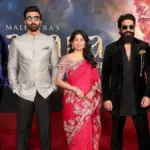



Actor Naqiyah Haji believes the entertainment industry needs room for light-hearted storytelling, healthier working practices and human creativity. In an exclusive conversation with Moneycontrol, she discussed her upcoming film Party Animals, her experience working with Viraj Ghelani, the rise of microdramas and why she agrees with Deepika Padukone’s position on eight-hour work shifts.
Naqiyah Haji is preparing for the theatrical release of Party Animals, a comedy directed by Ravi Chhabriya that is scheduled to arrive in cinemas on November 20, 2026. The film, which also features Viraj Ghelani, promises a mix of youthful humour, unexpected situations and fast-paced entertainment.
Known for playing Dr Nats in Heartbeats: Pyaar Aur Armaan Season 2, Naqiyah describes Party Animals as a combination of the desi sensibility of The Hangover and the energetic comedy of 21 Jump Street.
Speaking to Moneycontrol, the actor explained why she believes the film could appeal to younger audiences. She also shared her views on the industry’s changing work culture, the increasing use of artificial intelligence in advertising and filmmaking, and the popularity of short-form dramatic content.
Naqiyah Haji says Party Animals reflects Gen Z’s entertainment preferences
For Naqiyah, one of the film’s central attractions is its emphasis on keeping the audience engaged through a steady flow of comic situations.
The actor said she hopes younger viewers will connect with the film and enjoy it without feeling the need to analyse every moment. Drawing a comparison with social media reels, she explained that the film maintains a lively pace, with something happening frequently enough to hold viewers’ attention.
Her comments reflect a broader conversation about changing viewing habits. Short-form videos have become a major part of digital entertainment, particularly on social platforms, but theatrical films offer a different experience through longer narratives, performances and shared audience reactions.
Party Animals aims to bring the energy of contemporary youth culture into a feature-length comedy while giving audiences a reason to watch the story unfold on the big screen.
Naqiyah also pushed back against assumptions about Gen Z, saying she is proud to belong to a generation that continues to challenge preconceived notions about its abilities and ambitions.
She hopes the film will give audiences an opportunity to enjoy a lighter side of contemporary youth rather than approach the generation through familiar stereotypes.
Working with Viraj Ghelani: Naqiyah Haji recalls funny moments
Naqiyah also spoke about working with comedian and content creator Viraj Ghelani, describing him as someone whose humour comes naturally.
According to the actor, Viraj has a knack for making people laugh even during ordinary conversations. She recalled moments on set when he would switch to Gujarati while expressing frustration, only for her to burst into laughter.
The anecdote offers a glimpse into the atmosphere behind the scenes and the kind of spontaneous interactions that can develop during a comedy production.
For a film built around humour and chaotic situations, the chemistry among the cast members is an important part of the overall experience. Naqiyah’s comments suggest that the fun was not limited to the scenes written for the screen.
Party Animals features an ensemble cast that includes Naqiyah Haji, Viraj Ghelani, Arjun Tanwar, Pragati Nagpal, Jaanyaa Joshi, Anil Charanjeett, Soundous Moufakir, Suresh Menon, Brijendra Kala, Samir Soni and Manoj Joshi.
The film is directed by Ravi Chhabriya and is scheduled for a theatrical release on November 20, 2026.
Naqiyah Haji supports Deepika Padukone’s eight-hour work shift stance
One of the notable subjects in Naqiyah’s interview was Deepika Padukone’s position on eight-hour work shifts in the film industry.
Naqiyah said she agreed with the principle, arguing that shorter working hours should be considered if productions can organise their schedules to accommodate them.
She pointed out that actors have responsibilities beyond their professional commitments and that balancing work with personal life can be particularly demanding for parents.
In her view, if a production can complete its work within an eight-hour schedule without compromising essential requirements, there is a case for exploring that arrangement.
The actor also acknowledged that implementing shorter shifts may raise practical concerns for some people in the industry. Film and television productions involve multiple departments, location requirements, budgets and scheduling constraints, all of which can affect the length of a working day.
Nevertheless, Naqiyah believes that a more cooperative approach could help the industry consider arrangements that better support its workforce.
She described the film industry as a family in which professionals should try to support one another when changes can be made.
Her comments add another perspective to the ongoing discussion about working conditions in entertainment. The issue involves not only actors but also technicians, crew members, production staff and others whose schedules can be affected by long shoots.
The practical question is how productions can balance working-hour limits with safety, scheduling, budgets and the demands of filmmaking.
Naqiyah Haji explains why she prefers long-form storytelling over microdramas
The rise of microdramas has created new opportunities for short, mobile-friendly storytelling. These productions typically present dramatic developments in brief episodes, allowing viewers to follow a story in short bursts.
Naqiyah acknowledged that the format serves a purpose but said she personally prefers longer narratives.
For her, acting involves having enough time to develop a performance and communicate a story in greater detail. She expressed a preference for watching content in a traditional horizontal format and allowing the narrative to unfold over a longer period.
Her comments highlight the difference between formats designed for quick consumption and those that give characters and situations more room to develop.
Microdramas can offer convenience and immediate engagement, while long-form productions may provide greater space for character development, emotional shifts and more elaborate storytelling.
Neither format necessarily replaces the other. Their appeal depends on the audience, the story being told and the experience viewers want from their entertainment.

As viewing habits continue to change, actors and filmmakers are likely to encounter more opportunities across theatrical films, streaming platforms, television and short-form digital productions.
Naqiyah Haji raises concerns about AI replacing human creativity
Naqiyah also expressed reservations about the growing use of artificial intelligence in entertainment, particularly in advertisements, modelling campaigns and other forms of commercial content.
The actor made a distinction between using ChatGPT as a conversational tool and relying on AI-generated material to replace human performers and creative professionals.
While acknowledging that she uses ChatGPT, she said she believes human expression, emotions and dialogue bring qualities to performances that AI-generated content does not necessarily reproduce in the same way.
She also voiced concern about the effect that fully AI-driven advertising and modelling campaigns could have on employment opportunities in the creative industries.
Her position reflects a wider debate about how emerging technologies should be used in film, advertising and digital media.
Artificial intelligence can assist with tasks such as editing, visual effects, translation and pre-production. However, its use can also raise questions about consent, the use of performers’ likenesses, ownership of creative work and the future of jobs across the industry.
For actors and other creative professionals, the concern is not simply whether the technology can generate convincing images or dialogue. It is also whether its adoption will protect the rights and livelihoods of the people whose work has traditionally powered entertainment.
Naqiyah hopes that the industry will continue to recognise the value of human creativity as these tools become more widely available.
Her comments do not amount to a rejection of every application of AI. Instead, they underline her concern that technological convenience should not come at the expense of opportunities for human performers and creators.
Why Naqiyah Haji wants more light-hearted films like Party Animals
Beyond its comedy and youthful energy, Naqiyah sees Party Animals as a chance to offer audiences a break from the serious themes that feature in much of today’s content.
She acknowledged that emotionally demanding stories have an important place in entertainment but argued that audiences also need films that allow them to relax, laugh and spend time with friends.
For her, comedy can serve a valuable purpose by giving viewers a shared experience that does not require them to carry the weight of a difficult subject after leaving the cinema.
The actor also connected this approach to the way younger audiences are often described. Rather than accepting assumptions about Gen Z, she expressed pride in being part of a generation that is demonstrating its abilities in different fields.
Party Animals, she hopes, will appeal to viewers looking for a lively theatrical experience centred on friendship, humour and unexpected situations.
Party Animals release date and cast
Party Animals is directed by Ravi Chhabriya and is scheduled to release in theatres on November 20, 2026.
The film stars Naqiyah Haji and Viraj Ghelani alongside Arjun Tanwar, Pragati Nagpal, Jaanyaa Joshi, Anil Charanjeett, Soundous Moufakir, Suresh Menon, Brijendra Kala, Samir Soni and Manoj Joshi.
As the release approaches, Naqiyah’s comments offer a preview of the ideas behind the film: an energetic comedy aimed at younger viewers, supported by a cast whose off-screen interactions also appear to have provided moments of laughter.
Her interview also goes beyond the movie itself, touching on important questions about work-life balance, changing viewing habits and the place of human creativity in an increasingly technology-driven entertainment business.
For Naqiyah, the hope is straightforward: audiences should have room for stories that make them laugh, while the people who create those stories should continue to have meaningful opportunities to do their work.