









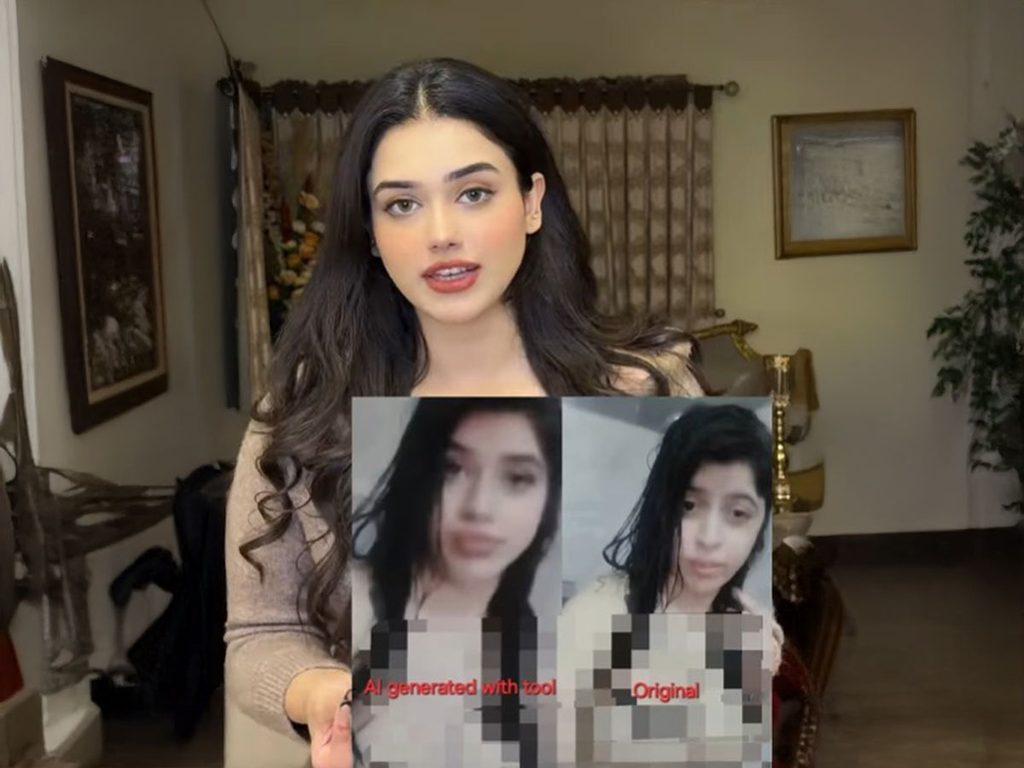
Social media influencer and TikTok creator Alina Amir has spoken out after a manipulated video was circulated online and falsely associated with her.
The alleged intimate video quickly spread across social media, accompanied by sensational claims and links promising users access to the supposed “full” or “original” clip. Amir has publicly denied being featured in the video, describing the material as an AI-generated deepfake.
The incident has also renewed concerns about the growing misuse of artificial intelligence to create deceptive and abusive content, particularly against women.
Alina Amir Says the Viral Video Is a Deepfake
After remaining silent for several days, Amir addressed the controversy through a video message shared on Instagram.
See more of our coverage in your search results.
Add Hunterfly on GoogleShe condemned the circulation of manipulated material and urged people not to share or promote unverified videos. She also appealed to Punjab Chief Minister Maryam Nawaz to take strong action against people responsible for creating and distributing deepfake content.
Amir also acknowledged the intervention of the Punjab Cyber Crime Department and used the incident to highlight a broader problem: online harassment involving fabricated content can affect not only public figures but ordinary people as well.
According to Amir, such material can also reach victims’ family members, creating serious emotional distress.
Her comments underline an important distinction in cases involving alleged leaked videos: the existence of a widely circulated clip does not establish that the person shown is actually the person being named.

What Is a Deepfake?
A deepfake is digitally manipulated or AI-generated media designed to make a person appear to say or do something they did not actually say or do.
See more of our coverage in your search results.
Add Hunterfly on GoogleModern image and video-generation tools can produce increasingly convincing results. In abusive cases, photographs or publicly available videos can be manipulated and combined with fabricated footage to impersonate someone.
The technology has created new challenges for online safety because manipulated material can spread rapidly before platforms, authorities or independent investigators have an opportunity to establish what is authentic.

Why Fake “Viral Video” Links Can Be Dangerous
The controversy surrounding the alleged Alina Amir video also illustrates another risk: fraudulent links that exploit people’s curiosity.
See more of our coverage in your search results.
Add Hunterfly on GooglePosts promising access to a “full video” or “original clip” can direct users to websites designed to collect personal information, distribute malicious software or trick visitors into handing over account credentials.
Some scams may also imitate familiar websites or use fake video players to encourage users to download an application or file.
In other cases, the promised content simply does not exist.

How to Recognise a Suspicious Link
Internet users should be particularly cautious when a post combines sensational claims with an unfamiliar URL.
Some warning signs include:
- Clickbait language: Claims designed to create shock, urgency or curiosity.
- Unknown domains: Websites with unusual or misspelled addresses.
- Pressure to act immediately: Messages insisting that a video will disappear soon.
- Unexpected downloads: Requests to install software or download files before viewing content.
- Fake login pages: Websites asking for social-media, email or other account credentials.
- Suspicious shortened links: URLs that hide the actual destination.
- Requests for personal information: Forms asking for phone numbers, passwords or financial details.
A legitimate-looking thumbnail does not prove that the underlying link or video is genuine.
Do Not Download or Forward Alleged Intimate Material
When an alleged private or intimate video involving a public figure begins circulating, sharing it can compound the harm even if the material is manipulated.
Users should avoid downloading, forwarding or reposting such content. Instead, suspicious posts can be reported directly to the relevant social-media platform.
If someone receives an abusive deepfake involving themselves or another person, preserving relevant evidence—such as the post URL, account information and screenshots where appropriate—can also help when reporting the incident to the platform or authorities.
Deepfakes Pose a Wider Threat to Women Online
The problem extends well beyond celebrity controversies.
Women can be targeted with fabricated sexual or compromising images and videos created without their consent. Such material can be used to embarrass victims, damage reputations, facilitate harassment or support attempts at blackmail.
The speed at which manipulated content can spread makes the problem particularly difficult to contain. A false video may reach thousands of people before a victim has even learned that it exists.
Amir’s public comments therefore point to a broader issue involving digital consent, online harassment and the responsible use of artificial intelligence.
Is the Video Allegedly Linked to Alina Amir Real?
Amir has publicly stated that the video being circulated in her name is fake and that it was created using AI deepfake technology.
There is no basis in the information provided here to treat the circulating material as authentic. Readers should therefore avoid posts claiming to provide an “original” or “real” version of the alleged video.
Importantly, viewers should not attempt to verify such material by downloading or sharing it. The safest approach is to rely on statements from the person involved, official investigations and credible reporting rather than anonymous social-media posts.
What Action Has Alina Amir Called For?
Amir has called for strict action against people who create and distribute deepfake videos. She also highlighted the work of the Punjab Cyber Crime Department and urged authorities to address the wider problem of online abuse.
Her response has helped shift attention away from the sensational claims surrounding the alleged video and toward the risks associated with manipulated media and cyber harassment.

The Bigger Lesson for Social Media Users
The Alina Amir controversy is another reminder that viral content is not automatically authentic.
AI-generated and manipulated media can make false claims appear convincing, while scam websites can exploit the same public curiosity generated by viral stories. Users can reduce their risk by checking sources, avoiding suspicious links, refusing unexpected downloads and reporting abusive content rather than helping it spread.
In cases involving alleged intimate material, the most responsible response is not to search for or circulate the content. It is to question its authenticity, respect the person involved and rely on verified information.