





A poetry performance that appeared completely authentic has now sparked a wider debate about artificial intelligence and digital authenticity.
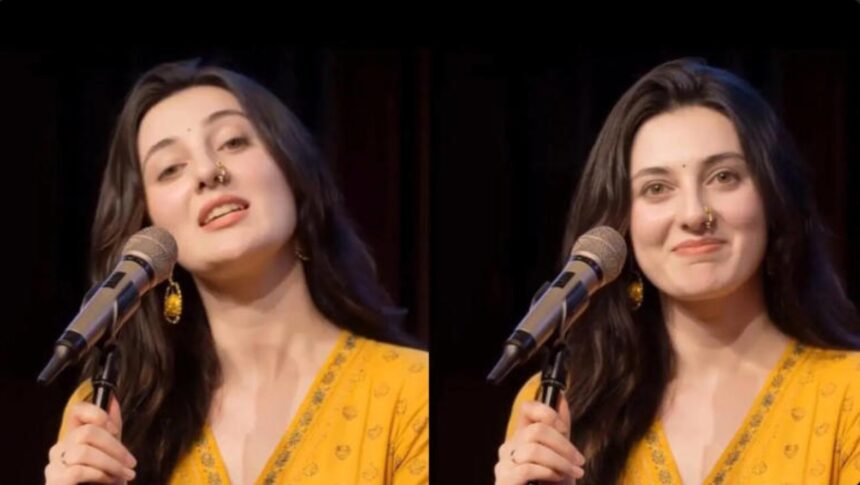
In a now-viral Instagram reel, a woman dressed in a yellow kurta stood on stage under bright lights, confidently reciting an Urdu couplet. The setting resembled a typical poetry event — microphone in hand, measured pauses, and a self-assured smile as the audience applauded.
Within 24 hours of being uploaded, the clip amassed an astonishing 28 million views.
The Shayari That Took Over Instagram
In the video, the woman recites:
See more of our coverage in your search results.
Add Hunterfly on Google“Khaandani raees rakhte hain mijaaz naram apna… tumhara lehja bata raha hai ki tumhari daulat nayi nayi hai.”
The couplet loosely translates to: “Those born into wealth carry themselves with grace. Your tone makes it clear your riches are newly acquired.”
The sharp punchline drew widespread praise. Comment sections quickly filled with admiration for the delivery, while others debated pronunciation details — particularly the correct usage of “mijaaz.”
The reel was uploaded by an Instagram account named Tanvi Joshi, whose bio describes her as a “Punjabi girl.” At first glance, nothing appeared unusual.
The Twist: The Performer Is Not Real
Despite the natural expressions and convincing body language, the woman in the video is not a real person. “Tanvi Joshi” is reportedly an AI-generated model.
See more of our coverage in your search results.
Add Hunterfly on GoogleAlthough some viewers noticed subtle irregularities — such as overly smooth skin texture and slight voice variations across videos — the majority engaged with the content without questioning its authenticity.
What made the situation more striking is that the poetry itself was not original to the AI profile.
The Real Voice Behind The Viral Clip
The audio used in the viral reel belongs to Marziya Shanu Pathan, a corporator from the Thane Municipal Corporation.
See more of our coverage in your search results.
Add Hunterfly on GoogleJust six days before the AI-generated version surfaced, Pathan had recited the same couplet at a public event and posted the original video on her Instagram account. Her upload received fewer than nine lakh views — significantly lower than the 28 million views accumulated by the AI-driven reel.
In the viral clip, Pathan’s voice was repurposed and layered onto the digital avatar, making it appear as though the AI model was delivering the lines.
Pathan herself commented under the post: “Aye thats my voiceeeeeee,” a remark that quickly alerted many viewers to the reality behind the video.
Bigger Questions Around AI And Consent
The incident underscores how advanced AI-generated visuals and voice replication technology have become. Artificial faces paired with cloned audio can now convincingly simulate real-life performances, blurring the line between authentic and fabricated content.
Beyond virality, the episode raises important concerns around digital consent, intellectual ownership and recognition. Who owns spoken words in an era of voice cloning? Who deserves credit when content is repurposed without attribution? And how can audiences differentiate between genuine creators and synthetic personas?
As AI tools grow more sophisticated, incidents like this highlight the increasing need for transparency and clearer safeguards in digital spaces.