





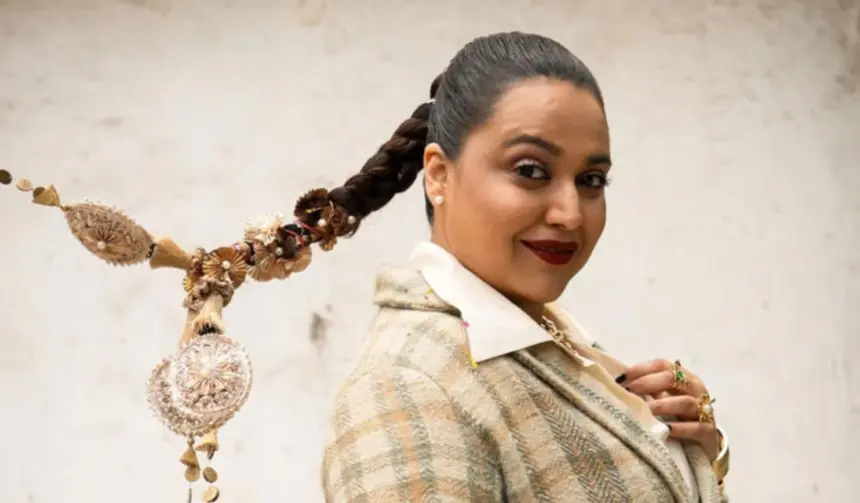
Actor Swara Bhasker has opened up about the emotional and physical challenges of motherhood, describing how becoming a parent changed her sense of identity, priorities and relationship with her career. In an interview with Yasmin Kidwai ahead of her reported participation in Rise and Fall season 2, the Veere Di Wedding actor spoke about what she described as a difficult postpartum period, including possible depressive episodes and the pressure she felt around taking time for herself.
Swara married political activist Fahad Ahmad in January 2023, and the couple welcomed their daughter in September that year. Reflecting on the period from pregnancy through the years that followed, she described the transition as overwhelming.
“From pregnancy to childbirth and everything that comes after, I feel like I’m shipwrecked. It has been like a storm. It has been so hard, in every way, physically, mentally,” she said.
The actor also explained that motherhood left her feeling unfamiliar with herself, as the experience brought changes she had not anticipated.
“I have had the biggest identity crisis after I had my baby because I have become a fully new person. I don’t know myself,” she said.
‘I didn’t even want to leave the house’
Swara said that before becoming a mother, she had always been ambitious and strongly focused on her professional life. After her daughter’s birth, however, she found it difficult to imagine spending time away from her child.
“Whole my life, I remember, I have been a highly ambitious person, a hustler, a career girl,” she said.
Describing the first two years after childbirth, the actor explained that even ordinary activities outside the home became emotionally complicated because she did not want to be separated from her daughter.
“I didn’t even want to leave the house. I don’t want to leave the child,” she said.
This feeling also influenced her approach to fitness and weight loss. Rather than making post-pregnancy weight loss a priority, Swara found herself questioning how she could set aside time for exercise while caring for her child.
“Half the reason I never tried to lose weight was that who would leave the child and go to the gym for two hours?” she said.
Her comments highlight how expectations surrounding postpartum bodies can intersect with the practical and emotional demands of caring for a young child. They also reflect the pressure some mothers experience when trying to reconcile their previous routines with their new responsibilities.
Swara Bhasker on being a homemaker and feminist guilt
Swara also spoke about the unexpected questions motherhood raised about her identity and her understanding of feminism.
Having previously identified strongly with her career and independence, she found herself adjusting to a more home-centred life. She described experiencing what she called a form of “reverse feminism guilt” as she navigated this change.
“I’m not leaving. I just like, ‘I’m a housewife now.’ I have this weird reverse feminism guilt that I used to be a feminist. Now I’m going home,” she said.
Her reflections point to the tension that can arise when a person’s day-to-day life changes significantly from the future they once imagined for themselves. For some women, the transition to motherhood can bring fulfilment alongside uncertainty, grief for their previous independence or questions about professional ambitions.
These emotions do not necessarily mean that a woman regrets motherhood or has abandoned her values. They can reflect the challenge of integrating a new role with an established sense of self.
Swara opens up about possible postpartum depressive episodes
Beyond questions of identity, Swara said she believed she had experienced depressive episodes associated with the postpartum period. She also spoke about seeking professional help.
“I felt I had depressive episodes that were very related to being postpartum, like postpartum depressive episodes. Nobody tells you about it,” she said.
The actor revealed that she has a therapist and has also consulted an endocrinologist.
“I have a therapist, I’m in therapy, I went to an endocrinologist,” she said.
Swara’s account brings attention to the emotional difficulties that can accompany the transition to parenthood. Postpartum depression is a recognised mental health condition, but an individual’s symptoms and diagnosis need to be assessed by a qualified healthcare professional. Feeling overwhelmed or experiencing an identity crisis does not, by itself, establish a diagnosis.
Why motherhood can trigger an identity crisis
Dr Rimpa Sarkar, a clinical psychologist with a PhD and founder of Sentier Wellness in Mumbai, explained that motherhood can significantly alter a woman’s sense of identity, particularly when her previous self-image has been closely tied to career, ambition and independence.
“A woman is not simply adding the role of mother to her existing identity; her routines, relationships, body, priorities and sense of autonomy can all change at once. For someone whose self-concept has been strongly built around career, achievement and independence, this can create a gap between her previous identity and her current lived reality,” the expert said.
She added that women may experience a sense of loss alongside love for their children, and that these seemingly conflicting emotions can be difficult to understand.
“There can also be grief for the freedom and identity she had before motherhood, even when she feels enormous love for her child. That coexistence of love and loss can be confusing, and many women interpret it as ‘something is wrong with me’ when it is actually part of a significant psychological transition,” she added.
The expert’s explanation underscores the importance of recognising that motherhood can involve substantial psychological adjustment. A woman can be deeply committed to her child while also missing aspects of her previous life, independence or professional identity.
How to cope with conflicting emotions after childbirth
Dr Sarkar advised distinguishing between an identity conflict and a possible mental health condition, while recognising that the two can occur together.
“A woman may experience guilt, resentment, loss of independence or discomfort with becoming a full-time caregiver while still being a loving and committed mother. Suppressing these feelings can actually increase distress, because she begins judging herself for having them,” she said.
She highlighted emotional acceptance and the integration of different aspects of identity as important parts of navigating the transition. Rather than treating career ambitions, personal interests and motherhood as mutually exclusive, women may benefit from finding ways to acknowledge their changing needs and circumstances.
However, persistent or severe symptoms should not automatically be attributed to the normal adjustment to motherhood.
“If there are persistent symptoms such as hopelessness, loss of interest, severe anxiety, withdrawal, feelings of worthlessness or difficulty functioning, then we should not simply call it an identity crisis. Those symptoms warrant assessment for postpartum depression or anxiety and appropriate professional support,” Dr Sarkar added.
Postpartum depression and anxiety can affect people in different ways, and support may include assessment by a qualified mental health professional or healthcare provider. Anyone experiencing severe distress or difficulty functioning should seek professional guidance rather than feeling they must manage the experience alone.
Swara Bhasker’s account offers a candid perspective on the less-discussed emotional dimensions of motherhood. Her experience also highlights the importance of allowing mothers to acknowledge complicated feelings, seek support when needed and adapt to changing identities without judging themselves against unrealistic expectations.