








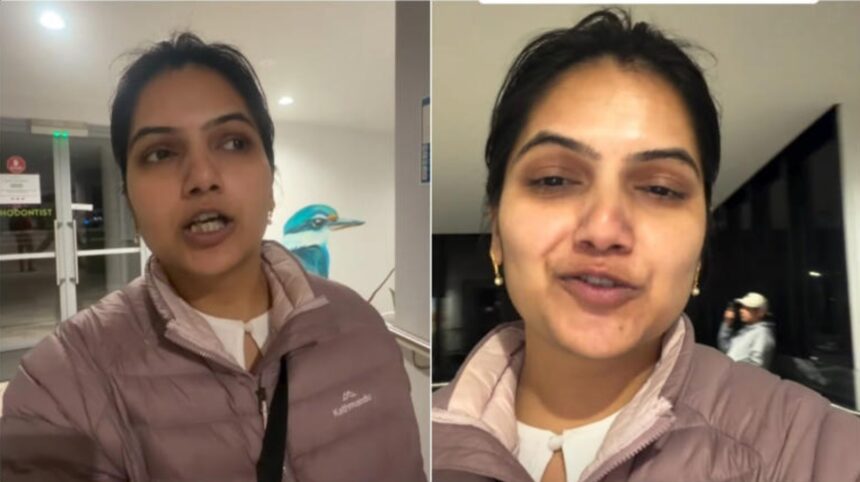
An Indian mother living in New Zealand has shared her experience of trying to get medical attention for her child after a cough continued for 10 days without showing signs of improvement. Her account, shared on Instagram, has prompted discussion among migrants and other social-media users about appointment availability, after-hours healthcare and the differences between healthcare systems in India and overseas.
Akriti Jaiswal Srivastava said she contacted her local medical centre on a Thursday because she was concerned about her child, Kevith. According to her account, she was unable to secure an appointment until the following Wednesday.
That meant the earliest available appointment was several days away.
As the child’s cough continued, Srivastava said she eventually decided to seek help from an after-hours clinic, where patients can generally seek care outside regular medical-centre hours.
See more of our coverage in your search results.
Add Hunterfly on GoogleBut when she arrived, she encountered another difficulty: the clinic had reached capacity.
A notice outside reportedly told patients that no additional patients could be accepted that night.
For a parent already worried about a child’s health, the experience was understandably frustrating.
What happened when the mother called her medical centre?
According to Srivastava’s account, she contacted her local medical centre after her child’s cough had continued for around 10 days.
She said she was told that there were no appointments available for several days, with Wednesday being the earliest slot offered to her.
See more of our coverage in your search results.
Add Hunterfly on GoogleInitially, she decided to continue monitoring her child.
In her Instagram video, she explained that she had also been influenced by her understanding of how medical treatment is approached in New Zealand compared with India. She said she felt doctors in New Zealand generally do not prescribe medicines as readily as doctors may in India.
However, after the cough continued without improvement, she became increasingly uncomfortable with waiting.
See more of our coverage in your search results.
Add Hunterfly on Google“I thought, okay, let’s wait and see if it gets better on its own,” she said.
Eventually, she decided to try an after-hours clinic instead.
After-hours clinic was already at capacity
The alternative did not provide the immediate solution she had hoped for.
When Srivastava reached the after-hours facility, she said it was already extremely crowded. A notice outside reportedly stated:
“We are sorry but we are at capacity and unable to take any more patients tonight.”
Srivastava recorded the notice and shared her reaction online.
She described the situation as particularly difficult for parents who need medical advice when their children are unwell.
Her experience also raised a practical question for families living overseas: what should parents do when their regular doctor is unavailable and an urgent-care facility is full?
The answer depends heavily on the severity of the child’s symptoms. A routine appointment, an after-hours service and an emergency department serve different purposes, and parents should seek urgent or emergency care when a child shows signs of serious illness.
Why her experience resonated with Indians living abroad
The video quickly became part of a wider discussion about healthcare experiences outside India.
For many Indians who move overseas, one of the biggest adjustments is learning how healthcare access works in a new country.
In India, particularly in larger cities, patients can often find multiple private clinics, specialists and hospitals within a relatively short distance. Many facilities also offer walk-in consultations.
That does not mean healthcare access in India is universally quick or easy. Public hospitals can face substantial demand, rural areas may have fewer medical professionals and the cost of private healthcare can be a barrier for many families.
New Zealand has a different healthcare structure, with primary care playing an important role in coordinating medical treatment. Appointment availability can vary according to location, practice capacity, staffing and demand.
For someone accustomed to walking into a clinic and seeing a doctor relatively quickly, that difference can be difficult to navigate.
‘In India, you can go to a hospital or clinic immediately’
Reflecting on her experience, Srivastava said it made her appreciate the accessibility she associated with healthcare in India.
“In India, you can go to a hospital or clinic immediately, see a doctor right away, and everything gets sorted quickly,” she said.
She acknowledged that New Zealand is a developed country but said the experience had changed her perspective on the convenience of accessing doctors in India.
Her observation is best understood as a personal comparison rather than a conclusion about the quality of either healthcare system.
Healthcare quality and healthcare accessibility are also separate issues. A system can provide high-quality clinical care while still having challenges involving appointment availability, staffing or waiting times.
A persistent cough does not always require antibiotics
One important aspect of the story is the mother’s comment about doctors being less likely to prescribe medicines in New Zealand.
Different prescribing practices can sometimes surprise people who have moved between healthcare systems.
However, a lack of an immediate prescription does not necessarily mean that a patient is receiving inadequate care.
Many childhood coughs are caused by viral respiratory infections, which often improve without antibiotics. Antibiotics are designed to treat bacterial infections and are not effective against viruses.
Doctors may therefore recommend observation, fluids, rest and symptom management when a child does not show signs suggesting a bacterial infection or another condition requiring specific treatment.
The appropriate approach depends on the child’s age, medical history, symptoms and examination.
Parents should not give children leftover antibiotics or medicines prescribed for someone else simply because a cough has persisted.
When should a child’s cough be taken seriously?
A cough lasting several days does not automatically indicate a medical emergency. Nevertheless, parents should pay attention to the child’s overall condition and any changes in symptoms.
Urgent medical assessment may be appropriate when a child develops symptoms such as:
- Significant difficulty breathing or visibly increased effort when breathing
- Blue, grey or unusually pale lips or skin
- Severe drowsiness, confusion or difficulty waking
- Signs of significant dehydration
- Persistent or severe chest pain
- A choking episode followed by continuing breathing problems
- Rapid deterioration or a child who appears seriously unwell
- Concerning symptoms in a very young infant
These are general warning signs, not a diagnosis. Parents who are uncertain about a child’s condition should seek advice from an appropriate healthcare professional or urgent medical service.
The importance of knowing the local healthcare pathway
Srivastava’s experience also highlights something that can be overlooked when families relocate: knowing where to seek help can be just as important as knowing when to seek it.
A regular GP or primary-care practice may be appropriate for many non-emergency concerns. After-hours or urgent-care services can provide another option when a regular practice is closed or unavailable.
Emergency departments, meanwhile, are intended for serious or potentially life-threatening conditions.
Understanding these distinctions before a child becomes seriously ill can reduce uncertainty during a stressful situation.
Families who move to another country may also benefit from registering with a local primary-care provider, understanding how appointments are booked, keeping important medical records accessible and learning which local services are available outside normal hours.
Other migrants joined the conversation
Srivastava’s video also encouraged people to share their own experiences of seeking medical treatment abroad.
One social-media user recalled waiting more than five and a half hours in London before being seen by doctors for what they described as a brief consultation.
Such comments show that waiting for healthcare is an issue experienced by people in several countries, although individual experiences cannot be used to measure the performance of an entire healthcare system.
For migrants, however, these experiences can feel particularly significant because they often provide the first real encounter with a country’s healthcare system.
What seems normal in one country can feel unfamiliar in another.
The bigger conversation: access versus quality
The discussion surrounding Srivastava’s video ultimately goes beyond New Zealand and India.
Healthcare systems are judged on many factors: clinical outcomes, affordability, accessibility, staffing, infrastructure, preventive care and the patient experience.
Fast access to a doctor is valuable, especially when a child is unwell. But speed alone does not determine whether a healthcare system provides appropriate treatment.
Similarly, a doctor choosing not to prescribe antibiotics should not automatically be interpreted as a failure to treat a patient. Responsible prescribing can be an important part of preventing unnecessary antibiotic use and resistance.
The challenge for families is finding the appropriate level of care at the appropriate time.
A parent’s concern at the centre of the story
For Srivastava, however, the issue was much simpler.
Her child had been coughing for 10 days, she wanted medical advice, and the regular appointment she could obtain was several days away. When she tried an after-hours clinic instead, she found that it had already reached capacity.
That experience left her comparing the healthcare access she remembered from India with the system she is now navigating in New Zealand.
Her story has resonated because the underlying concern is universal: when a child is sick, parents want to know that professional help is available when they need it.
At the same time, her experience is one individual’s account and should not be treated as representative of every medical centre or family in New Zealand.
The most useful takeaway for families living abroad is perhaps a practical one: understand the local healthcare system before an urgent situation arises, know which services are appropriate for different levels of illness and seek prompt professional advice whenever a child’s condition is worsening or concerning.
Editorial disclosure: This article is based on the account shared publicly by Akriti Jaiswal Srivastava on Instagram. The circumstances described have not been independently verified by Indya Story, and the article does not assess the quality of care provided by any specific New Zealand medical facility. Medical information included here is general health information and is not a substitute for professional medical advice.