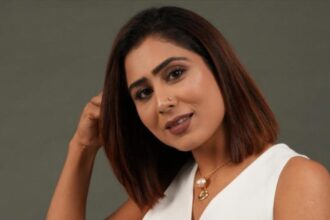






Reality television personality and entrepreneur Soundous Moufakir is building MoroMaa around Moroccan beauty traditions. In an interview with Hindustan Times, she discusses the brand’s early progress, its ₹1.5 crore funding round and why she believes modern beauty consumers expect more than celebrity endorsements.
India’s beauty industry is attracting new brands, investors and consumers, but standing out in an increasingly competitive market requires more than an attractive product or a recognisable face. For Soundous Moufakir, the opportunity lies in combining authentic beauty traditions with effective formulations, thoughtful packaging and a clear understanding of customer needs.
Best known to Indian audiences for winning MTV Splitsvilla X4 with Hamid Barkzi, Moufakir has expanded her professional portfolio into entrepreneurship with MoroMaa, a beauty, lifestyle and body-care brand inspired by Moroccan beauty rituals.
The idea originated in a personal experience. Having lived in France, where Moroccan beauty products and traditions were more accessible to her, she found it harder to locate products she considered authentic after moving to Asia. That experience eventually contributed to her decision to build a brand of her own.
MoroMaa launched in India on June 27, 2026, according to the interview published by Hindustan Times. Moufakir has reported encouraging early demand, including two products selling out during the brand’s initial months. The company has also raised ₹1.5 crore from Aviral Bhatnagar of AJ VC in exchange for a reported 9% equity stake.
For Moufakir, however, the bigger ambition extends beyond launching another skincare label. She wants to establish a distinct identity for what she describes as Moroccan beauty, or “M Beauty”, within India’s expanding personal-care market.
Why Soundous Moufakir started MoroMaa
MoroMaa’s founding idea came from Moufakir’s familiarity with Moroccan beauty practices and her difficulty finding products that met her expectations after relocating to Asia.
Rather than starting exclusively with a market-gap analysis, she identified a category she personally understood and wanted to make more accessible. The experience shaped the brand’s focus on Moroccan-inspired beauty, lifestyle and body care.
Morocco has a longstanding association with ingredients such as argan oil, which is widely used in cosmetic and personal-care formulations. Yet a brand’s connection to a particular beauty tradition is only one part of its proposition. Product quality, ingredient transparency, formulation, sourcing and consumer trust are equally important in a competitive skincare market.
MoroMaa’s challenge is to translate that cultural inspiration into products that appeal to Indian consumers while establishing a recognisable position among established companies and newer direct-to-consumer brands.
The distinction matters because consumers have many choices across price points, product categories and distribution channels. A clear identity may help a young brand attract attention, but sustained growth depends on whether customers are satisfied with the products and return to purchase them.
India’s beauty consumers are becoming more informed
One of Moufakir’s central arguments is that the Indian beauty market is changing not just because it is growing, but because consumers are becoming more selective.
In her interview with Hindustan Times, she cited projections suggesting that the market could expand substantially over the coming five to ten years. The figures she referenced were approximately ₹1,230 billion at present, potentially increasing to ₹4,000–4,500 billion. These figures are her cited market estimates and should be read in the context of the underlying research and forecast methodology.
For emerging brands, a larger market creates opportunities, but it also attracts more competitors. Moufakir believes consumers are increasingly willing to examine ingredients, formulations and suitability for their individual skin needs instead of choosing products solely because a celebrity endorses them.
This shift places greater pressure on beauty companies to explain what their products contain, how they are intended to be used and what customers can reasonably expect from them.
Ingredient awareness also makes product education important. Consumers may compare active ingredients, seek information about skin concerns and look for guidance on choosing products that fit their routines. Brands need to communicate this information responsibly rather than rely on broad promises or exaggerated claims.
For MoroMaa and similar startups, the implication is straightforward: marketing may attract a first-time buyer, but product performance and customer experience are central to earning repeat business.
Why formulation and packaging both matter
Moufakir argues that product effectiveness is only part of the equation. Convenience and visual appeal also influence how consumers discover, evaluate and purchase beauty products.
Social media has made product presentation especially important. Packaging, photography, demonstrations and short-form videos can introduce a brand to consumers who might never encounter it in a traditional retail setting.
However, a visually appealing product must still deliver an experience that justifies its price. Packaging that looks attractive but is difficult to use can undermine convenience, while a promising formulation can struggle to attract attention if its purpose and benefits are poorly communicated.
This creates a challenge for founders: balancing research and development, manufacturing costs, usability, design and marketing without compromising product quality.
For a young beauty company, those decisions are also financial. Packaging choices influence unit costs, while product development and quality control require investment before a brand can build a stable customer base.
Moufakir’s approach reflects her view that formulation, convenience and aesthetics need to work together rather than operate as separate parts of the business.
MoroMaa’s ₹1.5 crore funding: What the investment means
MoroMaa’s reported ₹1.5 crore investment from Aviral Bhatnagar of AJ VC represents an important early-stage milestone for the company.
According to the interview, the funding was raised in exchange for a 9% equity stake. For an early-stage consumer brand, capital can help bridge the gap between launching initial products and building the operational capacity required to reach more customers.
Moufakir described the money as seed funding intended to support the next stage of the company’s development. The priorities she identified included product development, manufacturing, customer acquisition, distribution and recruitment.
These areas are closely connected. Developing additional products requires formulation and production resources. Reaching more customers requires marketing and distribution. Meeting higher order volumes requires reliable inventory management, fulfilment and customer support.
A young company must also manage its cash carefully because spending often precedes revenue. Manufacturing commitments, employee salaries, advertising and logistics can place pressure on working capital even when a product attracts initial interest.
The reported funding provides MoroMaa with resources to pursue growth, but it does not by itself establish long-term profitability or guarantee that the brand will achieve its expansion goals.
What investors look for in a beauty startup
Moufakir’s account of the investment process highlights two considerations: the problem a business aims to solve and the founder’s ability to execute the idea.
A product or service may address an identifiable consumer need, but investors also have to consider whether the company offers a differentiated proposition. In startup discussions, this is sometimes described as finding “white space” in the market: an unmet need or an underserved segment that existing competitors do not fully address.
For MoroMaa, its Moroccan-inspired positioning is part of that differentiation. Whether it becomes a durable competitive advantage will depend on the brand’s products, customer response, pricing, distribution and ability to build trust.
Founder capability is another important consideration, particularly during the early stages of a company. Before a business has a long operating history, investors may place significant weight on the founder’s understanding of the market, decision-making and capacity to build a team.
Nevertheless, a compelling idea and a committed founder are only starting points. Execution, financial discipline and evidence of sustained customer demand ultimately determine whether a young company can scale.
Why Soundous Moufakir chose to become a solo founder
Moufakir initially expected that she might need a co-founder to establish MoroMaa. After speaking with potential partners, she decided to proceed independently because she had not found someone who matched the profile she was looking for.
Taking on the roles of founder and CEO meant becoming involved in more than the creative direction of the business. Alongside branding and positioning, she had to understand operations, supply chains, vendor negotiations, advertising, packaging and the economics of individual products.
That involvement has shaped her understanding of the company, according to her interview.
A founder’s responsibilities can become particularly demanding in a consumer business, where decisions about production, stock levels, marketing expenditure and pricing affect cash flow and profitability. Even a product with strong initial demand can become difficult to scale if costs are poorly controlled or supply cannot keep pace with orders.
Moufakir said she believes that working through these details herself at an early stage has helped her understand the business before deciding whether to bring in a co-founder or hire additional leadership.
The approach also carries trade-offs. A solo founder can retain direct control over decisions, but must manage competing priorities and recognise when specialist expertise is needed. As the business grows, building a capable team becomes increasingly important.
Why unit economics matter more than early popularity
For MoroMaa, the next phase is not simply about attracting attention. It is about developing a business model that can support growth.
Unit economics help a company understand the financial contribution of each product or customer transaction. In a beauty business, this means examining costs such as manufacturing, packaging, shipping, discounts, payment processing, returns and customer acquisition.
A product selling quickly or going out of stock can indicate demand, but neither outcome automatically demonstrates profitability. The company must also account for production costs, overheads, marketing expenditure and the resources required to replenish inventory.
Customer acquisition is another key consideration. If the cost of attracting a customer is too high relative to the gross profit generated by their purchases, rapid growth may consume cash rather than strengthen the business.
Repeat purchases can improve the economics of a beauty brand, provided customers remain satisfied and the company can serve them efficiently. This makes product quality, customer support and retention important alongside advertising and brand visibility.
Moufakir has emphasised the importance of understanding unit economics as part of building a scalable and profitable company. That focus is particularly relevant as MoroMaa moves from its initial launch towards a broader customer base.
The challenge of hiring for an early-stage company
Building a team is another challenge Moufakir identified. Startups often need experienced people who can take responsibility for important functions, but may not yet have the financial resources to compete with larger employers on salaries.
For a consumer brand, the right team may need expertise across product development, operations, marketing, supply chain, finance and customer experience. Hiring too slowly can restrict growth, while expanding payroll too quickly can place pressure on limited funds.
This makes recruitment a question of prioritisation. Founders must identify which capabilities are essential immediately, which tasks can be handled externally and which roles can be added as revenue and funding develop.
Moufakir’s experience reflects a wider reality for early-stage businesses: securing investment is only one milestone. Turning that capital into a functioning organisation requires people, systems and disciplined execution.
Can Moroccan beauty carve out a place in India?
India’s beauty market offers opportunities for brands that understand specific consumer needs and communicate a clear identity. However, Moroccan inspiration alone will not guarantee success in a market where shoppers can choose from a wide range of domestic and international products.
For MoroMaa, the opportunity lies in translating its cultural positioning into a consistent product experience. Consumers need reasons to trust the brand, understand its formulations and choose its products over alternatives.
That involves balancing several priorities: effective products, transparent communication, convenient packaging, competitive pricing and reliable availability.
The brand’s reported early sales and funding provide a starting point, but its longer-term performance will depend on how well it converts initial interest into repeat purchases and sustainable growth.
Moufakir’s journey also highlights the demands of building a business while maintaining a career in entertainment. Her public profile may help introduce MoroMaa to potential customers, but a durable consumer brand ultimately needs to stand on the strength of its products and operations.
The bigger lesson from Soundous Moufakir’s entrepreneurial journey
Soundous Moufakir’s move from reality television into beauty entrepreneurship illustrates how a founder can use personal experience to identify a business idea and develop it into a consumer brand.
MoroMaa’s reported ₹1.5 crore funding round gives the company an opportunity to strengthen its operations, develop products and expand its reach. At the same time, the competitive beauty market demands careful attention to formulation, customer trust, cost management and differentiation.
Her emphasis on informed consumers is particularly relevant. As shoppers become more discerning, celebrity visibility may help generate awareness, but it cannot replace a reliable product and a sound business model.