




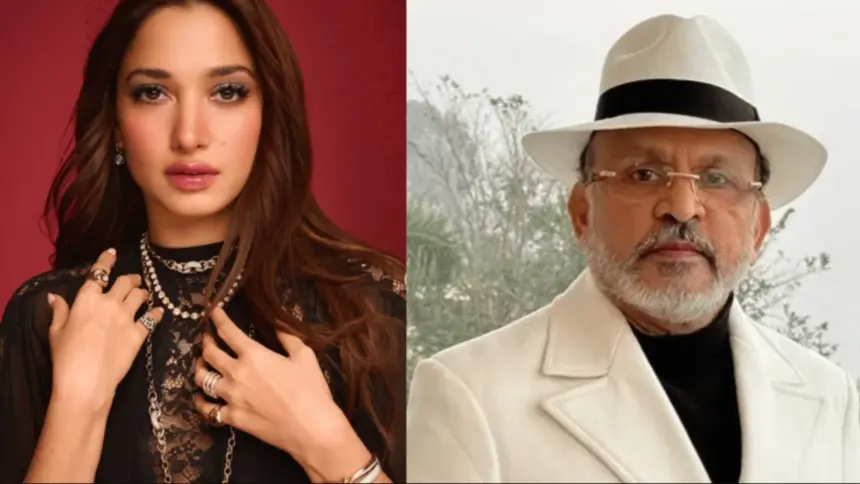
Tamannaah Bhatia has addressed the controversy over Annu Kapoor’s comments about her appearance, explaining that she chooses carefully which opinions deserve her attention.
According to the supplied report of her appearance at NDTV Profit Ignite 2026, the actor was asked about Kapoor’s remarks and whether her recent role choices reflected an effort to move beyond the image associated with her screen presence.
Her response centred on her work: listening matters, but so does deciding what to take seriously.
Tamannaah explains how she handles personal comments
Tamannaah described filtering outside opinions as an important part of working in a creative profession. Giving every personal remark significance, she suggested, could distract from the work she wants to pursue.
Rather than dwell on comments about her appearance, she said her priorities remain acting, developing her craft and deciding what she wants to create.
She also described approaching her work with a sense of service. In her view, the intention behind a performance helps explain how it connects with audiences.
Her answer placed the emphasis on professional purpose. Asked about a controversy involving her physical appearance, she brought the conversation back to the choices within her control.
What led to the Annu Kapoor controversy?
The supplied report traces the controversy to an October 2025 conversation on Shubhankar Mishra’s YouTube channel.
During the interview, Kapoor was shown a clip of Tamannaah performing Aaj Ki Raat from Stree 2. His response included the phrase “dudhiya badan,” referring to her complexion, followed by additional comments about her appearance.
The remarks prompted objections on social media. Critics questioned why the discussion focused on the actor’s body rather than her performance.
Kapoor later addressed the criticism
According to the same report, Kapoor discussed the backlash in interviews in April 2026. He defended his wording, saying that admiration for someone’s appearance should not automatically be interpreted as an expression of desire.
He also indicated that he would apologise if Tamannaah felt hurt by the remark.
That distinction matters: an expressed willingness to apologise is different from an apology delivered directly to the person concerned.
A response centred on her career
Tamannaah’s reported answer did not call for further confrontation. Instead, she explained how she manages the attention that comes with public life.
Her position was that listening does not require giving every observation equal importance. For her, the more useful investment of attention is in acting and the work she hopes to make.
The exchange also illustrates the difference between discussing a performer’s work and commenting on their physical appearance. Tamannaah’s response returned the focus to her professional priorities.