


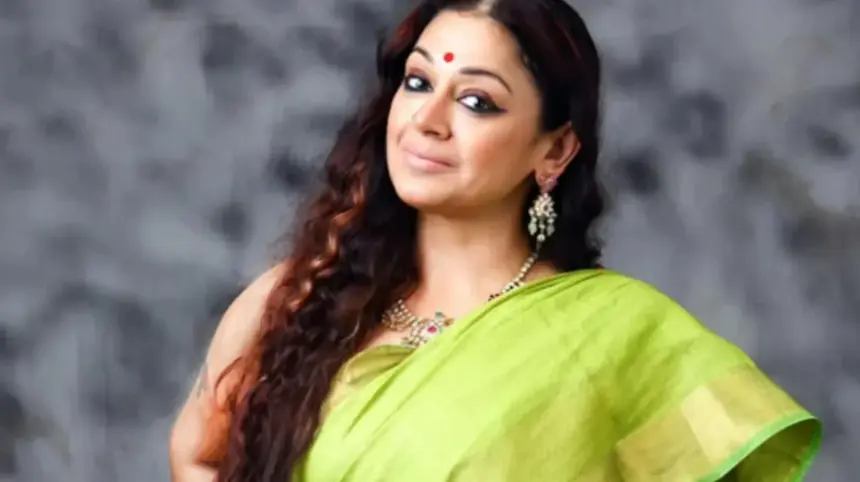
Acclaimed actor and Bharatanatyam dancer Shobana is reportedly set to portray Kaikesi, the mother of Ravana, in Nitesh Tiwari’s Ramayana. Here is a closer look at her remarkable career, award-winning performances and the character’s place in the epic.
Nitesh Tiwari’s ambitious cinematic adaptation of Ramayana has attracted considerable interest for its scale, creative vision and ensemble cast. Among the latest names linked to the project is celebrated Indian actress and classical dancer Shobana, who is reportedly set to play Kaikesi, the mother of Ravana.
According to the supplied casting report, Shobana would share the film’s larger mythological narrative with Kannada superstar Yash, who is associated with the role of Ravana.
Her reported involvement has drawn attention to a career that extends across Malayalam, Tamil, Telugu, Kannada and Hindi cinema.
For audiences familiar with her performances, Shobana represents a rare combination of acting experience and classical dance expertise.
For those discovering her work through Ramayana, her career offers an introduction to some of the most acclaimed performances in South Indian cinema.
However, an official casting announcement or authenticated production statement is still required to independently confirm her participation as Kaikesi.
Who Is Shobana, the Actress Reportedly Playing Kaikesi?
Shobana is an Indian film actress and accomplished Bharatanatyam performer whose career spans several decades.
She is particularly celebrated for her contribution to Malayalam cinema, where she has portrayed characters ranging from emotionally vulnerable women to strong, independent personalities.
Her performances have frequently combined expressive acting with a refined understanding of movement and body language.
Although she is best known for her Malayalam films, her work across different Indian languages has helped establish her reputation among audiences beyond Kerala.
She has appeared in more than 200 films, according to commonly reported accounts of her filmography.
Her career also includes major national honours, reflecting her contribution to both cinema and classical dance.
The reported Ramayana casting would introduce another significant mythological character to her screen repertoire.
Shobana’s Early Life and Artistic Family Background
Shobana was born on March 21, 1970, into a family with a rich association with the performing arts.
She is connected to the celebrated Travancore sisters—Lalitha, Padmini and Ragini—whose contributions to Indian cinema and classical dance remain widely recognized.
Padmini, in particular, became known for her screen performances and accomplished dancing across multiple film industries.
Growing up with this artistic heritage helped shape Shobana’s interest in performance.
However, her later achievements were built through years of training, professional discipline and individual artistic development.
Her background provided exposure to an important cultural tradition, while her work established a distinctive identity of her own.
Shobana Began Her Acting Career at a Young Age
Shobana entered the entertainment industry as a child performer before moving into leading roles.
Her breakthrough as a lead actress came with the Malayalam film April 18, directed by Balachandra Menon.
The film helped establish her presence in Malayalam cinema and marked an important stage in her transition to more substantial screen roles.
During the following years, she became associated with films that showcased her ability to portray a wide range of emotions.
Her acting style was particularly effective in stories requiring subtle changes in expression and complex interpersonal relationships.
As her career developed, she became a familiar presence in Malayalam cinema while also taking on roles in other language industries.
Shobana’s Most Recognized Films
Over the years, Shobana has worked in commercial entertainers, family dramas, romances and critically acclaimed productions.
Her filmography includes several projects that continue to be discussed among Malayalam cinema enthusiasts.
Notable titles include:
- Kanamarayathu
- Thenmavin Kombath
- Manichitrathazhu
- Mambazhakkalam
- Thira
- Varane Avashyamund
Each film represents a different phase of her career.
Some highlight her emotional range, while others demonstrate her ability to adapt to changing storytelling styles and cinematic expectations.
Her continued association with Indian cinema has helped maintain interest in her work across generations of viewers.
Manichitrathazhu: The Performance That Became a Career Landmark
One of Shobana’s most celebrated performances came in the Malayalam psychological thriller Manichitrathazhu, released in 1993.
Directed by Fazil, the film follows a woman whose experiences become central to a story involving psychological distress, family history and supernatural interpretations.
Shobana’s portrayal of Ganga remains among the most recognizable roles of her career.
The character required her to move between different emotional states while maintaining the credibility of a complex narrative.
Her performance earned her the National Film Award for Best Actress.
The film subsequently became an important reference point in Indian popular cinema and inspired adaptations in other languages.
Even decades after its release, Manichitrathazhu remains closely associated with Shobana’s screen legacy.
Her Second National Film Award Came With Mitr, My Friend
Shobana received another National Film Award for Best Actress for Mitr, My Friend, directed by Revathi.
The film explores relationships, emotional isolation and the experiences of an Indian woman living abroad.
Her performance demonstrated a different side of her acting abilities compared with the dramatic intensity of Manichitrathazhu.
Rather than depending on heightened theatrical moments, the role required a more restrained portrayal of loneliness and personal transformation.
The award reinforced her reputation as an actress capable of carrying emotionally layered stories.
Together, these two National Film Awards remain among the defining achievements of her cinema career.
Shobana’s Contribution to Bharatanatyam
Shobana’s artistic identity extends far beyond film acting.
She is also a respected Bharatanatyam dancer with extensive training in the classical tradition.
Her dance education has been associated with renowned teachers including Chitra Visweswaran and Padma Subrahmanyam.
Bharatanatyam requires rigorous training in rhythm, posture, movement, expression and storytelling.
These disciplines can provide performers with a sophisticated understanding of how physical gestures communicate emotion.
For Shobana, classical dance has remained a central part of her professional life alongside cinema.
Her stage performances and choreography have contributed to her recognition as an important figure in Indian classical arts.
Kalarpana: Shobana’s Commitment to Training Young Dancers
Shobana established Kalarpana, a dance institution dedicated to the teaching and development of classical performance.
The institution reflects her commitment to preserving artistic traditions while supporting younger performers.
Teaching classical dance involves more than demonstrating physical movements.
Students must also learn rhythm, musical interpretation, expressive technique and the cultural context associated with compositions.
Through her work in dance education, Shobana has contributed to the transmission of these skills to a new generation.
Her involvement in training and performance demonstrates that her artistic career has developed across multiple disciplines rather than remaining limited to cinema.
Padma Shri and Padma Bhushan: National Recognition
Shobana’s contribution to Indian arts has received national recognition.
She was honoured with the Padma Shri in 2006 for her work in the performing arts.
She was subsequently selected for the Padma Bhushan in 2025.
These honours reflect her longstanding involvement in cinema and classical dance.
They also highlight the importance of artists whose work crosses different performance traditions.
While her National Film Awards recognize specific acting achievements, the Padma honours acknowledge her broader contribution to Indian cultural life.
The combination of film accolades and classical dance recognition distinguishes Shobana’s career.
Who Is Kaikesi in the Ramayana?
Kaikesi is an important figure in the family history of Ravana in various traditional accounts associated with the Ramayana.
She is commonly described as the daughter of Sumali and the wife of the sage Vishrava.
Through this marriage, she becomes the mother of Ravana and his siblings.
The family relationships associated with Kaikesi help explain Ravana’s ancestry and the wider background of the characters connected to Lanka.
Her children are generally identified as Ravana, Kumbhakarna, Vibhishana and Shurpanakha.
However, details of characters and events can vary across different retellings and regional traditions.
Kaikesi’s significance is rooted in her place within Ravana’s lineage rather than in the central Rama-Sita narrative alone.
Kaikesi’s Relationship With Ravana
Ravana is one of the principal figures in the Ramayana, and his family background forms an important part of several versions of the epic.
Kaikesi’s relationship with him connects the character to the larger history of the rakshasa lineage.
Traditional narratives explore Ravana’s ancestry, ambitions, extraordinary abilities and eventual conflict with Rama.
These stories often place Ravana within a complex family structure that includes individuals holding different moral and spiritual positions.
For example, his brother Vibhishana becomes an important figure because of his opposition to Ravana’s actions.
Kaikesi’s role in these family relationships provides material that filmmakers could potentially explore when adapting the epic.
However, the extent of her presence in Nitesh Tiwari’s film has not been established through the supplied casting account.
Why Shobana Could Be an Interesting Choice for Kaikesi
If the casting report is confirmed, Shobana’s experience would make her a noteworthy addition to the film.
The character of Kaikesi requires an understanding of the relationships surrounding Ravana and his family.
Shobana has previously portrayed characters involving complicated emotional situations and strong personal identities.
Her classical dance training may also contribute to her ability to communicate through expressions and gestures.
These qualities could be relevant to a mythological production where dialogue, visual presentation and physical performance work together.
However, it would be premature to describe how she will interpret Kaikesi before official footage or character details become available.
Her reported casting is best understood as an indication of the experienced performers being considered for the project.
Nitesh Tiwari’s Ramayana and Its Expanding Ensemble
Nitesh Tiwari’s Ramayana is among the major Indian film projects attracting attention for its adaptation of a culturally significant epic.
The narrative is associated with the story of Rama, Sita, Lakshmana, Hanuman and Ravana.
The film’s casting discussions have received considerable coverage because the production aims to present these characters on a large cinematic scale.
According to the supplied report, Yash is associated with the role of Ravana.
The addition of a performer such as Shobana would bring experience from another important part of Indian cinema into the ensemble.
However, specific production decisions, character appearances and release information should be confirmed through official announcements.
What Makes Mythological Roles Challenging for Actors?
Characters from Indian epics carry strong cultural associations and have been interpreted through literature, theatre, dance and cinema for generations.
Actors portraying these figures must work within expectations shaped by earlier performances and storytelling traditions.
At the same time, a new adaptation may choose a particular interpretation of a character.
This can create opportunities for nuanced performances while requiring careful attention to the source material.
For someone with Shobana’s experience in classical dance and acting, mythological storytelling would provide a familiar connection between movement, expression and narrative.
Nevertheless, any assessment of her portrayal should be reserved until her role is officially confirmed and audiences can see the performance.
Shobana’s Career Connects Classical Art and Contemporary Cinema
The interest surrounding Shobana’s reported involvement in Ramayana offers an opportunity to revisit her wider artistic journey.
From her early work in Malayalam cinema to her National Award-winning performances, she has established a career built around versatility.
Her work in Bharatanatyam and dance education has also contributed to the preservation and development of Indian classical performance traditions.
These different achievements make her more than a familiar screen personality.
They reflect a sustained commitment to artistic expression across cinema, stage performance and teaching.
For newer audiences, the reported casting could encourage interest in her earlier films and classical dance work.
What Is Known About Shobana’s Role in Ramayana?
The current supplied report identifies Shobana as the actress expected to portray Kaikesi.
It also associates Yash with the role of Ravana.
However, the account does not provide a verified statement from the filmmakers confirming Shobana’s casting.
There is also no authenticated information in the supplied material establishing her screen time, appearance, dialogue or participation in specific sequences.
These details should not be inferred from the importance of Kaikesi in traditional narratives.
Further confirmation from the production team would help establish the precise nature of her involvement.
A Celebrated Artist Potentially Enters a New Cinematic Chapter
Shobana’s reported association with Nitesh Tiwari’s Ramayana brings renewed attention to one of Indian cinema’s accomplished performers.
Her career includes memorable Malayalam films, two National Film Awards for acting and major recognition for her contributions to classical dance.
The character of Kaikesi offers a link to Ravana’s family history, an aspect of the epic that has been explored through different storytelling traditions.
If the casting is officially confirmed, the project would provide another opportunity for audiences to experience Shobana’s screen presence.
Have a story tip or feedback? Write to [email protected].
© Hunterfly.in. Original editorial content.