



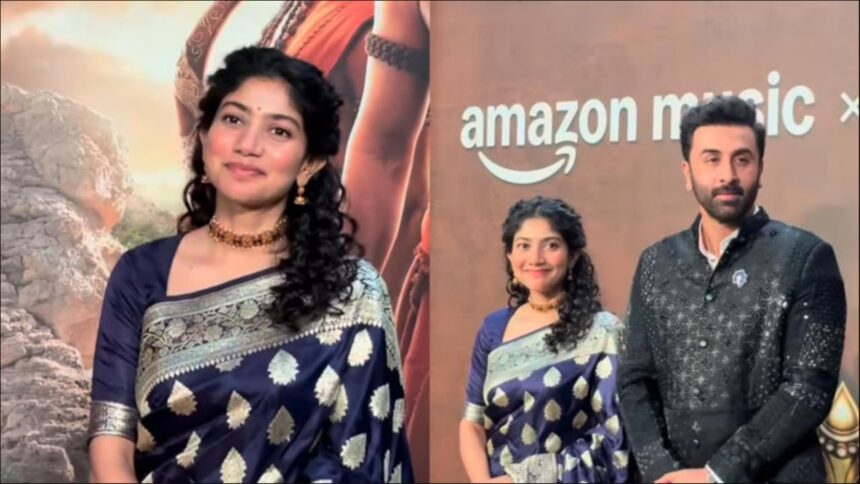
Sai Pallavi brought traditional Indian craftsmanship into the spotlight at the Ramayana music event in Chennai, choosing a navy blue silk saree with delicate silver detailing as she joined Ranbir Kapoor and AR Rahman for the film’s promotional celebrations.
Chennai, October 22, 2026: Actress Sai Pallavi made an elegant appearance at the promotional music event for Ramayana on October 21, embracing the beauty of Indian handloom traditions in a navy blue silk saree.
The event, held at the Chennai Trade Centre, brought together members of the much-anticipated film’s team, including Ranbir Kapoor and music composer AR Rahman. While musical performances entertained the audience and Ranbir received an enthusiastic response for addressing fans in Tamil, Sai Pallavi’s understated traditional look became another talking point.
The actress, who portrays Sita in filmmaker Nitesh Tiwari’s ambitious adaptation of the Indian epic, opted for an ensemble that reflected her preference for classic silhouettes, minimal styling and traditional Indian textiles.
Sai Pallavi’s Navy Blue Saree Highlights Banarasi Craftsmanship
For the Chennai event, Sai Pallavi wore a deep navy blue silk saree featuring intricate silver-toned woven motifs and a broad decorative border.
The saree appeared to draw inspiration from traditional Banarasi weaving, a textile tradition closely associated with Varanasi in Uttar Pradesh. Its rich colour, metallic detailing and structured silk drape gave the outfit a festive appearance without overwhelming the overall styling.
Small silver motifs were distributed across the body of the saree, while the wider border added visual definition to the ensemble.
She paired the saree with a matching blouse featuring elbow-length sleeves and coordinated border detailing.
Rather than experimenting with a contemporary draping technique, Sai Pallavi chose a traditional style. The saree featured neatly arranged front pleats, while the pallu fell naturally over her shoulder.
The result was a look that placed the fabric and its craftsmanship at the centre of attention.
Although the saree resembles a Banarasi Katan silk design, its exact textile composition, weaving origin and designer have not been independently confirmed.
Traditional Jewellery Completes Sai Pallavi’s Look
Sai Pallavi complemented her navy blue ensemble with traditional jewellery that introduced warmer tones to the outfit.
She wore a gold-toned choker featuring red and green stones, along with pearl detailing around its edges. The contrasting colours stood out against the deep blue fabric and silver motifs.
A pair of small jhumka earrings completed her accessories.
The actress kept her hairstyle equally simple. Her hair was parted in the middle, with sections from the front pulled back and secured near the crown, leaving the remaining hair flowing naturally.
Her makeup featured soft pink tones on the lips, cheeks and eyelids. A small red bindi added a familiar finishing touch.
Together, the jewellery, hairstyle and makeup created a balanced appearance that complemented the traditional saree rather than competing with it.
What Makes Banarasi Katan Silk Special?
Banarasi textiles are among India’s best-known weaving traditions, recognised for their decorative patterns, silk fabrics and intricate zari work.
Katan refers to a type of silk yarn traditionally produced by twisting silk filaments together. Sarees woven using Katan silk are valued for their structure, smooth finish and ability to hold elaborate woven patterns.
Several design features associated with Banarasi sarees can be seen in Sai Pallavi’s outfit:
- Silver-toned zari detailing: Metallic-looking woven patterns create contrast against the navy blue base.
- Small buti motifs: Repeated decorative motifs give the fabric visual interest without making it appear overly elaborate.
- Broad ornamental border: A prominent border frames the saree and enhances its traditional silhouette.
- Classic draping: Carefully arranged pleats and an open pallu allow the textile’s details to remain visible.
However, visual similarities alone cannot establish whether a saree was handwoven in Varanasi or made using a particular silk variety. Such details require confirmation from the designer, seller or textile producer.
Sai Pallavi Continues Her Traditional Fashion Choices During Ramayana Promotions
Sai Pallavi’s Chennai appearance follows another traditional saree look during the promotional activities for Ramayana in Hyderabad.
Across these appearances, her styling has placed greater emphasis on Indian textiles, classic jewellery and understated beauty choices than on experimental red-carpet fashion.
Her wardrobe choices also fit the cultural setting of the film, in which she plays Sita, one of the central figures of the Ramayana.
Rather than relying on heavy embellishment throughout the ensemble, the Chennai look used the contrast between navy blue silk, silver detailing and traditional jewellery to create a distinctive appearance.
The styling demonstrates how a carefully selected saree can make a strong impression at a major entertainment event without requiring elaborate accessories.
Ramayana Music Event Brings Ranbir Kapoor and AR Rahman to Chennai
The October 21 event marked another major promotional appearance for the upcoming film.
Ranbir Kapoor, who plays Lord Rama, joined Sai Pallavi and AR Rahman as the team presented the film’s musical world to audiences in Chennai.
The gathering included live musical performances, while Ranbir’s decision to speak in Tamil received an enthusiastic response from attendees.
Music is expected to play an important role in the film’s presentation of the epic, with AR Rahman’s involvement adding to the interest surrounding its soundtrack.
The Chennai programme also brought attention to the scale of the production and its effort to reach audiences across India’s different language markets.
About Ramayana: Cast, Release Date and Production
Ramayana is an upcoming two-part cinematic adaptation of the ancient Indian epic, produced by Namit Malhotra.
The film features a large ensemble cast led by Ranbir Kapoor as Rama and Sai Pallavi as Sita.
Other reported cast members include Yash as Ravana, Sunny Deol as Hanuman, Ravi Dubey as Lakshmana, Lara Dutta as Kaikeyi, Kajal Aggarwal as Mandodari, Rakul Preet Singh as Surpanakha, Sheeba Chaddha as Manthara and others.
The first instalment is scheduled for release on November 5, 2026, with the second instalment planned for 2027.
The two-part production has attracted considerable attention for its ambitious scale, extensive cast and reported multithousand-crore-rupee investment. Published budget estimates should be treated as reported figures unless confirmed by the producers.
With the first instalment approaching its theatrical release, promotional events are drawing attention not only to the film’s music and cast but also to the traditional fashion worn by its leading performers.
Why Sai Pallavi’s Chennai Look Stands Out
Sai Pallavi’s latest appearance illustrates the lasting appeal of Indian sarees at contemporary entertainment events.
The deep navy blue shade offered a striking alternative to brighter festive colours, while the silver-toned woven details added texture and refinement.
Her jewellery introduced a traditional contrast, and the restrained makeup allowed the saree to remain the focal point.
More importantly, the outfit offered an opportunity to appreciate the design language associated with Banarasi textiles, including decorative borders, repeated woven motifs and rich silk textures.
For readers interested in festive dressing, wedding wardrobes or traditional Indian craftsmanship, the ensemble provides a useful example of how classic textiles can be styled with relatively few accessories.
As excitement builds around Ramayana, Sai Pallavi’s promotional wardrobe continues to draw attention to the enduring appeal of Indian traditional fashion.