








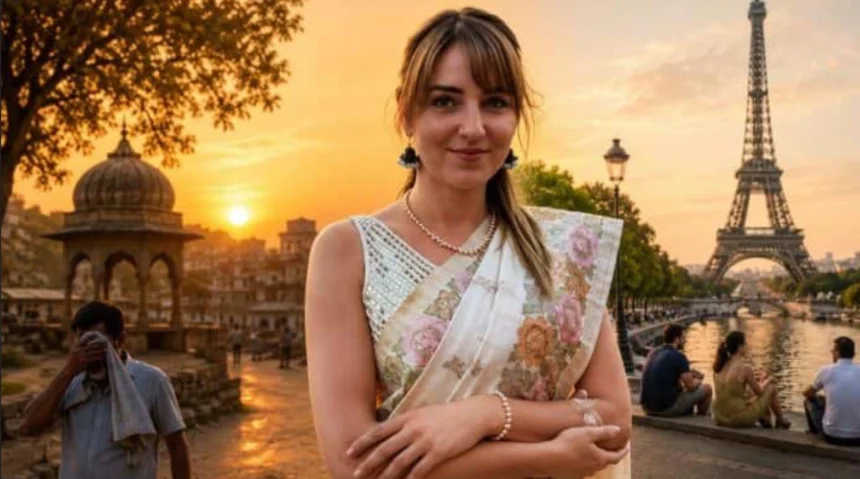
A viral social media video by Polish content creator Agnieszka Hadała has sparked an international conversation about how extreme weather events are perceived across different parts of the world. Her comments, shared amid a severe heatwave affecting several European countries, have resonated with thousands of viewers and reignited discussions about media narratives, climate change and public empathy.
Hadała, who has previously lived in India and is currently based in Poland, posted the video on Instagram as temperatures across parts of Europe climbed above 35 degrees Celsius. Several regions have responded with school closures, public health warnings and emergency measures aimed at protecting vulnerable populations from heat-related illnesses.
Comparing Reactions to Heatwaves
In her video, Hadała highlighted what she believes is a noticeable difference in how people respond to extreme heat in Europe compared to India.
She pointed out that temperatures exceeding 40 degrees Celsius are a regular occurrence in many Indian cities during summer, with some regions occasionally approaching 50 degrees Celsius. According to her, while European heatwaves often receive widespread sympathy and concern, similar or even harsher conditions in India are frequently discussed through the lens of infrastructure challenges or governance issues.
See more of our coverage in your search results.
Add Hunterfly on GoogleHer remarks touched on a broader question: whether climate-related suffering receives equal recognition regardless of where it occurs.
“When Europe suffers, people talk about the crisis. When India suffers, it often becomes a discussion about what India is doing wrong,” was the central message many viewers took away from the video.
Social Media Reacts
The video quickly gained traction, drawing reactions from users across multiple countries.
Many viewers supported Hadała’s observations, arguing that empathy should not depend on geography. They noted that extreme heat poses serious health risks regardless of a country’s economic status and that climate disasters deserve equal attention worldwide.
Others, however, suggested that comparing India and Europe is not straightforward. Critics pointed out that climate patterns, urban planning, infrastructure readiness and historical adaptation to high temperatures differ significantly between the regions.
See more of our coverage in your search results.
Add Hunterfly on GoogleSome users also emphasized that European countries are experiencing heat levels that, while common in parts of India, are less typical for many areas of the continent, making the impact particularly disruptive.
The Growing Climate Challenge
Beyond the social media debate, the discussion arrives at a time when scientists continue warning about the increasing frequency and intensity of heatwaves globally.
Europe has recorded a series of unusually hot summers in recent years, prompting governments to strengthen heat preparedness measures. Meanwhile, India has repeatedly faced prolonged heatwaves affecting millions of residents, placing pressure on healthcare systems, water resources and energy infrastructure.
See more of our coverage in your search results.
Add Hunterfly on GoogleClimate experts have consistently linked rising temperatures and more frequent extreme weather events to global climate change, highlighting the need for coordinated adaptation strategies across regions.
Why the Discussion Resonated
Part of the video’s impact stems from its focus on perception rather than weather statistics alone. Hadała’s comments encouraged viewers to consider how narratives surrounding climate events can differ depending on the country involved.
Her message also tapped into broader conversations about representation, media framing and global empathy in an interconnected digital age.
As climate-related challenges continue to affect countries around the world, the viral discussion serves as a reminder that extreme weather is increasingly becoming a shared global reality—one that transcends national borders and demands collective understanding.
Whether viewers agreed or disagreed with her perspective, Hadała’s video succeeded in sparking a meaningful conversation about how societies interpret and respond to human suffering during climate crises.