








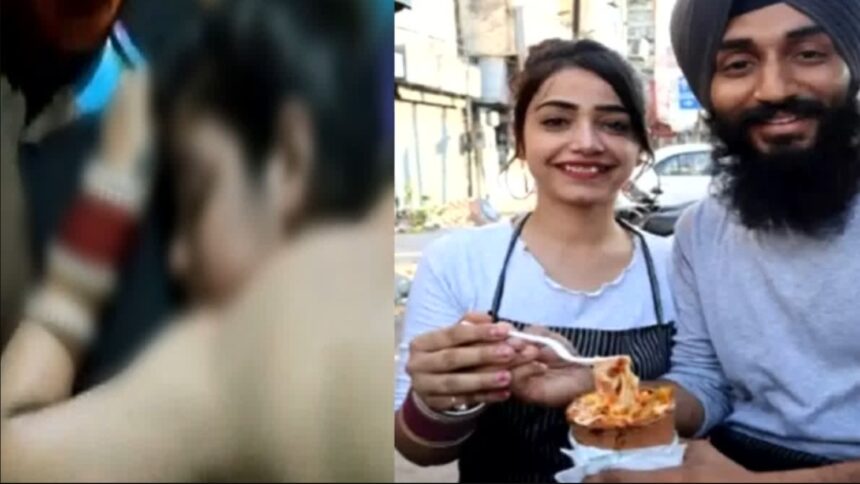
The Kulhad Pizza couple, Sehaj Arora and Gurpreet Kaur, became widely known through their food-content videos and entrepreneurial journey. However, in 2023, the couple faced a serious online controversy after a video was circulated on social-media platforms and falsely or allegedly linked to them.
Sehaj Arora publicly disputed the authenticity of the footage and said that it had been manipulated using artificial intelligence. He also appealed to people not to share the video and indicated that the matter had been taken to the police.
The episode highlighted a much larger problem: how private images and videos can be stolen, manipulated or falsely attributed to people and then spread rapidly online.
What Happened to the Kulhad Pizza Couple?
Sehaj Arora and Gurpreet Kaur, popularly known as the Kulhad Pizza couple, attracted a large following through their food-related social-media content.
See more of our coverage in your search results.
Add Hunterfly on GoogleIn September 2023, a video began circulating online with claims that it showed the couple in a private setting.
The footage generated significant discussion and led to widespread online harassment and trolling.
However, Sehaj Arora rejected the claims surrounding the video. He said that the footage was fake and alleged that artificial intelligence had been used to manipulate the faces.
The couple subsequently appealed to people not to circulate the material.
Sehaj Arora Asked People Not to Share the Video
Following the controversy, Sehaj Arora publicly addressed the issue through social media.
See more of our coverage in your search results.
Add Hunterfly on GoogleHe said that the incident had caused considerable distress to his family and asked users to stop forwarding or reposting the footage.
The situation became particularly difficult for the family because of the enormous speed with which the material was being circulated.
The couple’s response also underlined an important point: once allegedly private material enters multiple online networks, removing every copy can become extremely difficult.
See more of our coverage in your search results.
Add Hunterfly on GoogleWhy AI-Generated Fake Videos Are a Serious Problem
The controversy also drew attention to the increasing availability of AI-based image and video manipulation tools.
Modern software can alter faces, voices and other visual elements with increasing realism. Such technology can be used for legitimate creative purposes, but it can also be abused to create deceptive or non-consensual material.
A manipulated video can then be presented as genuine through misleading captions.
This means viewers should not assume that a video is authentic merely because it appears realistic.

How Can Private Videos Get Leaked?
There is no single way in which private digital material can become exposed.
Common security risks include:
1. Weak or Reused Passwords
Using the same password across multiple services can put several accounts at risk if one service experiences a security breach.
Strong, unique passwords are therefore essential.
2. Compromised Accounts
If someone gains access to an email, cloud-storage or social-media account, they may potentially access information stored there.
Enabling two-factor authentication (2FA) provides an additional layer of protection.
3. Malicious Apps
Some apps request access to photographs, videos, contacts, files or other information that they do not necessarily need.
Users should carefully review permissions before granting an application access to sensitive data.
4. Phishing and Fake Links
Cybercriminals may send messages containing links designed to steal login credentials.
A message appearing to come from a familiar service does not necessarily mean that it is genuine.
Users should avoid entering passwords after following suspicious links and should check the website address carefully.
5. Unsecured Devices
Leaving a phone, laptop or tablet unlocked can expose private information if someone gains physical access to it.
A strong device passcode and biometric security can reduce this risk.
6. Cloud Account Security
Cloud services can be extremely useful for backups, but accounts containing personal photographs or videos should be protected with strong passwords and two-factor authentication.
The issue is not that cloud storage itself is inherently unsafe. Account security is the crucial factor.
How to Protect Your Private Photos and Videos
People can take several practical steps to reduce the risk of unauthorized access.
Use unique passwords:
Create a different, strong password for every important account. A reputable password manager can make this easier.
Enable two-factor authentication:
Activate 2FA on email, cloud-storage, social-media and other important accounts.
Review app permissions:
Regularly check which applications can access your photos, files, camera and microphone.
Keep software updated:
Install operating-system and security updates because they frequently contain important security fixes.
Secure your phone before selling it:
Back up important information, sign out of accounts, remove linked services and perform a proper factory reset before transferring a device to another person.
Be careful with links and attachments:
Do not enter account credentials into websites reached through suspicious messages.
Avoid sharing passwords:
Never give account passwords, device passcodes or authentication codes to other people.
What to Do If Private Material Is Shared Without Consent
If someone discovers that intimate or private material involving them is being distributed without permission, they should avoid engaging with people who are spreading it.
Instead:
- Preserve relevant evidence such as URLs, usernames, timestamps and screenshots where appropriate.
- Report the content through the platform’s reporting system.
- Secure the affected accounts and change compromised passwords.
- Enable two-factor authentication.
- Contact the relevant cybercrime authorities or law-enforcement agency.
- Seek professional legal advice where necessary.
Victims should also avoid paying people who threaten them with further distribution. Such demands can lead to additional exploitation.
Don’t Forward Alleged Private Videos
Forwarding an alleged private video can cause additional harm to the person involved, particularly when the footage is fake, manipulated or falsely attributed.
Before sharing any controversial material, users should ask whether the source is credible and whether the identity of the person shown has actually been verified.
A large number of views does not make a video authentic.
The Bigger Lesson From the Kulhad Pizza Controversy
The controversy surrounding the Kulhad Pizza couple demonstrates how quickly an online allegation can become a major story.
Sehaj Arora disputed the authenticity of the footage and described it as manipulated. The incident subsequently became part of a broader conversation about digital privacy, AI-generated content and online harassment.
For internet users, the lesson is straightforward: protect sensitive accounts, question suspicious digital content and never automatically trust a viral video simply because thousands of people are sharing it.