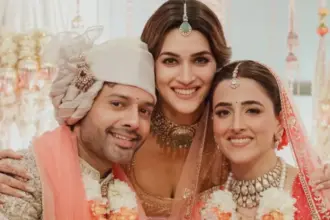








What keeps Kriti Sanon energised through dance rehearsals, action-heavy shoots and marathon workdays? According to celebrity nutritionist Ryan Fernando, the secret is far simpler than people imagine—sleep. Fernando revisited an earlier interview where the actor admitted, “I like sleeping at least eight hours. If I don’t have work, I can go up to nine or ten hours.”
Using her routine as an example, Fernando said Kriti’s commitment to sleep is a reminder that rest is just as essential as nutrition and training. “If you’re serious about fitness, it’s not only about eating right. Recovery matters. Poor sleep disrupts hormones, slows metabolism and even ages the brain. You can eat perfectly, but if you aren’t sleeping well, your nutrition goes to waste,” he explained.
He added a pointed reminder: “If someone like Kriti—who works back-to-back and releases multiple films a year—makes sleep non-negotiable, what’s our excuse?”
Decoding Kriti Sanon’s Sleep Discipline
Kriti’s 8–10 hour sleep window aligns closely with medical recommendations. Dr Narander Singla, lead consultant in internal medicine at CK Birla Hospital, said most adults need 7–9 hours of sleep to support memory, immunity and physical repair.
See more of our coverage in your search results.
Add Hunterfly on Google“Sleep needs vary from person to person, but quality matters as much as quantity,” he said. Factors such as stress, poor sleeping conditions and frequent disturbances can affect how refreshed a person feels, even if they technically log enough hours.
According to experts, the productivity and clarity of your daytime hours are tied directly to the depth and quality of your sleep, making uninterrupted rest essential for daily functioning.
Why Good Sleep Matters for Active Lifestyles
Dr Vajalla Shravani, fitness and Pilates specialist at Tone30 Pilates, explained that sleep is integral to recovery—especially before and after intense workouts.
“In deep sleep, growth hormone peaks, muscle fibres repair, and the nervous system resets. Without enough rest, recovery slows, inflammation rises and injury risk increases,” she said.
Metabolic health also takes a hit. Inadequate sleep reduces insulin sensitivity, raises cortisol and makes fat loss or muscle gain more difficult. Prolonged sleep deprivation may even elevate resting heart rate and blood pressure, compromising cardiovascular health.
See more of our coverage in your search results.
Add Hunterfly on Google“You cannot out-train poor sleep,” Dr Shravani emphasised. “It’s the invisible foundation behind every visible fitness result.”
Tips for Better Sleep
Experts recommend:
- Maintaining a consistent bedtime and wake-up schedule
- Limiting coffee, energy drinks, alcohol and other stimulants
- Sleeping in a dark, cool environment
- Listening to calming music or relaxation audio
- Creating a wind-down routine away from screens
DISCLAIMER: This article is based on publicly available information and expert insights. Always consult a healthcare professional before making lifestyle changes.
See more of our coverage in your search results.
Add Hunterfly on Google