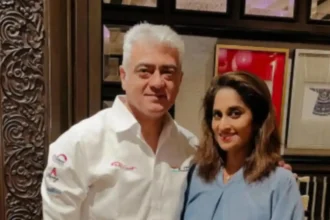






Tamil actress Ineya has shared her views on consent and personal boundaries in the film industry, saying performers should clearly communicate their discomfort with intimate scenes or revealing costumes. Speaking to hunterfly, the Mookuthi Amman 2 actress emphasised the importance of making personal limits known before filming. However, her remarks also raise an important distinction: consent can be withdrawn, and agreeing to one activity never automatically means agreeing to another.
Ineya Opens Up About Consent and Personal Boundaries in Cinema
Tamil film actress Ineya has discussed the importance of communicating personal boundaries while working in the entertainment industry.
During an interview with Hunetrfly Media, the actress spoke about situations involving intimate scenes, physical contact and costumes that performers may find uncomfortable.
According to the supplied account, Ineya believes actors should express their reservations before participating in such sequences.
She argued that performers need to make informed decisions about what they are willing to do on screen.
Her comments focused on individual responsibility, communication and the importance of establishing limits during film production.
However, some of the broader statements attributed to her require careful consideration because consent is not simply a one-time agreement.
An actor may initially accept a scene and later change their mind, and any physical activity must remain within the boundaries of freely given consent.
‘Nobody Can Make Us Do Something Without Our Consent,’ Says Ineya
In the interview, Ineya expressed her belief that performers should be able to refuse scenes that make them uncomfortable.
“In the film industry, nobody forces us to do anything,” she said, according to the supplied interview transcript.
She went on to argue that actors should communicate their discomfort rather than agree to requirements they do not wish to fulfil.
The actress specifically referred to intimate sequences, bedroom scenes, kissing and hugging.
She also mentioned costumes that reveal more of the body than a performer may be comfortable showing.
In Ineya’s view, speaking openly before filming can help prevent misunderstandings about what an actor has agreed to do.
Her comments reflect an emphasis on communication between performers and the filmmaking team.
However, her general statement about the absence of force should be understood as her personal view, not as evidence that coercion never occurs in the film industry.
Ineya Says Actors Should Speak Up About Uncomfortable Scenes
One of the central points in Ineya’s interview concerned the timing of discussions about personal boundaries.
She suggested that actors should raise concerns when they are first presented with a scene or costume requirement.
For example, a performer might agree to participate in a romantic scene but feel uncomfortable with specific forms of physical contact.
Another actor may be willing to perform a particular sequence but prefer a different costume.
Ineya argued that these preferences should be communicated to the filmmakers so that appropriate arrangements can be considered.
Her remarks emphasised the importance of clarity before shooting begins.
However, performers may not always know every detail of a scene when accepting a role.
Scripts can change, blocking can be adjusted, and new directions may arise during production.
For that reason, communication about consent must remain possible throughout the filmmaking process, not only during initial discussions.
Actress Discusses Intimate Scenes, Kissing and Revealing Costumes
Ineya identified several situations in which actors might need to establish boundaries.
These included kissing scenes, hugging, bedroom sequences and revealing clothing.
Such requirements can involve different levels of personal comfort depending on the performer.
An actor who agrees to portray a romantic relationship may not necessarily be comfortable with every form of physical intimacy.
Similarly, agreeing to wear one costume does not amount to accepting every possible change in wardrobe.
A clear discussion about the requirements of a scene can help ensure that performers and the production team understand what has been agreed.
These conversations may involve the director, costume department, production team and, where appropriate, an intimacy coordinator.
The objective should be to create conditions in which performers can communicate their decisions without fear of professional consequences.
Ineya Suggests Filmmakers Can Use Cinematic Techniques
Another point raised by Ineya concerned alternatives to filming intimate actions directly.
According to the interview, she suggested that filmmakers could use cinematic techniques when an actor expresses discomfort with a particular requirement.
Cinema offers several methods for communicating intimacy or emotional closeness without requiring performers to engage in unwanted physical contact.
Camera angles, framing, editing and carefully planned blocking can help convey a scene’s meaning.
For example, a sequence may suggest a romantic moment through close-ups, changes in perspective or a cutaway rather than an explicit physical action.
Such techniques can support storytelling while respecting an actor’s boundaries.
However, the availability of technical alternatives does not remove the production’s obligation to obtain consent for whatever actions are actually filmed.
Ineya Recalls Her Father’s Advice About Personal Space
The actress also discussed advice she received from her father about protecting personal boundaries.
According to the supplied interview, he compared personal privacy to a room with a locked door.
The analogy presented the decision to open the door as a way of deciding who may enter a person’s private space.
Ineya used the example to explain why she considers it important to establish limits before allowing others into personal situations.
The comparison reflected her belief that individuals should remain aware of their boundaries and communicate them clearly.
However, the analogy has significant limitations when applied to consent.
Allowing someone into a room does not grant that person permission to touch another individual inappropriately.
Likewise, agreeing to one form of physical contact does not establish consent for any additional contact.
Permission is specific to the activity involved and may be withdrawn.
This distinction is important when discussing workplace safety and personal autonomy.
Why Consent Can Be Withdrawn Even After an Actor Agrees
Part of Ineya’s reported argument suggested that performers should not raise objections after they have already agreed to a scene.
This viewpoint requires an important qualification.
Consent is an ongoing decision, not an irreversible commitment.
An actor may initially agree to a scene but become uncomfortable when the actual filming requirements become clear.
They may also withdraw consent because their circumstances, understanding or comfort level have changed.
A prior agreement does not justify ignoring a subsequent refusal.
Nor does a person’s decision to participate in an intimate scene excuse unwanted physical contact, coercion or harassment.
The responsibility for respecting boundaries remains with everyone involved.
This principle applies to film sets just as it does to other professional and personal environments.
Why Clear Communication Matters During Film Shoots
Ineya’s remarks highlight a practical issue faced by productions involving emotionally or physically sensitive scenes.
Actors, directors and crew members may approach the same scene with different assumptions about what is required.
Clear communication helps reduce uncertainty.
Before filming, a production can discuss the intended physical actions, costumes, camera framing and any limitations expressed by performers.
Those arrangements should remain subject to consent as the work progresses.
A performer should also be able to raise a concern without being pressured into continuing.
Professional planning becomes particularly important when a scene involves nudity, simulated intimacy or physical contact.
Establishing respectful procedures benefits both the cast and the production.
It can also reduce the risk of confusion when scenes are changed during rehearsals or filming.
The Role of Intimacy Coordination and Workplace Safety
The broader discussion of consent in entertainment has increased attention on professional safeguards for intimate scenes.
Some productions use intimacy coordinators to help plan and supervise sequences involving simulated intimacy, nudity or other sensitive physical actions.
Their work can include helping performers and filmmakers establish agreed boundaries, clarify choreography and communicate concerns.
These practices do not replace the need for direct consent.
Rather, they provide additional structure for conversations that might otherwise be difficult.
Workplace expectations also matter.
Actors may face differences in authority, experience or bargaining power when interacting with directors, producers and other senior professionals.
A safe filming environment should recognise those differences and make it possible for performers to refuse unwanted activities without intimidation or retaliation.
Ineya’s interview provides an opportunity to consider both the value of clear communication and the industry’s responsibility to respect it.
Ineya’s Career in South Indian Cinema
Ineya, also credited as Iniya, is an Indian actress recognised for her work in Tamil and Malayalam cinema.
She has appeared in films across different genres and developed a career involving a range of supporting and leading roles.
Among her notable Tamil films is Vaagai Sooda Vaa (2011), directed by A. Sarkunam.
The period drama helped bring wider recognition to her performances.
Her work has also included other Tamil and Malayalam productions, contributing to her presence in the South Indian film industry.
Her latest reported interview adds to public conversations about the experiences of performers working in cinema.
Ineya’s Role in Mookuthi Amman 2
On the professional front, the supplied report identifies Ineya as a member of the ensemble cast of Mookuthi Amman 2.
The Tamil fantasy-comedy project features Nayanthara in the lead role.
The report also states that the film arrived in theatres on November 6, 2026.
However, the specific theatrical release date, final cast credits and current distribution information have not been independently verified.
Those details should be checked against official film announcements before being presented as confirmed release information.
The supplied account also does not identify Ineya’s character or the extent of her role.
Her interview about consent and film-set boundaries remains the principal news development covered here.
Ineya’s Remarks Highlight an Important Film Industry Conversation
Ineya’s interview with hunterfly has brought attention to the importance of personal boundaries in filmmaking.
The actress believes performers should clearly communicate when they are uncomfortable with intimate scenes, physical contact or revealing costumes.
She also suggested that filmmakers can use technical methods to accommodate certain concerns.
Her remarks emphasise individual communication, but the discussion should not end there.
Respecting consent is a shared responsibility involving performers, filmmakers and production teams.
No actor should be expected to continue an activity after withdrawing permission, and no earlier agreement excuses inappropriate conduct.
Have a story tip or feedback? Write to [email protected].
© Hunterfly.in. Original editorial content.