





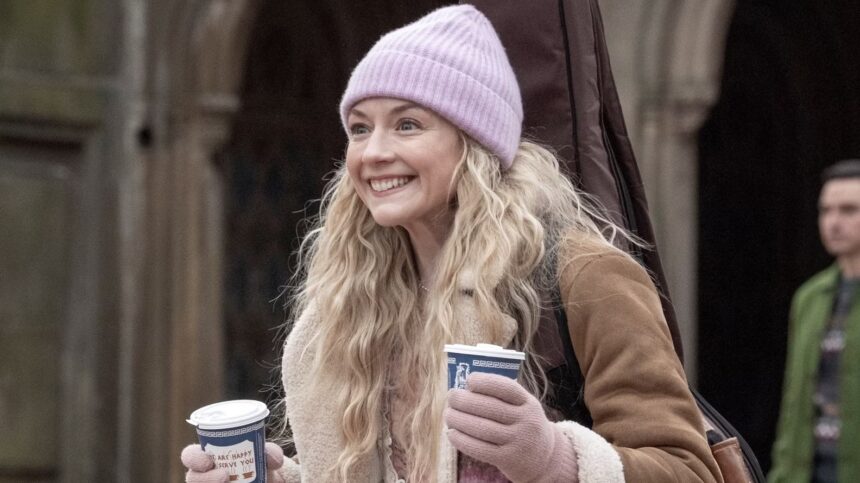
Emily Kinney has finally returned as Beth Greene in The Walking Dead: Dead City Season 3, giving fans a surprising and emotional glimpse at who the beloved character might have become in a different reality.
For years, The Walking Dead fans believed they had seen the final chapter of Beth Greene.
The character’s shocking death in the original series left a lasting emotional impact on viewers, and for a long time, a return seemed unlikely. That changed in Episode 306 of The Walking Dead: Dead City Season 3, which brought Emily Kinney back as Beth through an alternate-reality storyline.
Instead of revisiting Beth through a conventional flashback or dream sequence, the episode imagines a different version of her life — one in which she survived, grew older and continued pursuing her love of music.
See more of our coverage in your search results.
Add Hunterfly on GoogleFor Kinney, returning to the character offered an opportunity to answer a question that had remained unresolved for years: who might Beth Greene have become as an adult?
Speaking about her return, Kinney described her enthusiasm for the storyline and explained why the alternate-reality approach made the experience especially meaningful.
Emily Kinney Was Excited to Return as Beth
Kinney said she was given an opportunity to read the script before officially committing to the episode, and she quickly became interested in the idea.
After years away from the character, the possibility of revisiting Beth while also working again with Lauren Cohan was particularly appealing.
Kinney and Cohan have crossed paths over the years at fan conventions and other events, but returning to work together allowed them to revisit one of the emotional relationships established in The Walking Dead.
See more of our coverage in your search results.
Add Hunterfly on GoogleFor Kinney, however, the biggest appeal was the opportunity to explore Beth from an entirely new perspective.
Rather than attempting to recreate the teenage character viewers remembered, she could imagine Beth as an adult.
In this alternate reality, Beth had not experienced the same fate she did in the original series. She had the chance to grow up, build a life and follow a different path.
See more of our coverage in your search results.
Add Hunterfly on GoogleKinney said that concept allowed her to explore questions she had considered while playing Beth years earlier.
What kind of adult would Beth have become?
The episode provides its own answer: a Beth who is alive, hopeful and still deeply connected to music.
Beth Greene Returns in an Alternate Reality
Beth’s appearance in Dead City Season 3 is significant because it does not simply reverse the events of the original series.
Instead, the episode creates an alternate version of reality where the character survived.
That distinction allows the story to respect Beth’s original arc while also giving fans a chance to see another possibility.
Viewers see Beth spending time with Maggie, played by Lauren Cohan, in a quieter world that feels dramatically different from the constant danger associated with the Walking Dead universe.
From a walk through Central Park to intimate conversations and musical moments, the episode gives Beth an opportunity to experience ordinary moments that survival in the apocalypse rarely allowed.
For a franchise built around danger, loss and constant uncertainty, those peaceful scenes carry particular emotional weight.
The absence of the familiar threat of Walkers changes the atmosphere of the episode and gives the characters room to simply exist together.
Slipping Back Into Beth Felt Natural
Despite the years that had passed since she last played Beth, Kinney said much of the character still felt familiar.
Beth was one of the longest-running roles of Kinney’s career, and years spent developing the character had clearly left a lasting creative connection.
According to Kinney, returning to Beth did not require her to completely rediscover who the character was.
Instead, many of the details that had defined Beth — including her style, personality and connection to music — helped create a foundation for imagining who she might become as an adult.
The challenge was not simply returning to the past.
It was imagining a future that Beth never had the chance to experience in the original storyline.
Kinney noted that questions about Beth’s clothing, appearance and interests felt easier to answer once the character was placed in a world without the zombie apocalypse.
Beth had always loved music, and the alternate reality allowed that passion to become a more visible part of her adult life.
In Dead City, that connection becomes central to her return.
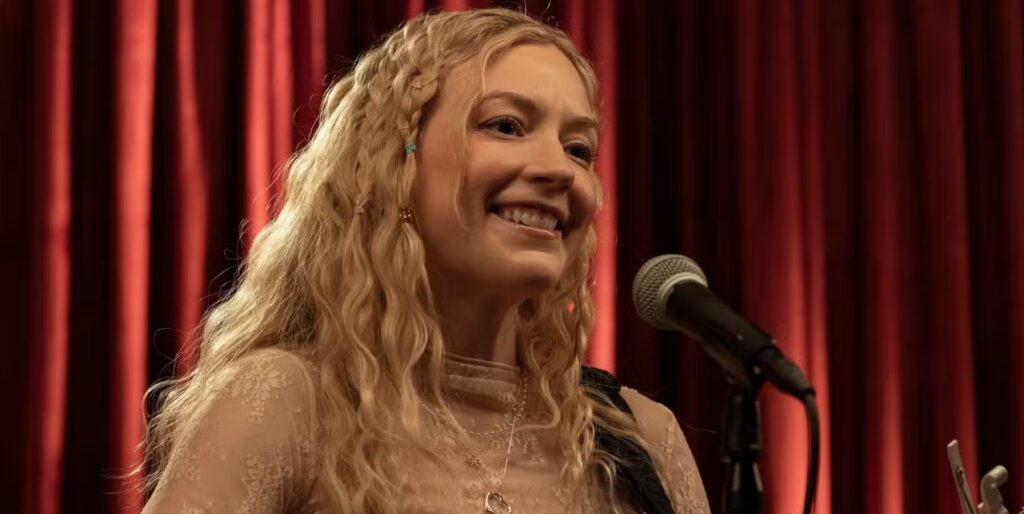
Emily Kinney Performs Her Own Song as Beth
One of the most personal aspects of Kinney’s return involved music.
Beth Greene was known for her love of singing in The Walking Dead, while Kinney is also a musician and songwriter outside her acting career.
That overlap created a unique opportunity during the development of the Dead City episode.
Kinney explained that the original script simply called for Beth to perform a folk song. When discussions began about the scene, she suggested using one of her own original compositions.
The song she performed was “Reasons to Stay Alive.”
The decision allowed Kinney to bring together her work as a musician with the character she played for years.
The choice also carried thematic significance.
Music has long been part of Beth’s identity, and allowing the character to perform as an adult created a sense of continuity between the Beth audiences knew and the person she might have become.
For Kinney, the moment represented a satisfying connection between her real-life artistic work and the fictional character that helped define an important chapter of her acting career.
A Quiet Reunion With Lauren Cohan
The emotional centre of the episode is the reunion between Beth and Maggie.
Kinney and Cohan began their journeys on The Walking Dead during the same period, and their characters became part of the Greene family storyline that played a major role in the series.
Kinney said reading the script was an emotional experience, reflecting the importance The Walking Dead had in her life and career.
Working with Cohan again also felt natural.
Their on-screen connection, Kinney suggested, had always come with a certain ease, whether the characters were sharing emotional scenes or navigating moments of extreme danger.
That sense of familiarity helped shape the alternate-reality reunion.
One especially meaningful sequence sees Beth and Maggie sharing music together while walking through the city.
The moment echoes earlier Walking Dead scenes in which music provided rare moments of peace and connection.
In a universe usually defined by loss and survival, singing together becomes a reminder of shared history.
‘Dead City’ Gives Beth a Different Kind of Closure
Beth’s original departure from The Walking Dead remains one of the show’s most memorable and debated character endings.
For many fans, there was a feeling that Beth’s story had ended just as the character was beginning to discover her strength and independence.
The Dead City appearance does not erase what happened.
Instead, it offers another perspective.
The alternate reality gives viewers a window into the life Beth might have lived. She is older, hopeful and pursuing the things that mattered to her.
Kinney said the experience was satisfying because it allowed her to imagine Beth as someone who had survived and entered adulthood.
The character was no longer defined only by what she lost or by the way her story ended.
For a brief but meaningful period, audiences could see her future possibilities.
A Celebration of Beth Greene
Kinney described the experience of returning to the character as something of a celebration.
The production brought her to locations near Boston and New York City, adding another personal dimension to the experience.
For an actor returning to a role after many years, the process can be complicated. The original show exists in the past, while both the actor and the audience have changed.
But Dead City gave Kinney a chance to return without simply repeating what came before.
The alternate-reality concept created room for nostalgia while also allowing Beth to evolve.
It was a reunion with the past, but not one trapped entirely by it.
Kinney also acknowledged the continued support of Beth’s fan community, which has remained passionate about the character long after her original storyline ended.
That enduring connection is part of what made the return especially meaningful.
Could Beth’s Story Continue?
Although the episode provides emotional closure, Kinney also suggested that the alternate-reality concept leaves room for imagination.
In a timeline where the zombie apocalypse has not shaped Beth’s life in the same way, there are still possibilities to consider.
What might happen next?
What kind of career would she build?
How would her relationships evolve?
Those questions are part of what makes the episode different from a traditional farewell.
Beth is not presented solely as a memory.
She is shown as someone whose story could, at least within this alternate reality, continue.
Whether the franchise ever revisits that possibility is unknown. There has been no official confirmation of additional appearances or a spinoff centered on this version of Beth.
For now, the episode stands as a meaningful return rather than a confirmed beginning of a new chapter.
Emily Kinney Hopes Fans Find Hope in Beth’s Return
For Kinney, one of the most important aspects of the episode is the sense of hope it offers.
Beth’s story in the original series ended in tragedy, leaving fans with questions about the future she never had the chance to experience.
The alternate-reality storyline offers a different emotional conclusion.
Fans can now see what Beth might have been like as an adult — still connected to music, still finding joy and still surrounded by the possibility of a future.
The episode also explores larger themes about fate, choices and the limits of personal control.
In a world where characters often face circumstances beyond their power, the idea of taking risks and learning from life’s experiences becomes an important part of the story.
For longtime viewers, Beth’s return is more than a nostalgic cameo.
It is an opportunity to revisit a character whose impact continued long after her original storyline ended.
And while The Walking Dead universe has always been shaped by loss, Dead City Season 3 gives Beth Greene something she did not receive before: a chance to be seen not only as who she was, but as who she might have become.
For Emily Kinney and Beth’s loyal fans, that possibility may be the most meaningful part of the character’s long-awaited return.