

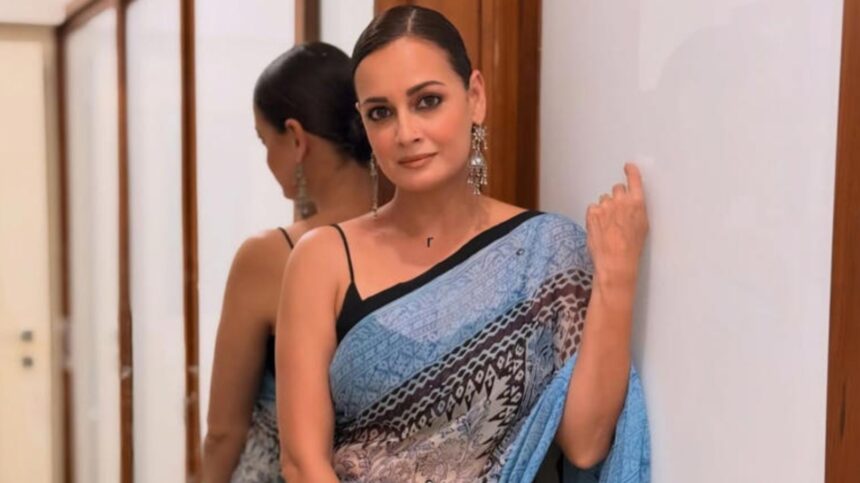
As Dia Mirza completes 25 years in the film industry, the actor reflects on changing representations of women, choosing stories over conventional roles and why artists and citizens should not remain silent on issues affecting society.
Dia Mirza is marking 25 years in the Hindi film industry, and the actor is looking back on a career that has increasingly moved beyond conventional commercial roles.
In a recent conversation with NDTV, Dia discussed the evolution of women’s representation in Indian cinema, her approach to selecting projects and her experiences working with actors including Akshaye Khanna and Sunny Deol.
The conversation also turned to another aspect of her public life: her willingness to speak about social justice, equality, climate and civic issues.
See more of our coverage in your search results.
Add Hunterfly on GoogleFor Dia, expressing an opinion on matters affecting society is not separate from being an artist. She sees it as part of being an engaged citizen.
“And if we don’t vocalise our truths, then who will?”
Dia Mirza on artists speaking about social issues
Dia questioned why artists are sometimes expected to remain silent when conversations move beyond cinema.
She said she finds it surprising that people question artists for expressing their views on issues involving social justice, equality and climate.
“To be an artist is to live truth and to learn and to evolve and to share.”
She went on to make the point that the responsibility does not apply only to people working in the arts.
According to Dia, individuals have the right to participate in conversations and processes concerning issues that affect their families and communities.
See more of our coverage in your search results.
Add Hunterfly on GoogleShe specifically referred to areas such as the environment, education and health, arguing that questioning existing systems can be part of the process of improving them.
“And without questioning, how can we build better systems?”
Her comments reflect a position she has expressed publicly over the years, particularly around environmental and social issues.
Dia Mirza on how women’s roles have changed
Reflecting on the changing landscape of Hindi cinema, Dia acknowledged that strong roles for women have existed throughout the industry’s history.
See more of our coverage in your search results.
Add Hunterfly on GoogleShe cited filmmakers including Mahesh Bhatt, Shyam Benegal and Govind Nihalani, along with earlier generations of filmmakers, as examples of directors who created substantial parts for women.
She also pointed to actors such as Shabana Azmi, Smita Patil, Waheeda Rehman and Sharmila Tagore as important reference points for powerful performances by women.
According to Dia, the situation changed considerably as commercial cinema became increasingly mainstream and many narratives became centred around a predominantly male perspective.
She believes the past decade has seen greater attention being paid to the complexity and individuality of women’s experiences.
“I think it’s really wonderful to see more people now paying attention to the finer nuances of femininity, of being a woman.”
Why Dia says she chooses stories, not roles
Dia also explained how her approach to work has evolved.
Rather than choosing a project simply because of the size or prominence of a particular character, she said she focuses on the larger story and the filmmaker’s intention.
“I don’t pick roles. I pick stories.”
For Dia, the questions surrounding a project include what the storyteller is attempting to communicate, whether the story can encourage audiences to think and whether it can contribute to conversations she considers meaningful.
She also stressed that this does not mean every character she plays needs to be morally perfect.
In fact, she said she is enjoying some of her newer work precisely because it takes her into territory audiences may not traditionally associate with her.
That willingness to experiment has become an important part of her current phase as an actor.
Dia’s memorable experience with Akshaye Khanna
Dia also recalled working with Akshaye Khanna in Ikka.
She described herself as a longtime admirer of the actor and spoke warmly about her connection with his late father, Vinod Khanna, who played her father in her second film.
Dia said her familiarity with the Khanna family added a personal dimension to meeting Akshaye on the set.
However, she admitted that she was nervous before shooting an important scene with him.
The characters had a complicated history in the story, and Dia was unsure whether the scene would achieve the emotional balance it required.
According to her, the rehearsal immediately changed that.
“We rehearsed the scene, and it just flowed. There was nothing forced about it.”
Dia said the experience reinforced something she believes comes with professional experience: learning not to overthink a scene and instead trusting the moment and the person performing opposite you.
She also praised Akshaye’s commitment to his craft and recalled that he responded positively to her performance after the scene.
Working with Sunny Deol
Dia also spoke about her experience working with Sunny Deol in Ikka.
She described him as kind, grounded and generous and said that these qualities helped her feel comfortable while portraying a complicated relationship on screen.
The actor said the relationship between their characters required considerable emotional texture and that the natural ease she felt around Sunny helped the scenes develop organically.
For Dia, working with experienced performers has also become an opportunity to learn.
She praised both Akshaye and Sunny for their openness and their willingness to remain fully engaged with the moment while performing.
Dia Mirza’s evolving film choices
Over 25 years, Dia’s career has moved through different phases, from her early commercial Hindi-film appearances to projects that have allowed her to explore more layered characters and socially relevant narratives.
She highlighted films and series including Thappad, Made in Heaven, Dhak Dhak and Kaafir while discussing the roles that have contributed to her understanding of women and their experiences.
Her recent slate includes Ikka, Alpha and Operation Safed Sagar, reflecting her continued interest in varied stories rather than being confined to one particular screen image.
Her latest project, Operation Safed Sagar, is currently streaming on Netflix.
A career increasingly defined by purpose
For Dia Mirza, the 25-year milestone is not simply a celebration of longevity.
Her comments suggest that the next phase of her career is closely connected to the kinds of stories she wants to tell, the questions she wants audiences to consider and the issues she believes deserve public attention.
Her view that artists should be able to speak about social issues may continue to invite debate, but her position is clear: creative expression and civic engagement do not have to exist in separate spaces.
As she enters her 26th year in the industry, Dia appears increasingly interested in projects and conversations that extend beyond entertainment and encourage audiences to reflect on the world around them.