








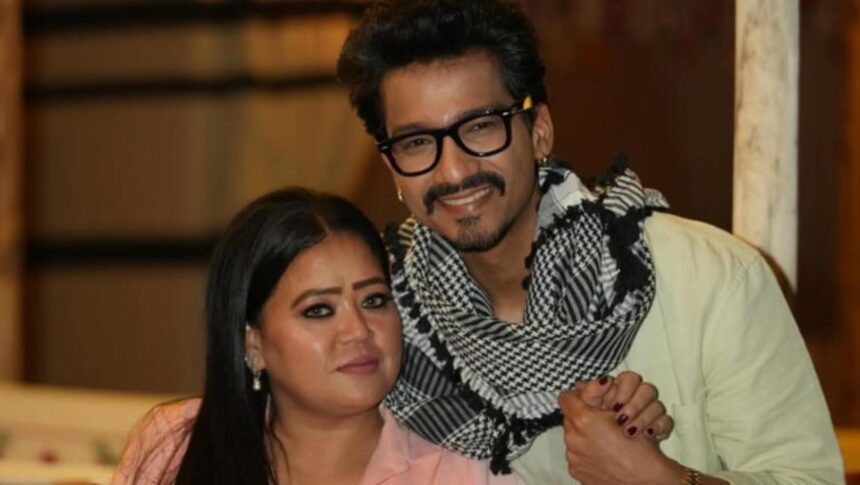
In a dating culture often marked by uncertainty, comedian Bharti Singh recently reflected on a love story rooted in clarity and acceptance.
Speaking on Raj Shamani’s podcast, Bharti opened up about how her husband, writer-producer Harssh Limbachiyaa, reassured her at a time when she struggled with self-doubt about her body image and compatibility.
She recalled how Harssh was direct about his intentions from the beginning, telling her he genuinely liked her and wanted to marry her. Bharti admitted she initially questioned their pairing, pointing out their physical differences. “Main 80 kg ki thi, tu ek dum patla,” she shared, reflecting on how she felt they didn’t “match.”
Harssh, however, reportedly reassured her by saying that appearance is temporary, but love endures. That statement, Bharti said, made her feel accepted in a way she had never experienced before.
See more of our coverage in your search results.
Add Hunterfly on GoogleWhy Reassurance Matters in Relationships
According to Arpita Kohli, Psychologist & Counsellor at PSRI Hospital, reassurance and unconditional acceptance form the emotional foundation of secure romantic relationships.
“When a partner feels accepted without conditions — without pressure to look or behave a certain way — it reduces anxiety and self-doubt,” she explains. Emotional safety allows individuals to show up authentically rather than defensively.
Bharti’s admission — that she once felt no one would love her as she was — reflects a vulnerability many people silently carry, especially around body image. Consistent affirmation from a partner, experts say, can gradually dismantle those deeply internalised fears.
Over time, such reassurance strengthens communication, intimacy, and long-term stability.
The Power of Unconditional Acceptance
Bharti described feeling “chosen” fully, not conditionally. Kohli notes that unconditional acceptance reinforces long-term commitment because it removes the fear that love is transactional.
See more of our coverage in your search results.
Add Hunterfly on GoogleWhen affection does not feel tied to appearance, success, or perfection, individuals feel emotionally anchored. Commitment then emerges from security rather than fear of abandonment.
In psychologically secure partnerships, reassurance is not performative — it is consistent and dependable.
Love vs Emotional Dependence: Where Is the Line?
Bharti candidly admitted that she cannot imagine loving anyone else. While emotionally powerful, such statements also raise an important psychological distinction.
See more of our coverage in your search results.
Add Hunterfly on GoogleKohli explains that healthy love enhances one’s identity rather than replacing it. Strong bonding allows closeness while preserving individuality and autonomy.
Feeling deeply attached is not inherently unhealthy. The concern arises only when a relationship becomes the sole source of identity or meaning.
“A relationship should add strength to your life, not substitute it,” Kohli says.
A Lesson in Emotional Security
Bharti Singh’s reflection underscores a universal desire: to feel accepted without modification. In an era of fleeting connections, her story highlights the value of direct intent, reassurance, and emotional safety.
When acceptance, honesty, and stability coexist, relationships don’t just ignite — they endure.