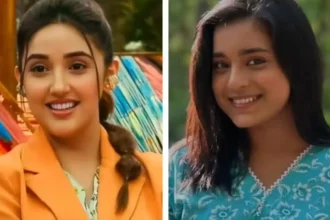





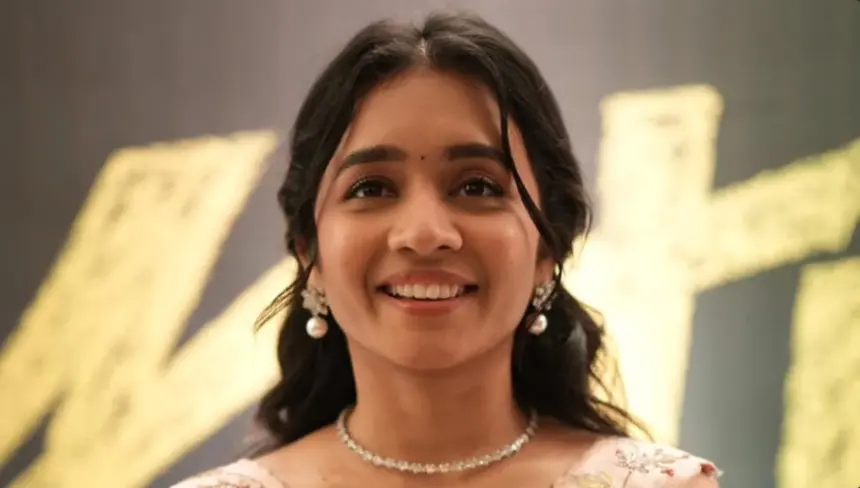
Anishma Anilkumar has been quietly building an impressive body of work, one role at a time. With three Tamil films showcasing three distinctly different performances, the young actor is emerging as a talent worth watching.
Her journey has been gradual. She made her Malayalam film debut with Poovan in 2023 and went on to appear in projects such as I Am Kathalan and the Basil Joseph-starrer Maranamass. Her Tamil breakthrough came with Sirai, followed by Youth and Modha Rathiri.
What makes this run particularly interesting is not simply that the films found an audience. It is the variety of characters Anishma has played across them. In three films, she has portrayed three very different women, each requiring a distinct emotional register and a different approach to performance.
It began with Kalaiyarasi in Sirai
In Sirai, Anishma played Kalaiyarasi, a young woman whose love for her partner remains unwavering even when her family and its caste-based prejudices stand in the way.
Based on a real incident, the film explored love, caste and social prejudice. Its emotional impact depended in part on Anishma’s ability to make Kalaiyarasi’s determination feel genuine. Rather than portraying her as a conventional romantic heroine, she brought out the courage of a young woman determined to stand by her partner despite the people and circumstances trying to separate them.
There was innocence in her performance, along with a sense of helplessness and kindness that came through in her expressions. Kalaiyarasi’s resolve did not depend on exaggerated dramatic gestures. Instead, Anishma conveyed the character’s emotional strength through quieter moments, making her struggles feel personal and believable.
The performance introduced Tamil audiences to an actor capable of carrying considerable emotional weight. Although she had already established a presence in Malayalam cinema, Sirai gave her an opportunity to reach a new audience and demonstrate her potential in a different film industry.
Youth brought out her nostalgic, playful side
If Sirai demonstrated Anishma’s ability to handle an emotionally demanding character, Ken Karunaas’ school drama Youth revealed a lighter side of her acting.
She played Kanagavalli, one of the film’s three female leads. Studious, earnest and a devoted Dhanush fan, Kanagavalli embodies the excitement, awkwardness and innocence associated with school life.
Anishma brought warmth and sweetness to the character, using her expressions and comic timing to make Kanagavalli relatable. It was a noticeable departure from Kalaiyarasi’s emotional intensity, and the change worked in her favour.
The performance did not rely on turning the character into an exaggerated version of a schoolgirl. Instead, Anishma found the small details that made Kanagavalli feel familiar: her enthusiasm, her youthful earnestness and the emotions that can seem enormous when experienced for the first time.
Youth demonstrated that Anishma could move beyond intense dramatic roles and bring charm and humour to the screen without losing the character’s authenticity.
In Modha Rathiri, she gives suppressed emotions a voice
With Modha Rathiri, Anishma made another shift, taking on the role of Muthuselvi, a woman entering an arranged marriage under the weight of family expectations.
The character carries years of thoughts, emotions and frustrations that she has rarely been allowed to express. While the film revolves around the chaos surrounding a wedding night, Muthuselvi’s predicament touches on a broader issue: women being expected to accept decisions made for them while keeping their own wishes and unhappiness to themselves.
Anishma has relatively little dialogue with which to communicate the full extent of the character’s inner conflict. Much of the performance rests on her facial expressions, body language and the emotions that gradually surface.
And then comes the scream.
It is more than a dramatic outburst. It feels like the release of accumulated frustration, anger and helplessness. The moment carries weight because Muthuselvi has spent much of the film holding her emotions in. When that restraint finally breaks, the result is visceral.
Anishma has spoken about being drawn to Muthuselvi’s inner world: a woman who carries a great deal within herself without necessarily expressing it openly. She has also described the film as an opportunity to explore a more mature side of her acting.
That makes the role an important step in her early career. Muthuselvi requires Anishma to communicate not just what the character feels, but also what she has been unable to say.
Anishma Anilkumar is not repeating the same performance
Young actors are often celebrated when a film becomes a major commercial success. Mamitha Baiju’s recent popularity is one example of how a successful run can bring an actor into the spotlight. But commercial visibility is only one part of building a lasting career. The ability to take on contrasting roles can be just as important.
Anishma’s three Tamil films have given her an opportunity to demonstrate precisely that range.
Sirai demanded vulnerability and quiet determination. Youth called for charm, comic ease and youthful enthusiasm. Modha Rathiri required restraint before allowing deeply buried emotions to surface.
Across these films, Anishma has not simply repeated the approach that worked previously. She has moved from one kind of character to another, adjusting her performance to suit each woman’s circumstances and emotional world.
That willingness to explore different roles is what makes her trajectory interesting. Rather than being defined by a single character or one particular screen persona, she is beginning to establish herself through variety.
Three Tamil films, three different women and three distinct performances make for a compelling start. If Anishma continues to find roles that challenge her in different ways, she could become an increasingly familiar name to audiences beyond Malayalam cinema.