






A new documentary about convicted Theranos founder Elizabeth Holmes has taken an unexpected route to the screen. Created by filmmaker Lance Oppenheim and comedian Nathan Fielder, You Can See Everything received a surprise world premiere at the Telluride Film Festival before its planned theatrical release through A24.
Elizabeth Holmes is once again at the center of a major documentary project—but this time, the filmmaker behind the camera is not approaching her story in the conventional way.
You Can See Everything, a new three-hour documentary directed by Lance Oppenheim with comedian Nathan Fielder involved in the project, made its world premiere at the Telluride Film Festival in a surprise screening.
Festivalgoers reportedly were not told the identity of the film before entering the screening, making the unveiling one of the more unexpected moments of the festival.
See more of our coverage in your search results.
Add Hunterfly on GoogleThe documentary is expected to receive a theatrical release from A24 on October 16.
Elizabeth Holmes Invited the Filmmakers Into Her Life
The project began at a remarkable moment in Holmes’ life.
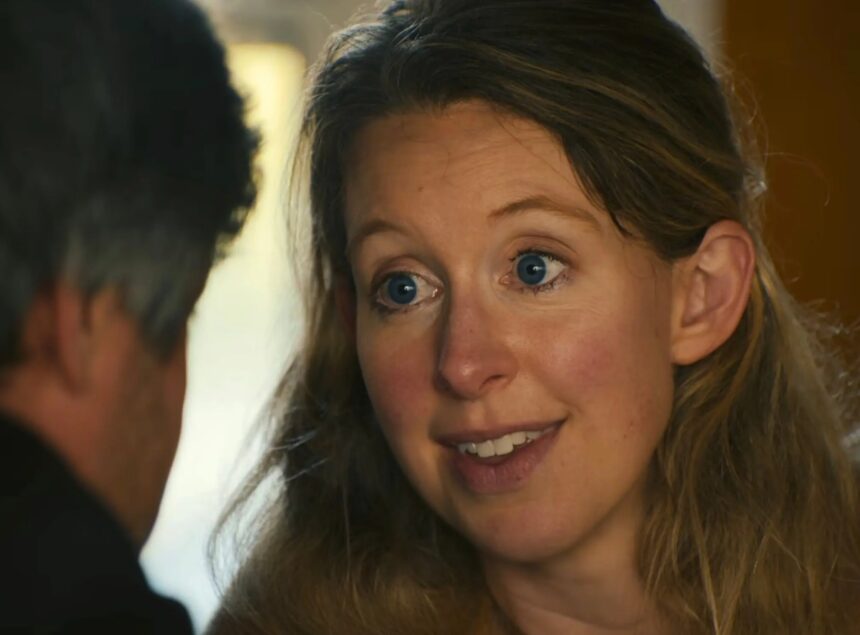
Shortly before she was due to report to prison, Holmes allowed a camera crew into the Southern California home she was renting. She had been convicted in connection with the collapse of Theranos, the blood-testing company she founded, and was preparing to begin her prison sentence.
Holmes’ decision to participate in a documentary offered the filmmakers access to a subject who had previously become one of the most closely scrutinized figures in the technology and business world.
Rather than producing a conventional retrospective about Theranos, however, Oppenheim and Fielder spent years following their subject.
See more of our coverage in your search results.
Add Hunterfly on GoogleWhat began as an attempt to document Holmes became a much longer filmmaking process.
Nathan Fielder Brings an Unusual Perspective
Fielder’s involvement makes You Can See Everything particularly intriguing.
Best known for his unconventional comedy projects, including Nathan for You, Fielder has built a career around blurring the boundaries between documentary-style observation, performance and reality.
See more of our coverage in your search results.
Add Hunterfly on GoogleHis presence alongside Oppenheim creates an unusual combination.
Oppenheim has developed a reputation for intimate, character-driven documentary filmmaking, while Fielder is known for exploring human behavior through deliberately awkward and unpredictable situations.
Together, they approached Holmes’ story over a period of roughly three years.
That extended access appears to have allowed the film to move beyond the familiar headlines surrounding Theranos and focus more closely on Holmes herself.
From Theranos Founder to Convicted Executive
Holmes became one of Silicon Valley’s most prominent entrepreneurs after founding Theranos and promoting the company’s ambition to transform medical testing.
The company claimed it could conduct a wide range of blood tests using very small quantities of blood.
The story eventually collapsed under scrutiny.
Investigations and reporting raised serious questions about the company’s technology and claims, leading to the unraveling of Theranos and a criminal case against Holmes.
She was ultimately convicted on multiple federal fraud charges relating to investors.
Her legal troubles transformed her from a celebrated technology entrepreneur into one of the most prominent examples of corporate deception in recent American business history.
Her story has already been examined through books, podcasts, television programs and documentaries.
You Can See Everything, however, takes a different approach by giving Holmes herself substantial access to the filmmaking process.
A Documentary That Began Before Prison
The timing of the production gives the documentary an unusual chronological framework.
Holmes’ decision to participate came shortly before she entered federal custody to serve her sentence. That means the filmmakers began recording at a pivotal point when the former Theranos chief was confronting the consequences of the company’s collapse and her criminal conviction.
Instead of only examining events from a distance, the documentary was able to observe Holmes during a period of profound personal transition.
The resulting footage was then developed over several years.
That timeline raises an important question at the heart of the film: what happens when a documentary subject attempts to shape the story being told about them?
The Film Challenges the Conventional Documentary Formula
The most intriguing aspect of You Can See Everything may be its format.
Traditional documentaries about controversial public figures generally rely on interviews with journalists, investigators, colleagues, family members and experts, supported by archival material.
This project appears to take a more complicated route.
Holmes is not simply being discussed by people who knew her. She becomes an active participant in a filmmaking process involving two creators with very different approaches to storytelling.
That creates an unusual tension between subject and filmmaker.
Holmes has previously had her story told through accounts that were often highly critical of her business practices. A documentary in which she participates directly gives her an opportunity to present her own perspective.
At the same time, giving a subject access to the camera does not necessarily mean giving that person control over the final narrative.
That distinction could become one of the central themes of the film.
You Can See Everything Arrives After Years of Theranos Coverage
The Theranos scandal has already generated enormous public interest.
Holmes’ rise and downfall became a defining Silicon Valley story, raising questions about startup culture, investor confidence, corporate governance and the willingness of powerful people to believe extraordinary technological claims.
Her distinctive public image also became part of the story.
The black turtlenecks, carefully managed public appearances and ambitious promises surrounding Theranos helped establish Holmes as a symbol of entrepreneurial disruption before the company’s claims came under sustained scrutiny.
The collapse was therefore more than a failed business story.
It became a broader cultural debate about how charisma, ambition and reputation can influence the way companies are evaluated.
Why the Telluride Premiere Matters
Telluride has long been an important destination for filmmakers and distributors seeking to introduce notable films to audiences and industry insiders.
The decision to screen You Can See Everything without publicly revealing its identity beforehand created an additional layer of intrigue.
Surprise screenings can generate immediate conversation because audiences encounter a film without the expectations created by a conventional marketing campaign.
For a documentary about one of the most recognizable corporate scandals of the past decade, that strategy is particularly fitting.
The film itself is built around uncertainty: how much should audiences believe a subject who has spent years defending her own story, and how should filmmakers navigate access to someone whose public reputation is already so firmly established?
A24 Will Bring the Film to Theaters
Following its Telluride premiere, You Can See Everything is scheduled for a theatrical release through A24 on October 16.
The distributor’s involvement places the documentary in the broader independent-film landscape rather than treating it simply as another true-crime or corporate-scandal title.
Its unusual creative team could also help it reach audiences beyond viewers already interested in the Theranos case.
For people familiar with Fielder’s work, the project represents a surprising expansion of his documentary and reality-based storytelling interests. For audiences who have followed Oppenheim’s filmmaking, it offers another character-focused exploration built around unusually close access.
Elizabeth Holmes’ Story Gets Another Chapter
The public story of Elizabeth Holmes has already been told many times.
But You Can See Everything arrives with something most previous accounts could not offer: extended access to Holmes herself during a crucial period of her life.
That access could make the film more revealing—or raise even more questions about how a controversial public figure attempts to reclaim control over her own narrative.
Either way, the documentary’s unusual creation, surprise Telluride premiere and combination of Lance Oppenheim’s filmmaking with Nathan Fielder’s distinctive sensibility make it one of the more unconventional documentary projects surrounding Holmes yet.
You Can See Everything is scheduled to open in theaters on October 16 through A24.