








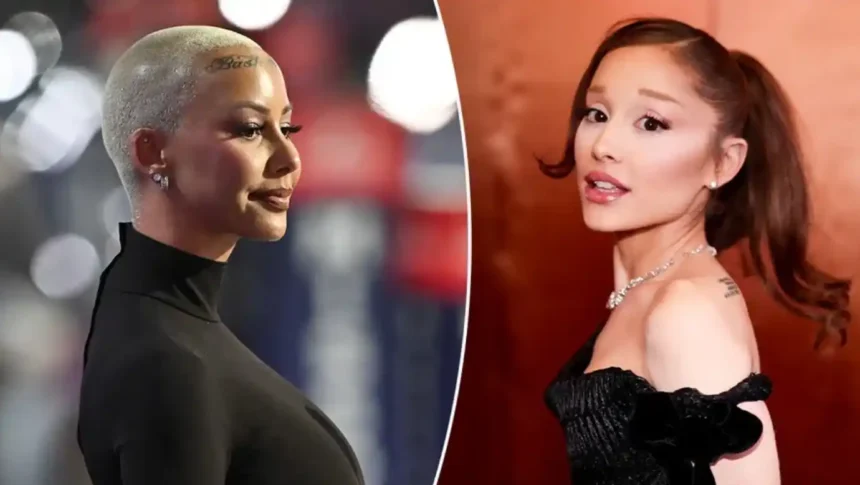
Model and actress Amber Rose has sparked fresh debate around celebrity activism after sharply criticising Ariana Grande for urging Americans to skip work, school and shopping as part of a nationwide protest against U.S. Immigration and Customs Enforcement (ICE).
Rose accused the pop superstar of promoting what she described as “elite hypocrisy”, arguing that wealthy celebrities are disconnected from the economic realities faced by millions of working families.
What Sparked the Controversy
On January 30, Ariana Grande shared an Instagram Story endorsing a “nationwide shutdown”, calling on supporters to halt economic activity for a day in protest of ICE operations.
“ICE out! Nationwide shutdown!
No work. No school. No shopping.
Jan 30, 2026.”
The post quickly went viral, drawing praise from immigration activists — but also fierce backlash from critics who warned that skipping work could have serious consequences for people living paycheck to paycheck.
See more of our coverage in your search results.
Add Hunterfly on GoogleAmber Rose: “That’s Out-of-Touch Activism”
Speaking during a livestream with social media personality Sneako, Amber Rose did not mince words.
“Ariana Grande… she’s worth, what, $250–300 million dollars, telling people not to go to work,” Rose said.
“Girl, shut the f— up.”
Rose argued that while celebrities can afford to take political stances without financial consequences, everyday Americans cannot.
“Do you want to give your money away to help people stay home from work?” she continued.
“Stop telling people not to work, not to go to school, not to buy food for their families.”
Her comments resonated widely online, with many users echoing concerns about the economic impact of protest calls issued by ultra-wealthy figures.
Debate Over Celebrity Activism and Privilege
The exchange has reignited a long-running debate about celebrity involvement in political activism — particularly when calls to action may disproportionately affect lower-income communities.
Critics argue that messaging from high-net-worth entertainers can overlook real-world consequences, while supporters counter that celebrities have a responsibility to use their platforms to spotlight injustice.
See more of our coverage in your search results.
Add Hunterfly on GoogleRose made it clear where she stands.
“Anyone worth hundreds of millions telling people to skip their livelihood should stay quiet,” she said.
Rose Defends Nicki Minaj Amid Political Criticism
During the same conversation, Rose addressed criticism surrounding Nicki Minaj’s political associations, including a previously viral meeting with President Donald Trump.
Rose revealed that she personally introduced Minaj to Trump and defended her longtime friend.
See more of our coverage in your search results.
Add Hunterfly on Google“Nicki has pledged a lot of money to help young girls,” Rose said.
“You don’t have to agree with her politics — she’s still helping people.”
She questioned why celebrities who provide tangible aid often face harsher criticism than those making symbolic political gestures.
Warning Against Violence at Protests
Rose also expressed concern about the growing hostility toward federal law enforcement officers during recent ICE protests.
“You can’t kick, spit on, or attack federal agents — whether you like them or not,” she said.
“That’s how people get hurt.”
Her remarks come amid heightened tensions following recent deadly encounters involving ICE officers, including the fatal shooting of Renee Nicole Good during an incident in Minneapolis earlier this month, and the killing of protester Alex Pretti on January 24.
Protests have since erupted across multiple U.S. cities, with local officials — including Minneapolis Mayor Jacob Frey — voicing criticism of ICE operations.
A Larger Cultural Divide
The clash between Amber Rose and Ariana Grande underscores a deeper cultural divide over how activism should be expressed, who bears the cost, and whether celebrity influence helps or harms public discourse.
As nationwide protests continue and public frustration grows, the conversation around privilege, protest, and responsibility shows no signs of slowing down.