




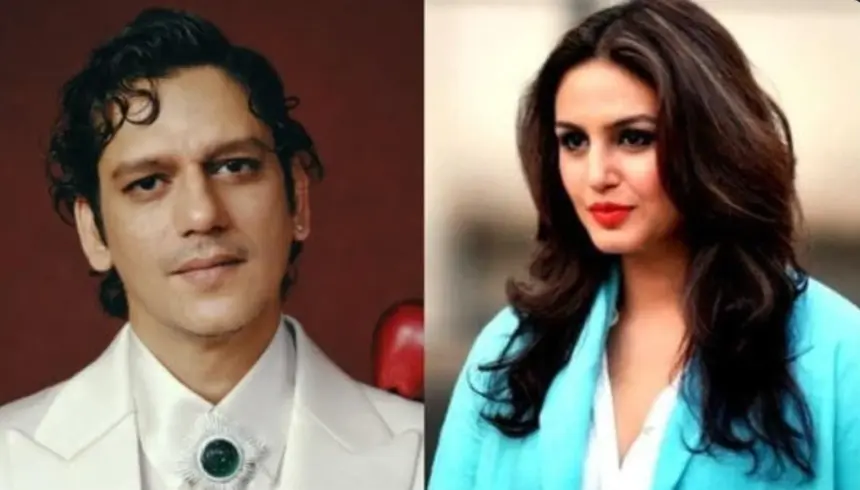
Bollywood actors Vijay Varma and Huma Qureshi have weighed in on the protests against Chief Election Commissioner Gyanesh Kumar, expressing their views on social media as demonstrations and police detentions in Delhi drew attention.
While Vijay Varma used satire to comment on the support extended to the Chief Election Commissioner, Huma Qureshi issued a statement defending the right to peaceful protest and calling for accountability. The demonstrations, organised by the Cockroach Janta Party (CJP), called for Kumar’s resignation over alleged irregularities linked to the Special Intensive Revision (SIR) of electoral rolls.
Vijay Varma’s ‘Saving Private Gyan’ Post
Vijay Varma took to Instagram to share a satirical post featuring Chief Election Commissioner Gyanesh Kumar. The image carried the phrase “The face of free and fair election” alongside the tagline “Saving Private Gyan”.
The wording referenced Saving Private Ryan, the 1998 Hollywood war film starring Tom Hanks, which follows a military mission to rescue an American paratrooper during World War II.
Accompanying the image, Varma wrote: “Happy to the see the forces joining together to save our national hero. Protect him at ANY cost.”
The post appeared to use sarcasm to question the support being extended to Kumar amid the controversy surrounding the electoral-roll revision process. Varma’s remarks added a celebrity voice to the wider public discussion surrounding the protests.
Huma Qureshi Says Peaceful Dissent Is Not a Crime
Huma Qureshi also expressed concern over the detention of protesters, emphasising the importance of peaceful demonstration and accountability in a democracy.
In her statement, the actor wrote: “We are the world’s largest democracy. The right to peaceful protest and the demand for accountability are fundamental democratic rights, not favours granted by those in power. Peaceful dissent is not a crime. Asking questions is not a crime. Demanding accountability is not a crime.”
She argued that citizens should be able to express their views without fear of intimidation or harassment, adding that suppressing peaceful demonstrations undermines democratic values.
Qureshi also clarified that her statement was not an endorsement of any particular political party or individual. Instead, she said her support was directed towards citizens seeking accountability and exercising their right to dissent.
“Let me be clear: I stand with no political party or individual. I stand with citizens demanding accountability, with peaceful protesters, and with every Indian exercising their democratic right to dissent,” she wrote.
The actor acknowledged that speaking publicly about political and civic issues could invite online abuse, personal attacks, scrutiny of her finances and possible professional consequences. She said she was prepared to face such reactions rather than remain silent.
Concluding her statement, Qureshi wrote: “Patriotism is not blind silence. Democracy is not blind obedience. And dissent is not anti-national. The world is watching. We must do better. Jai Hind.”
Her message focused on the principle of peaceful dissent and the right to question public institutions, rather than support for a particular political organisation.
What Happened During the CJP Protests in Delhi?
The demonstrations in Delhi were organised to demand the resignation of Chief Election Commissioner Gyanesh Kumar over alleged irregularities in the Special Intensive Revision of electoral rolls.
Police tightened security around Jantar Mantar ahead of the planned gathering, and multiple demonstrators were detained as authorities attempted to prevent protesters from reaching the site.
CJP leaders, including Abhijeet Dipke and Saurav Das, were among those detained. They were subsequently released, according to reports. AISA president Neha Bora was also reportedly detained by Delhi Police at Connaught Place.
Protest activity continued into Sunday, even as questions about the detentions and the handling of demonstrators remained part of the public debate.
The allegations concerning the SIR process, the circumstances of individual detentions and the police response should be assessed separately. The celebrities’ social media statements reflect their own positions on the controversy and do not, by themselves, establish the validity of the allegations against the election authorities.
Bollywood Voices Enter the Debate
Varma’s satirical post and Qureshi’s statement brought two distinct celebrity responses to the same controversy into public view. Varma used a film reference and pointed humour to comment on the situation, while Qureshi centred her remarks on peaceful protest, democratic participation and accountability.
Their comments come amid wider public discussion about the limits of protest, the conduct of authorities and citizens’ ability to question public institutions.
As the debate continues, the key issues remain the allegations surrounding electoral-roll revision, the legal basis and circumstances of the reported detentions, and the protection of lawful democratic expression.