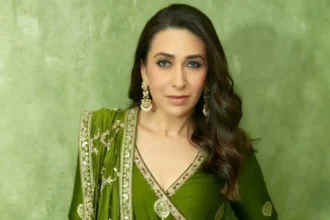






Tamannaah Bhatia has increasingly become one of the most recognizable performers associated with high-energy dance numbers in Indian cinema. Her combination of sharp expressions, confident movement and screen presence has helped turn several songs into major talking points among audiences.
The conversation resurfaced after the release of “Tum Mere Na Huye” from Thamma, with some social media users comparing the performance with Tamannaah’s work in popular dance tracks.
Fans bring Tamannaah Bhatia into the Thamma song conversation
Following the unveiling of “Tum Mere Na Huye”, a section of viewers took to social media to discuss the performance and express their preference for Tamannaah’s distinctive dance style.
Some comments specifically compared the performers, while others said they would have liked to see Tamannaah associated with the song. Several users referred to her expressions and stage presence as qualities they believe have become closely associated with her dance performances.
See more of our coverage in your search results.
Add Hunterfly on GoogleThe online discussion is subjective, with reactions varying from one viewer to another. However, the recurring references to Tamannaah demonstrate how strongly her dance numbers have shaped her image among mainstream Indian cinema audiences.
Why Tamannaah Bhatia has become a familiar face in dance tracks
Over the past few years, Tamannaah has appeared in a number of high-profile songs that have generated considerable attention online.
Her performance in “Aaj Ki Raat” from Stree 2 became one of the most widely discussed dance appearances of her recent career. The song’s popularity further strengthened Tamannaah’s reputation as a performer capable of commanding attention within a music sequence.
She has also featured in tracks such as “Kaavaalaa”, “Achacho” and “Ghafoor”, adding to a growing catalogue of music appearances that have kept her visible beyond conventional film roles.
Rather than relying only on choreography, Tamannaah’s performances are often built around facial expressions, timing and an ability to maintain a strong screen presence throughout a song.
See more of our coverage in your search results.
Add Hunterfly on Google“Aaj Ki Raat” became a major milestone
“Aaj Ki Raat” emerged as a significant cultural moment for Tamannaah. Her performance in the song from Stree 2 generated extensive attention across social platforms and video-sharing services.
The track also demonstrated the commercial importance of a recognizable performer in a film song. A successful dance number can become an independent promotional asset for a movie, generating conversations and attracting viewers who may encounter the song before watching the film.
Tamannaah’s performance became a major part of that conversation, reinforcing her standing as one of the industry’s sought-after performers for energetic songs.
See more of our coverage in your search results.
Add Hunterfly on GoogleKaavaalaa added another viral dance moment
Before “Aaj Ki Raat”, Tamannaah had already gained widespread attention for “Kaavaalaa” from the Rajinikanth-starrer Jailer.
The song became a major online trend, with Tamannaah’s choreography and expressions receiving significant attention from viewers. Its popularity also demonstrated her ability to connect with audiences across language and regional boundaries.
That Pan-India appeal has become an important part of Tamannaah’s image as a performer.
More than choreography: the importance of expressions
Dance numbers in Indian cinema depend on several elements working together, including choreography, music, costumes, editing, camera movement and the performer’s ability to communicate with the audience.
Tamannaah’s appeal in such sequences has often been linked to her expressions as much as her dance movements.
That ability to convey attitude and emotion through a few seconds of screen time can make a song memorable, particularly in short-form clips and social media edits where individual expressions and dance steps are frequently reproduced.
Why filmmakers continue to see value in Tamannaah’s screen presence
A successful song can give a film substantial visibility before and after its theatrical release. For performers, it can also become a signature moment that remains associated with their careers.
Tamannaah has developed a reputation for making such appearances count. Her work in popular dance tracks has allowed her to maintain a strong connection with audiences even when the song itself exists separately from the broader film narrative.
The latest online discussion surrounding “Tum Mere Na Huye” once again places that reputation in the spotlight.
Whether audiences prefer one performer over another ultimately comes down to personal taste. But the continued references to Tamannaah’s earlier songs show that her performances have left a lasting impression.
Tamannaah Bhatia’s dance legacy continues to evolve
From “Kaavaalaa” to “Aaj Ki Raat” and other music appearances, Tamannaah Bhatia has established a distinctive identity within the world of Indian cinema’s dance numbers.
Her ability to combine choreography with expressions and camera-friendly screen presence has made her a particularly recognizable performer in this space.
The reaction to Thamma‘s “Tum Mere Na Huye” is therefore less about declaring a definitive winner and more about demonstrating the benchmark Tamannaah has created through her previous performances.
As Indian film music continues to dominate streaming platforms and social media, performers who can turn a few minutes of screen time into a memorable visual moment are likely to remain central to the promotional and cultural life of cinema.
About Tamannaah Bhatia
Tamannaah Bhatia is an Indian actor known for her work across Hindi, Telugu and Tamil cinema. Alongside her film roles, she has appeared in several prominent music sequences that have become widely recognized among Indian audiences.