








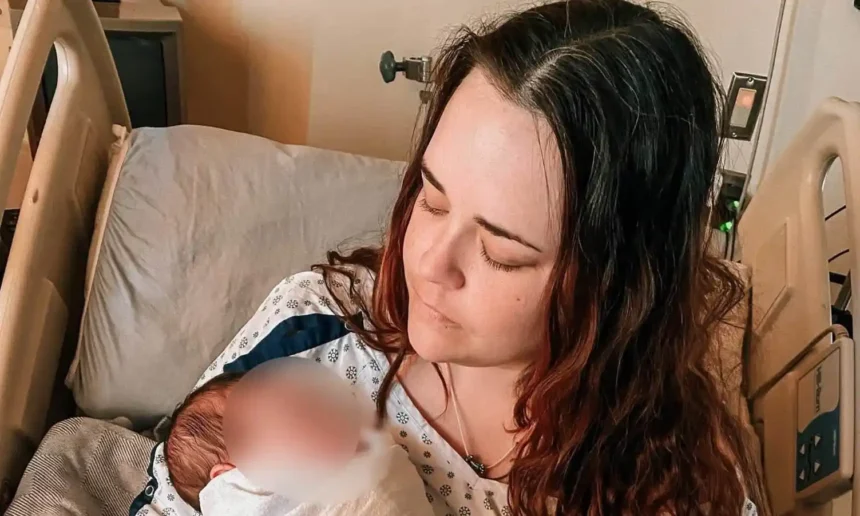
For Dawn Wickhorst, surrogacy was never about attention or praise. It was about purpose.
But as she carried babies for two different couples, the emotional isolation of the journey became impossible to ignore.
The 33-year-old single mother of five from Alberta, Canada, has spoken candidly about the often-unseen emotional toll of surrogacy—describing moments where she felt “completely invisible and lonely,” even while doing something deeply meaningful.
‘You’re the Vessel—But Not the Family’
Dawn first chose to become a surrogate in 2019 after interviewing an author about infertility and realising how many people struggle to conceive.
“I didn’t realise how lucky I was,” she said.
“I’ve had five children of my own, and my pregnancies went well. I felt like my body could do good for somebody else.”
See more of our coverage in your search results.
Add Hunterfly on GoogleShe went on to carry babies for two gay male couples, but doing so without a partner left her feeling isolated.
“As a surrogate, you’re such an important part of the process,” Dawn said.
“But you’re also not part of the family.”
While the intended parents planned nurseries and imagined life with their child, Dawn was managing pregnancy sickness, body changes, and daily life—alone.
“I was trying to manage all of my kids while being pregnant, feeling sick, and handling all these changes in my body,” she said.
“There’s this unspoken expectation that because you chose this, you should just ‘handle it’ quietly.”
The Loneliness No One Talks About
The hardest part, Dawn says, wasn’t giving the baby away.
It was the silence.
“I remember sitting in waiting rooms alone,” she said.
“Managing big feelings quietly. Then going home and jumping straight back into single-mum responsibilities—with no pause to process what I was carrying, literally and emotionally.”
In Canada, paid surrogacy is illegal, meaning Dawn completed the process altruistically. While she found it deeply rewarding, the lack of structured emotional support made the journey heavier.
See more of our coverage in your search results.
Add Hunterfly on Google“Feeling lonely doesn’t mean you regret the journey,” she said.
“It just means you’re human.”
Why Surrogates Are Often Overlooked
Dawn’s story comes as surrogacy becomes increasingly common among high-profile celebrities, often away from public scrutiny.
Recently, Meghan Trainor revealed she and husband Daryl Sabara welcomed their third child via surrogate after medical advice not to carry again—sparking public debate.
Other celebrities who have used surrogates include:
See more of our coverage in your search results.
Add Hunterfly on Google- Kim Kardashian
- Paris Hilton
- Priyanka Chopra & Nick Jonas
- Rebel Wilson
While intended parents often speak openly about joy and gratitude, the voices of surrogates themselves are rarely amplified.
“That contrast can make surrogates feel overlooked,” Dawn said, especially when they’re navigating intense physical symptoms like nausea and back pain while caring for their own families.
Choosing the Intended Parents
After signing up with an agency, Dawn was given profiles of intended parents. One profile stood out immediately.
“They had a big red label that said ‘HIV positive’,” she recalled.
“But when I read their story—how they fell in love, their values—I couldn’t imagine them not being able to have a baby because of that label.”
They officially matched, though the COVID-19 pandemic delayed the embryo transfer until August 2020.
“The doctor implanted the embryo so fast and said, ‘Congratulations, you’re pregnant,’” she said.
“It felt natural—but strange knowing I wouldn’t have a baby at the end.”
Handing the Baby Over—and Letting Go
Contrary to common belief, Dawn says giving the baby to his parents wasn’t the hardest part.
“That moment was actually the highlight,” she said.
“It was emotional and beautiful to watch.”
What followed, however, was a quieter grief.
“My whole life revolved around having a baby for this couple,” she said.
“And then suddenly, it was over.”
Why Support Systems Matter
Dawn now urges anyone considering surrogacy to build a strong support network before beginning the journey.
“I didn’t have a partner,” she said.
“And the intended parents didn’t live near me, so there wasn’t day-to-day support.”
She believes formal support groups and mental-health resources for surrogates could make a significant difference.
“It would be amazing if there were more services so it doesn’t feel so lonely,” she said.
No Regret—But a Clear Limit
Despite the emotional strain, Dawn does not regret becoming a surrogate. The experience gave her a sense of purpose—and led her to do it a second time in 2024.
Now, after seven pregnancies, she believes her body has reached its limit.
“I think my body is done,” she said.
Dawn is currently writing a memoir about her experiences and shares her journey on social media at @onceupona_daw, hoping her honesty will help others better understand the realities of surrogacy.