




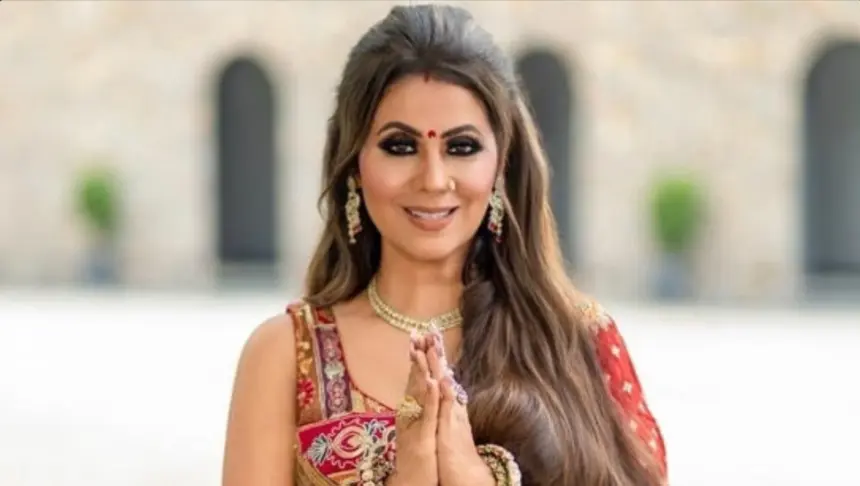
Devotional music is finding a renewed audience among young listeners, and singer Sonia Arora believes the growing interest reflects a wider search for comfort, spirituality and emotional connection.
The Delhi-based devotional singer, known for her rendition of Shukar Karaan Guruji, recently spoke about the emotional power of bhajans, her own connection with Maine Tere Hi Bharose and the rise of bhajan clubbing among younger audiences.
For Arora, devotional music is not simply about melody or musical technique. She believes its impact comes from the emotion and sincerity carried by the singer’s voice.
Sonia Arora connects with Maine Tere Hi Bharose
Arora was particularly moved when she heard singer Suneel Lodhi’s rendition of Maine Tere Hi Bharose from the recently released film Hanuman Ansh.
Rather than focusing on the technical aspects of the composition, Arora said she was drawn to the emotion in Lodhi’s performance. She eventually decided to lend her own voice to the bhajan.
Explaining what stood out to her, Arora said:
“Jo Suneel ji ne gaaya hai, bilkul dil se. Bahut time baad kisi ke bhaav sune us gaane mein.”
She said the simplicity of Lodhi’s rendition was particularly powerful, especially when performed with an ektara, a traditional one-stringed musical instrument.
“Lay, taal, music sab chhod do. Sirf ektara pe unhone jo gaaya hai, uske bhaav. Sirf gaayaki nahin hai, usme roohdaari ka maamla hai..matlab rooh (soul) se nikli hui awaaz.. Bas yahi mujhe aur poori duniya ko lubhaya.”
For Arora, that emotional quality is what gives devotional music its ability to connect with listeners beyond conventional musical arrangements.
Why Sonia Arora believes young people are turning to bhajans
Arora believes the growing popularity of devotional songs among younger listeners reflects an emotional need that many people are experiencing.
She pointed to the popularity of songs such as Maine Tere Hi Bharose on social media as part of a wider trend, arguing that members of Gen Z are increasingly looking towards spirituality for comfort and connection.
“Har insaan thaka hua hai. Andar hi andar koi na koi khaalipan hai har insaan mein jo sirf ishwar hi bhar sakta hai.”
According to Arora, people can turn towards faith for different reasons, including seeking solace or expressing gratitude.
She sees the growing popularity of bhajan clubbing as another expression of this interest in spirituality.
Bhajan clubbing creates a sense of togetherness
Bhajan clubbing has emerged as a contemporary way for groups of people, including younger audiences, to experience devotional music together.
Arora believes these gatherings appeal because they combine music, community and spiritual expression.
She said:
“Jab sab ek saath ibaadat karte hain, woh jo positive energies hoti hain, aisa lagta hai jaise Bhagwan ke saath saakshaat baat kar rahe hain.”
She added that she does not know how far the trend will develop, but described the experience of performing or listening to bhajans in such settings as deeply spiritual.
“Ye kahan tak jaayega, yeh to pata nahi, but jab bhajan clubbing mein hum log gaate hain ya jo hum bhi sunte hain, to aisa lagta hai maano ishwar ke saakshaat darshan hote hain.”
Arora also referred to Prime Minister Narendra Modi’s public participation in and comments about the trend.
Sonia Arora compares nightclubs and bhajan gatherings
Arora does not see the rise of bhajan clubbing as necessarily requiring a rejection of conventional nightlife.
She said:
“Nightclubs kharab nahin hain… magar youth jo galat raaste pe ja raha tha, usse main kehti hoon… 50% to sort ho gaya jo ab bhajan attend karte hain.”
Her broader argument is that young people can have spaces where they socialise while also engaging with spirituality.
Rather than simply contrasting nightlife and devotional gatherings, her comments present bhajan clubbing as another social environment through which younger audiences can find community and emotional connection.
Sonia Arora raises concerns over AI in music
While Arora is enthusiastic about the growing interest in devotional music, she expressed strong concerns about artificial intelligence and its expanding role in the music industry.
She believes AI-generated music could threaten the livelihoods of singers, musicians, lyricists and music directors.
“AI bilkul humare singers ko barbaad karne ka hi hai. Kisi ki zaroorat nahin padegi kal ko.”
She continued:
“Jitne musicians hain, aaj jo music directors hain, lyrics jo likh rahe hain, jo unko ga rahe hain, sabke darwaaze band ho jaate hain.”
Her concerns centre on the possibility that technology could increasingly replicate creative work traditionally performed by human artists.
‘Itna dil toota’ when she learned songs were AI-generated
Arora said the emotional response to music is another reason she believes human performers remain important.
She recalled being disappointed after learning that some songs she had admired were created using AI.
“Kuch songs itne hit ho gaye, lekin jab humein pata chala ki AI ne gaaya hai, to itna dil toota… Itna behtareen aapki machine ne ga diya ki insaano ki zaroorat nahin hai.”
For the singer, the identity and emotion of the person behind a voice are central to the listening experience.
She ultimately called for restrictions on AI in music, saying:
“AI bilkul ban hona chahiye khas kar ke music industry mein.”
Her comments reflect an ongoing debate within the music industry about the opportunities offered by generative AI and the concerns surrounding consent, attribution, employment and the use of artists’ voices and creative identities.