




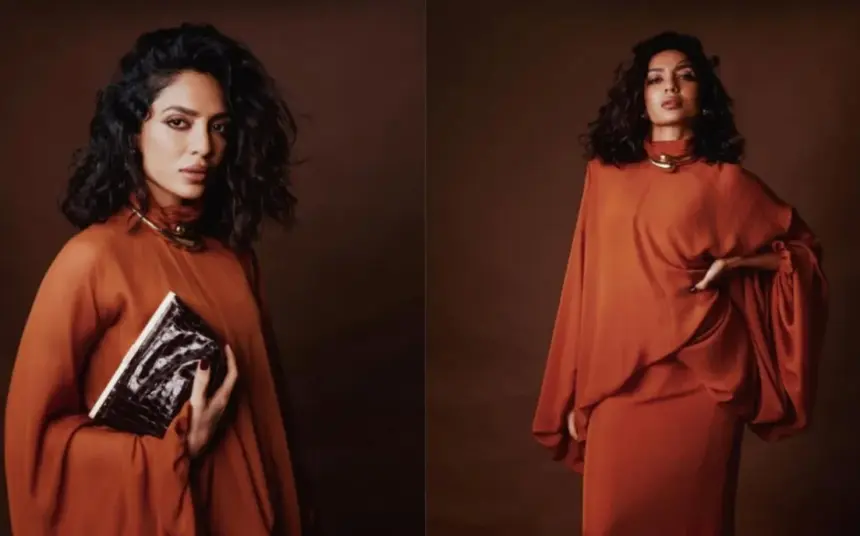
Honoured with the Rule Breaker award, Sobhita Dhulipala embraced experimental fashion in a sculptural Deme creation featuring dramatic draping, feather detailing and statement gold jewellery.
Sobhita Dhulipala has never been one to approach red-carpet fashion without a sense of individuality. Her reported appearance at the Vogue Forces of Fashion Awards was another example of that distinctive style, as the actress stepped out in a striking burnt-orange ensemble that challenged conventional eveningwear silhouettes.
The occasion was particularly fitting. Sobhita was reportedly recognised with the Rule Breaker award, and her outfit reflected the experimental spirit associated with the honour.
Instead of choosing a familiar fitted gown or heavily embellished dress, she opted for a flowing design with exaggerated proportions, architectural draping and feather detailing.
The result was a fashion statement built around shape, texture and confidence rather than conventional red-carpet glamour.
Sobhita Dhulipala’s Burnt-Orange Dress Steals the Spotlight
For the occasion, Sobhita selected the Rosemary dress by Deme, the fashion label founded by designer Gabriella Demetriades.
The burnt-orange creation stands apart because of its unusual construction.
A softly gathered high neckline frames the upper body, while generous sleeves and flowing fabric create a dramatic cape-like effect. The design carries considerable volume through the shoulders and upper half before transitioning into a more fitted skirt.
This contrast gives the outfit its distinctive silhouette.
Rather than depending on intricate embroidery or sparkling embellishments, the dress allows its draping to become the main visual feature.
The fabric falls in sculptural folds, creating movement and dimension that change the appearance of the outfit from different angles.
It is a design that combines the fluidity of traditional draped clothing with the structural experimentation often associated with contemporary runway fashion.
Feather Detailing Adds Drama to the Silhouette
One of the most eye-catching elements of the Rosemary dress is its feather-trimmed hem.
The detailing introduces a playful contrast to the otherwise streamlined lower half of the outfit.
Feathers have long appeared in eveningwear, frequently used to add movement, texture and a theatrical finish. In Sobhita’s ensemble, they provide a decorative accent without overtaking the garment’s larger sculptural shape.
The result is a careful balance between controlled tailoring and expressive embellishment.
The feathered finish also brings a softer texture to the design, contrasting with the clean lines of the fitted skirt and the generous draping above it.
Together, these elements create an outfit that feels deliberately unconventional while retaining a cohesive overall appearance.
Why Burnt Orange Was a Striking Red-Carpet Choice
Colour plays an important role in the impact of Sobhita’s outfit.
Burnt orange is a warm, earthy shade that sits between vibrant orange and deeper rust tones.
Compared with familiar red-carpet choices such as black, silver, champagne and classic red, this colour offers a different visual character.
Its richness complements the dramatic construction of the dress without requiring excessive embellishment.
The shade also works effectively with gold accessories, allowing the jewellery to feel connected to the outfit rather than appearing as a separate statement.
For eveningwear, burnt orange can be paired with bronze, antique gold, deep brown or neutral accessories to create a coordinated palette.
In Sobhita’s case, the relatively restrained colour combination ensures that the unusual proportions of the garment remain the main focus.
Statement Gold Jewellery Complements the Dramatic Draping
Sobhita’s jewellery choices reportedly followed the same sculptural direction as her outfit.
A chunky gold choker provided a defined metallic element against the softly gathered neckline.
The necklace added structure to a look otherwise dominated by flowing fabric.
Rather than pairing it with several additional statement pieces, she kept the remaining jewellery comparatively restrained, choosing gold earrings to complete the styling.
The relationship between the necklace and dress is particularly effective.
The garment introduces movement through its soft folds, while the choker creates a more solid, architectural shape.
This balance between fluid and structured elements gives the ensemble an editorial quality.
It also demonstrates how one carefully chosen accessory can have more impact than multiple competing pieces.
Jimmy Choo Clutch and Sleek Shoes Finish the Look
The accessories continued the outfit’s sophisticated yet experimental approach.
Sobhita reportedly carried a crocodile-effect Jimmy Choo Ganache chain clutch, introducing another texture to the ensemble.
The structured appearance of the bag complemented the bold jewellery and provided a contrast to the softer fabric of the dress.
Pointed slingback shoes completed the look.
Their streamlined design was a practical styling choice for an outfit already defined by volume and dramatic proportions.
More elaborate footwear could have competed with the feather detailing and flowing silhouette.
Instead, the pointed shoes helped keep the overall appearance balanced.
The combination of a textured handbag, sleek footwear and sculptural jewellery illustrates how accessories can support a statement garment without distracting from it.
Voluminous Curls and Bronzed Makeup Add a Relaxed Finish
Sobhita’s beauty styling offered another contrast to the structured elements of the ensemble.
Her hair was reportedly arranged in voluminous curls with a slightly undone finish, adding softness and movement around the face.
The hairstyle worked particularly well with the dress’s dramatic proportions.
Rather than choosing an extremely sleek or tightly arranged hairstyle, the loose curls introduced a more relaxed element.
Her makeup featured warm bronzed tones, defined eyes and a muted lip colour.
The earthy palette complemented the burnt-orange dress and gold accessories, creating consistency throughout the look.
Together, the hairstyle and makeup helped the outfit feel expressive rather than overly formal.
Sobhita’s Playful Reaction to Her Rule Breaker Award
Sobhita’s reported social-media reaction added a humorous note to the occasion.
Sharing her excitement about the recognition, the actress wrote:
“Look mom I got an award for breaking rules 😺”
The caption captured the playful spirit of the honour and reflected the unconventional fashion choice she made for the event.
The Rule Breaker recognition and the outfit formed a fitting combination: both celebrated the idea of taking a different approach rather than relying on established expectations.
The original post and award details should be linked or cited once verified.
What Makes Sobhita Dhulipala’s Look Different?
Several individual elements contribute to the impact of this red-carpet appearance.
The exaggerated upper-body silhouette creates a strong visual identity. The high neckline and flowing sleeves introduce volume, while the fitted lower half provides definition.
The feather trim adds texture and movement without covering the entire garment in decoration.
The warm burnt-orange colour brings richness to the design, and the sculptural gold jewellery reinforces its architectural character.
Finally, the more relaxed hairstyle prevents the outfit from feeling excessively controlled.
What makes the combination work is the interaction between these different elements.
Volume is balanced by fitted tailoring. Fluid fabric is contrasted with solid jewellery. Decorative feathers are offset by relatively minimal footwear.
Each part of the outfit contributes to the overall design rather than competing for attention.
How to Take Styling Inspiration From Sobhita’s Red-Carpet Look
While the Rosemary dress is a distinctive designer creation, its broader styling ideas can be adapted for other occasions.
For someone experimenting with statement eveningwear, a draped dress with one dramatic feature can create an impactful look without requiring elaborate embellishment.
A warm rust or burnt-orange outfit can be paired with gold jewellery for a cohesive colour scheme.
When choosing oversized sleeves or cape-like detailing, a relatively fitted lower silhouette can help balance the proportions.
Similarly, if an outfit features feathers, fringe or another textured finish, simpler shoes and accessories can keep the look visually organised.
Sobhita’s appearance offers a reminder that unconventional fashion does not always require combining numerous bold elements.
Sometimes, the strongest results come from choosing a distinctive silhouette and allowing the rest of the styling to support it.
A Red-Carpet Moment That Celebrates Individuality
Sobhita Dhulipala’s burnt-orange ensemble brings together several elements of contemporary occasionwear: dramatic proportions, experimental draping, textured detailing and confident accessorising.
The Rosemary dress by Deme provided the foundation, while the gold jewellery, structured clutch and softly styled curls completed the appearance.
Beyond its individual design details, the outfit reflects a larger idea in fashion: personal style can be expressed through unexpected choices rather than following a fixed formula.
For an actress reportedly receiving recognition as a Rule Breaker, selecting a dress that challenges familiar red-carpet conventions seems especially appropriate.
And that may be the most memorable aspect of the look. It does not attempt to follow every traditional rule of evening dressing. Instead, it creates its own visual identity.
Have a story tip or feedback? Write to [email protected].