





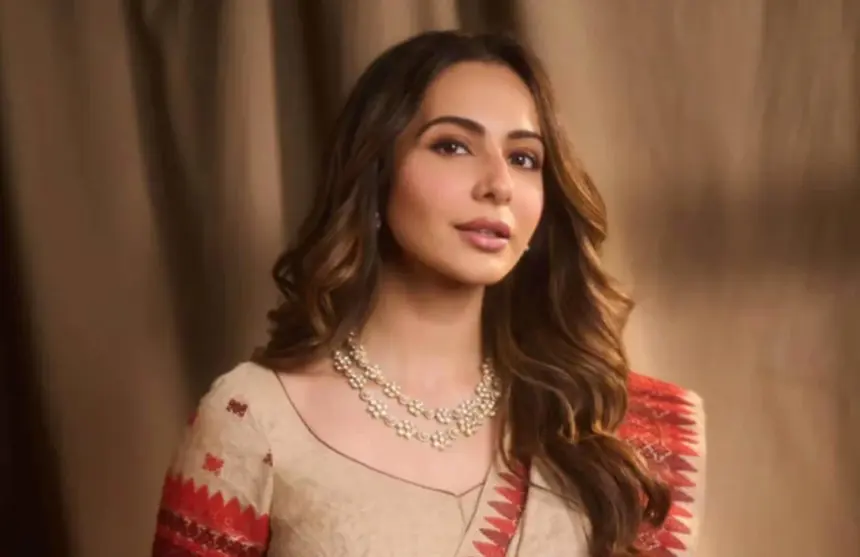
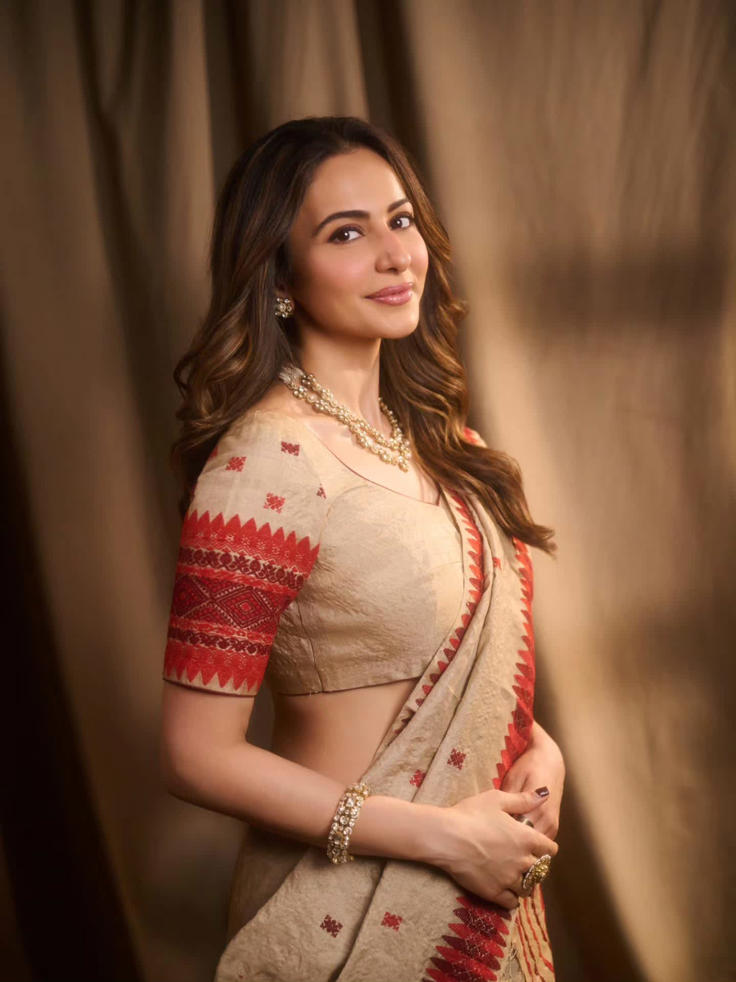
Rakul Preet Singh’s traditional Diwali look puts the spotlight on Assam’s treasured Muga silk, a naturally golden textile celebrated for its distinctive shine, remarkable durability and centuries-old weaving traditions.
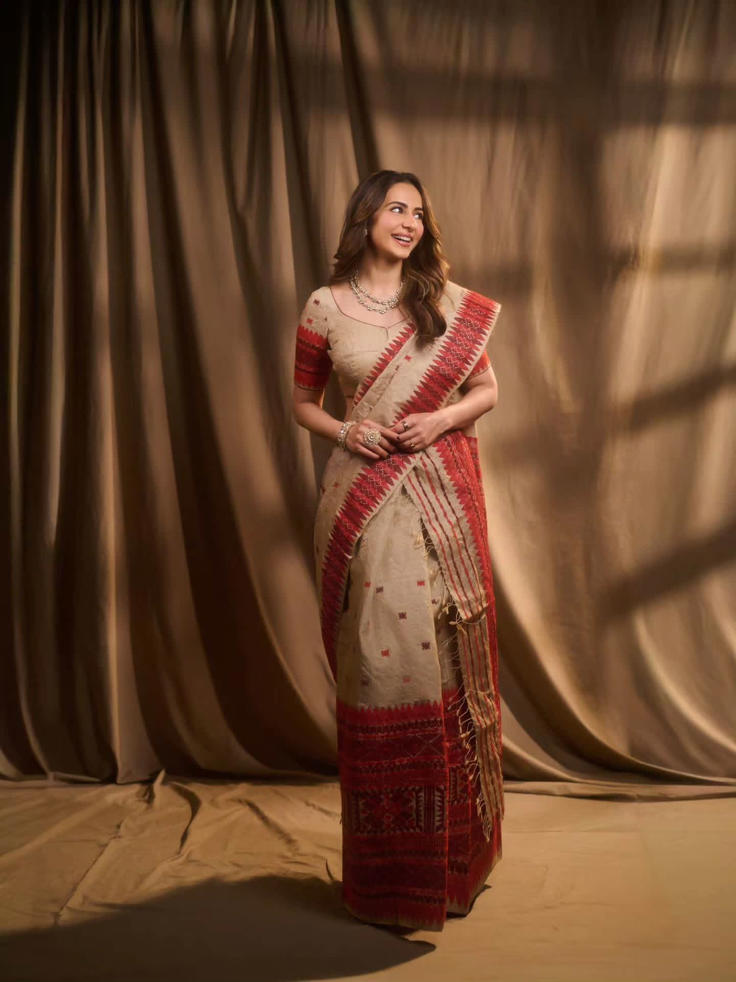
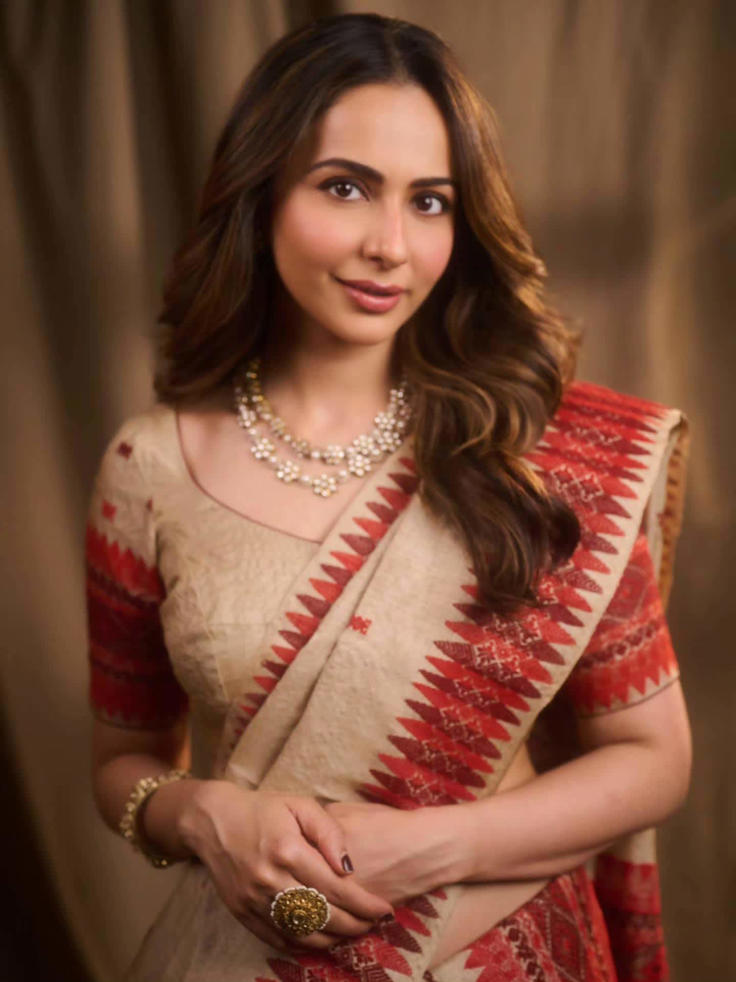
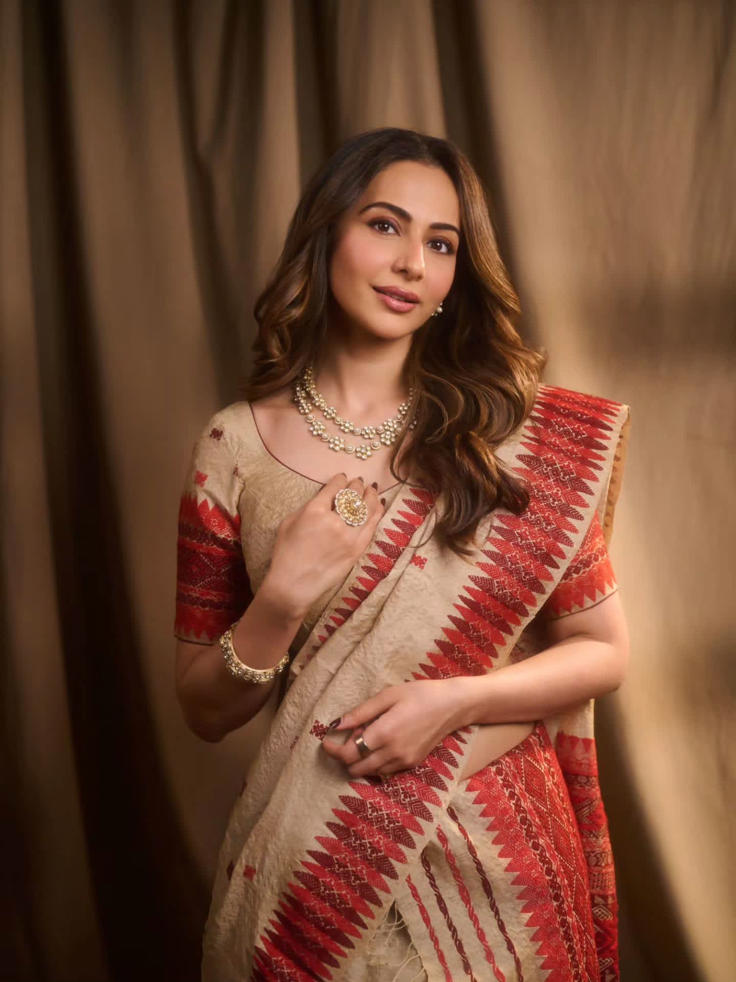
Bollywood actress Rakul Preet Singh has brought attention to Assam’s traditional handloom heritage by choosing a Muga silk mekhela saador for a Diwali celebration. Moving away from conventional festive sarees and contemporary ethnic ensembles, the actress embraced an Assamese outfit known for its cultural significance and distinctive golden appearance.
Sharing her festive look on Instagram, Rakul expressed her appreciation for the traditional weave.
“Chose to wear this beautiful Mekhela Chador woven with the golden threads of Assam for one of the Diwali evenings. A little tradition, a little festive love! ❤️✨” she wrote.
Her choice highlighted a textile that has long been associated with Assamese identity, skilled craftsmanship and special occasions.
Although Muga silk is admired for its luxurious appearance, its importance extends far beyond fashion. From its naturally golden fibres to the generations of weavers who preserve its traditions, the fabric represents an important part of India’s textile heritage.
Here are six things worth knowing about Assam’s famous golden silk.
1. Muga Silk Gets Its Golden Colour Naturally
One of the most remarkable characteristics of Muga silk is its natural golden-yellow colour.
The silk is produced by the silkworm Antheraea assamensis, which is closely associated with Assam’s traditional sericulture practices.
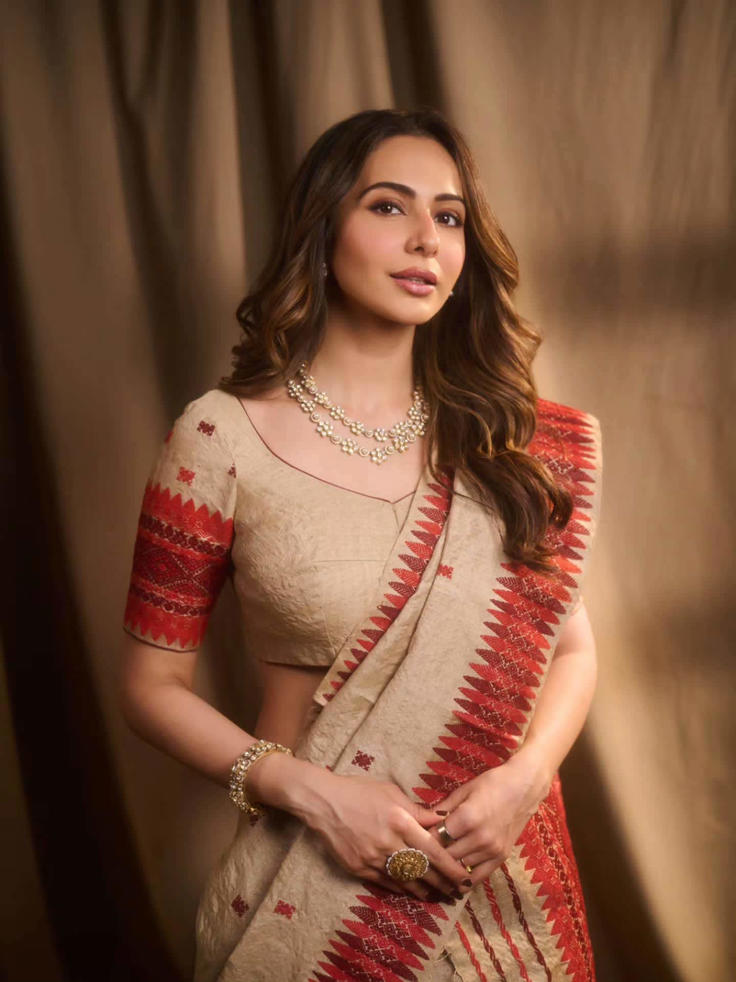
Unlike fabrics that depend on artificial colouring to create a golden finish, Muga silk possesses its characteristic warm sheen naturally.
Depending on the quality of the yarn, weave and lighting, the textile can display shades ranging from pale gold to deeper honey-like tones.
This distinctive lustre makes it particularly popular for ceremonial clothing and traditional garments.
The golden appearance is also one reason Muga silk is regarded as a premium material in the Indian handloom sector.
For many Assamese families, the appeal of Muga silk lies not simply in its appearance but also in the craftsmanship involved in producing and weaving it.
2. Muga Silk Has a Special Connection With Assam
Muga silk is deeply connected with Assam’s geography, sericulture and traditional textile economy.
The silkworm species used in its production is indigenous to northeastern India and has historically been cultivated in Assam.
Its commercial production is especially associated with the state’s local environmental conditions and generations of specialist knowledge.

Muga silkworms are traditionally reared outdoors on suitable host plants, including som and soalu.
Cultivators must manage environmental conditions and protect the silkworms during their development, making the production process dependent on both natural conditions and specialised experience.
Assam’s Muga silk received Geographical Indication recognition in 2007, reinforcing its identity as a product associated with the region.
A GI registration identifies goods whose particular qualities, reputation or characteristics are linked to a defined geographical origin.
The recognition is important for maintaining the distinction between authentic regional products and textiles marketed using similar descriptions.
However, buyers should remember that a product being described as Muga silk does not automatically establish its authenticity or origin.
3. Muga Silk Is Valued for Its Strength and Longevity
Beyond its golden appearance, Muga silk is known for its durability.
Its fibres are valued for their strength, allowing properly woven and carefully maintained garments to remain usable for many years.
Traditional Muga textiles are often preserved as family possessions and passed from one generation to another.
The fabric is also widely associated with the belief that its lustre becomes more pronounced over time, although the actual appearance of any garment depends on its quality, age, care and cleaning methods.
Its longevity contributes to the cultural value of garments made with the material.
However, durability should not be confused with being maintenance-free.
Muga silk garments still require appropriate storage, careful handling and cleaning according to the weaver’s or manufacturer’s instructions.
For expensive handwoven pieces, professional cleaning may be preferable to repeated home washing.
4. Sualkuchi Plays a Major Role in Assam’s Silk-Weaving Heritage
The village of Sualkuchi, located near Guwahati in Assam’s Kamrup district, is among the state’s best-known traditional silk-weaving centres.
Often referred to as the “Manchester of the East”, Sualkuchi has a long association with handloom production and skilled textile artisans.
The region is recognised for weaving traditional Assamese garments using Muga, Pat and other silk varieties.
Local weaving traditions involve considerable technical skill, from preparing yarn and arranging the loom to producing decorative borders and intricate patterns.
The handloom industry also supports families involved in weaving, yarn preparation, finishing and related activities.
For many artisans, these skills represent knowledge developed over generations rather than simply a manufacturing process.
Sualkuchi’s importance extends beyond the textiles produced there. The village is also closely associated with efforts to preserve Assam’s weaving identity in an increasingly industrialised clothing market.
Its continued relevance demonstrates why traditional handloom centres matter to both regional culture and artisan livelihoods.
5. Traditional Assamese Motifs Reflect Art and Cultural Identity
A Muga mekhela saador is often admired for the decorative designs that appear along its borders and woven sections.
Assamese weaving traditions feature motifs inspired by local flora, fauna, traditional objects and geometric forms.
These can include floral patterns, birds, stylised leaves and designs influenced by familiar elements of Assamese culture.
The jaapi, a traditional conical hat associated with Assam, is another recognisable cultural symbol that may inspire textile ornamentation.
Such patterns are not merely decorative. They contribute to the visual language of Assamese craftsmanship and help distinguish traditional garments from more generic festive clothing.
Different weaving communities, designers and workshops may employ their own arrangements, colours and motifs.
As a result, the appearance of Muga silk garments can vary considerably.
Some pieces feature restrained borders that highlight the natural golden fabric, while others incorporate elaborate designs and contrasting threads.
The complexity of the weave, quality of materials and amount of manual labour can all influence the finished garment’s value.
6. The Muga Mekhela Saador Is an Important Traditional Garment
The mekhela saador is one of the best-known traditional outfits worn by Assamese women.
Unlike a conventional one-piece saree, it consists of two principal pieces of fabric.
The mekhela forms the lower portion of the outfit and is wrapped around the waist, while the saador is draped around the upper body.
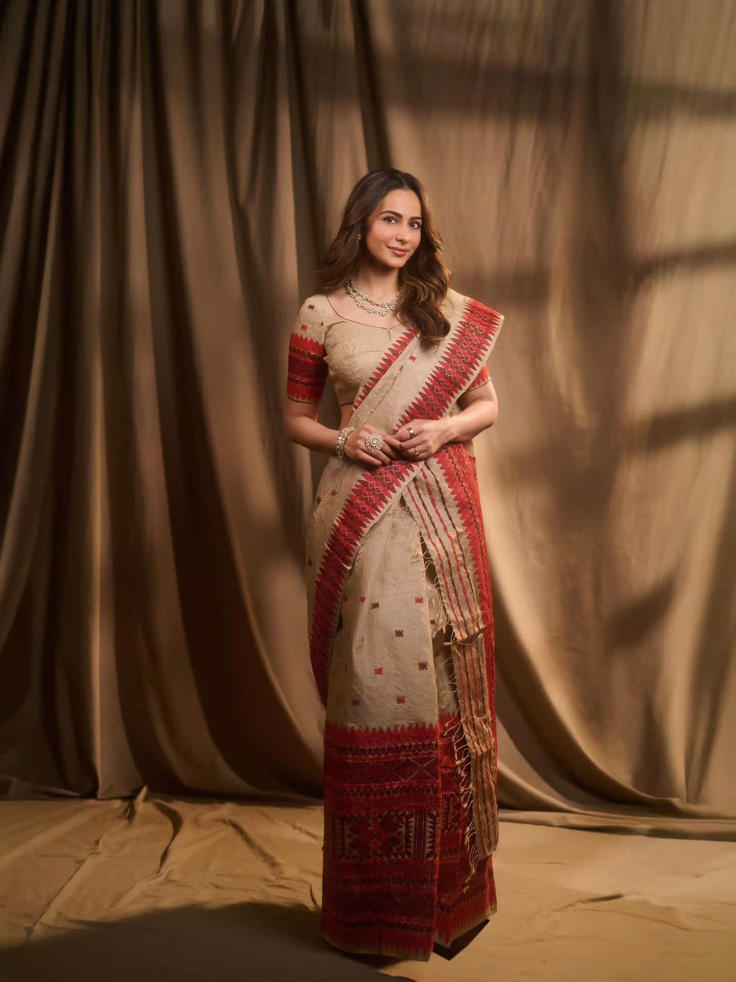
The garment is widely associated with festivals, family celebrations, cultural occasions and weddings.
A Muga silk mekhela saador is especially valued because it brings together the region’s traditional clothing style and one of its most distinctive textiles.
Such garments may be carefully preserved and handed down as heirlooms.
They can also hold significance in bridal clothing and wedding trousseaus, depending on family customs and individual preferences.
For many wearers, a handwoven mekhela saador represents a connection to Assamese identity, craftsmanship and family traditions.
That cultural meaning is part of what makes the garment more than just another festive fashion choice.
Why Rakul Preet Singh’s Muga Silk Look Matters
Celebrity fashion often draws attention to clothing trends, but traditional textiles also carry stories about the communities that produce them.
Rakul Preet Singh’s decision to wear a Muga mekhela saador introduced a recognisable Assamese garment to audiences who may be more familiar with sarees, lehengas and other mainstream festive outfits.
The appearance offers an opportunity to understand the work behind handwoven garments and the cultural importance of regional fabrics.
However, meaningful support for traditional handlooms extends beyond celebrity appearances.
Consumers interested in purchasing Muga silk can look for credible sellers, ask about the fabric’s composition and origin, and seek relevant certification or documentation where available.
Understanding whether a garment is handwoven, the type of yarn used and the identity of the producer can help buyers make more informed choices.
Supporting established weaving enterprises and artisan groups can also contribute to demand for traditional craftsmanship.
Assam’s Golden Textile Heritage Deserves Wider Recognition
Muga silk occupies a distinctive position within India’s textile heritage because of its natural golden lustre, strong regional identity and longstanding association with Assamese weaving.
Its value comes not only from the material itself but also from the people and practices involved in its production.
From silkworm cultivation to yarn preparation and handloom weaving, several stages contribute to the creation of a traditional Muga garment.
Rakul Preet Singh’s festive outfit provides a reminder that Indian fashion includes diverse regional traditions that deserve recognition beyond occasional celebrations.
For Assam, the Muga mekhela saador remains a symbol of craftsmanship, cultural continuity and pride.
Have a story tip or feedback? Write to [email protected].