






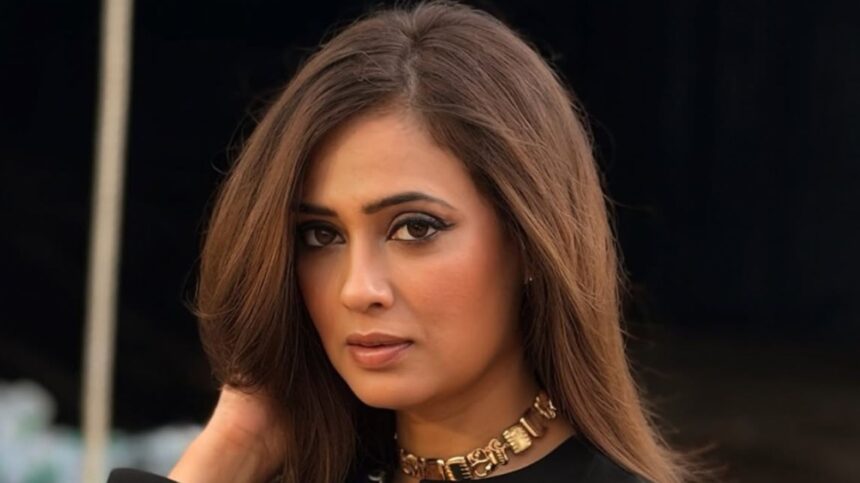
The actress says the accounts involved were not MNS members and reflects on the larger problem of online abuse directed at women
Actress Shweta Tiwari has shared a significant update about her recent stand against online trolling and abusive comments directed at women. In a detailed social media post, the actress said that the individuals who allegedly posted objectionable messages about her were not members of the Maharashtra Navnirman Sena (MNS), despite one of them apparently claiming support for the party.
Shweta said she had previously raised the issue with MNS chief Raj Thackeray after questioning whether such behaviour should be associated with people claiming to be supporters of the political organisation.
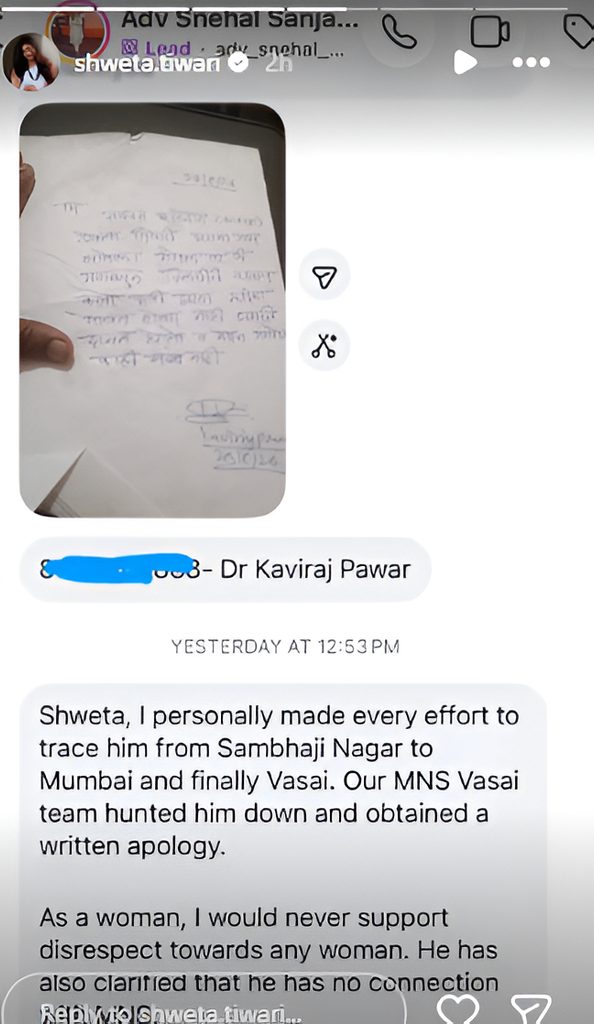
According to the actress, she later received a response from people associated with the party, who clarified that the individuals she had highlighted were not MNS members. Shweta said efforts were made to identify the person involved, and that she received contact information and a handwritten apology within three days.
While appreciating the response, Shweta also used the incident to draw attention to a much larger concern: the widespread culture of online abuse and harassment, particularly the abusive language frequently directed at women on social media platforms.
See more of our coverage in your search results.
Add Hunterfly on GoogleShweta Tiwari Earlier Called Out Online Abuse
The actress had earlier shared Instagram Stories highlighting what she described as abusive and objectionable comments made by some social media users.
According to Shweta, she decided to publicly address the issue because she did not believe that people who use abusive language against women online should feel completely protected by the anonymity of social media.
She also shared the social media accounts of some of the people whose comments she found objectionable and raised concerns about the growing normalisation of online abuse.
In her update, Shweta said she had questioned whether such behaviour was acceptable from individuals who claimed to be supporters of political leaders or organisations.
Her comments highlighted a wider concern about online accountability and whether social media users should face consequences for harassment and abusive behaviour.
See more of our coverage in your search results.
Add Hunterfly on Google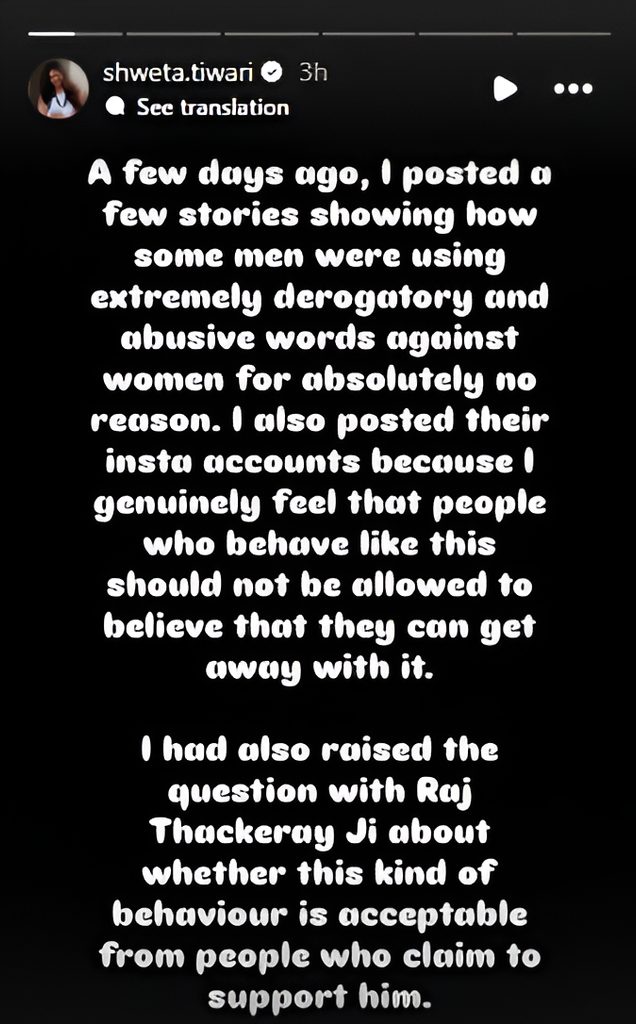
What Happened After Shweta Raised the Matter?
According to Shweta Tiwari, a lawyer associated with the MNS committee subsequently contacted her regarding the issue.
The actress said she was informed that the individuals whose behaviour she had questioned were not members of the Maharashtra Navnirman Sena.
Shweta also said she was told that abusive and disrespectful behaviour towards women was not supported or approved by those who contacted her.
See more of our coverage in your search results.
Add Hunterfly on GoogleAccording to the actress, she was given a few days while efforts were made to identify the individual involved.
Shweta said that within three days, she received the contact details of the person concerned along with a handwritten apology.
She later shared a screenshot of the apology on her Instagram Story and publicly acknowledged the response she received.
Actress Appreciates the Response
Shweta said she appreciated the fact that the issue was taken seriously.
According to her account, she was reassured that disrespectful behaviour towards women would not be ignored. She also said that she was told she could seek assistance if she faced a similar situation in the future.
The actress described the effort to address the matter as commendable and said it was encouraging to know that her concerns had received a serious response.
However, Shweta made it clear that resolving one incident did not address the much larger problem of online harassment.
Shweta Tiwari Raises a Bigger Question About Online Trolling
In her social media update, Shweta reflected on the scale of abuse that takes place online every day.
She questioned what happens when thousands—or potentially millions—of users believe they can say anything without consequences simply because they are communicating from behind a screen.
The actress suggested that identifying one or two individuals may provide accountability in specific cases, but it does not automatically change the mindset that allows online abuse to flourish.
Her comments focused on what she described as a larger culture in which some users feel empowered to harass and abuse women on social media platforms.
The issue, she said, cannot be viewed as a problem involving only one person or one incident.
“The Problem Is Bigger Than One Troll”
Shweta’s comments drew attention to the broader social problem behind online harassment.
According to the actress, the real concern is a mindset that allows people to believe they can abuse women online without facing consequences.
This is a challenge that extends beyond celebrities. Public figures may have large platforms that allow them to highlight online harassment, but countless ordinary users also experience abuse, threats and offensive language online.
Women, in particular, frequently face gender-based abuse across social media platforms.
Shweta’s response has therefore added to an important public conversation about digital behaviour, accountability and the responsibility of online platforms.
The Challenge of Social Media Accountability
Social media has made it possible for public figures and ordinary users to communicate directly with large audiences. However, the same accessibility has also created opportunities for harassment and abuse.
The relative anonymity of the internet can sometimes make people feel that they can avoid responsibility for their words and actions.
Shweta Tiwari’s experience raises several important questions:
- How should social media platforms respond to abusive behaviour?
- What protections are available to people facing sustained online harassment?
- Should anonymous users face stronger accountability?
- How can technology companies improve reporting and enforcement systems?
- What role should society play in changing attitudes toward online abuse?
These questions have become increasingly relevant as online communication continues to play a major role in public and private life.
Shweta Calls for a Larger Solution
While appreciating the response she received in her own case, Shweta said the incident made her think about the much wider problem of online abuse.
She argued that catching one or two people would not be enough to solve the issue if a larger culture continues to allow abusive behaviour to grow.
The actress expressed hope that technology companies, social media platforms and society would find more effective ways to address the problem.
Her concern focused particularly on abusive language directed at women, which she described as an issue that is increasingly difficult to control.
The actress’s comments reflect a growing demand for stronger digital accountability, better reporting systems and more effective action against persistent online harassment.
Why Shweta Tiwari’s Stand Matters
By publicly discussing the issue, Shweta Tiwari has brought attention to an experience that is familiar to many social media users.
Online harassment is not limited to celebrities. Women, journalists, public figures, professionals and ordinary users can all face abusive messages and targeted trolling.
The conversation sparked by Shweta’s experience is therefore about more than one apology or one social media account.
It raises broader questions about how society responds to digital abuse and whether current systems do enough to protect users.
Shweta’s experience also highlights the difference between addressing an individual incident and solving a wider social problem.
An apology may bring closure in one case. But long-term change requires stronger online safety measures, responsible platform policies and a shift in how people communicate with one another online.
The Bigger Debate Over Online Abuse
Shweta Tiwari’s recent update may have begun with a personal experience, but her final message addressed a much wider issue.
The actress argued that online abuse, particularly abuse directed at women, has become a serious problem that cannot be ignored.
Her response also demonstrates the importance of speaking out against harassment rather than treating abusive online behaviour as normal.
As social media platforms continue to grow, the debate over accountability is likely to become even more important.
For Shweta, the incident may have resulted in an apology after the matter was raised and followed up. But the larger question remains: how can millions of online users be encouraged—or required—to treat others with basic dignity and respect?
That is the issue at the centre of her message.