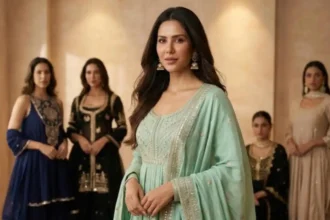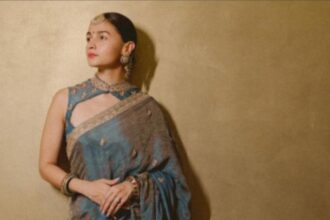







India’s saree tradition is woven with far more than threads and patterns. Across generations, the garment has carried regional identities, artisan skills, cultural memories and centuries-old techniques. It is this expansive heritage that fashion advocate and designer Seema Singh sought to spotlight through Saree Utsav – Virasat, a three-day celebration dedicated to India’s handmade textile traditions.
Bringing together more than 250 sarees from across the country, the festival presented a visual journey from Kashmir to Kanyakumari. Each textile represented not only a distinctive craft tradition but also the communities and artisans responsible for keeping these techniques alive.
A Celebration of India’s Regional Textile Traditions
The Virasat exhibition brought together a wide variety of Indian textile and embroidery traditions. The collection included Lucknow’s Chikankari, Maharashtra’s Paithani, Gujarat’s Patola, Varanasi’s Banarasi silk, Bihar’s Madhubani tradition, Kashmiri embroidery and Rajasthan’s Tussar silk, among other regional crafts.
Together, the sarees reflected the extraordinary diversity of Indian textile culture. Their significance, however, extended beyond their visual appeal.
See more of our coverage in your search results.
Add Hunterfly on GoogleFor Seema Singh, every saree also represents the story of the person or community behind it. The exhibition therefore placed emphasis on the artisans, weavers and traditional workshops—or karkhanas—whose skills have helped sustain these crafts over generations.
Seema Singh’s Longstanding Connection With the Saree
The Virasat initiative builds on Seema Singh’s longstanding association with Indian textiles. For roughly five to six years, she has been promoting sarees, traditional craftsmanship and Indian textile heritage through fashion events and public appearances.
Her approach is rooted in the belief that preserving a textile tradition also requires supporting the people who create it.
Through her fashion label SS by Seema Singh, she has continued to explore ways of presenting the saree to contemporary audiences while retaining its cultural character. Her vision is to position the saree not simply as conventional ethnic wear, but as an expression of Indian culture, identity, craftsmanship and pride.
Putting Artisans at the Centre of the Story
One of the central themes of Saree Utsav – Virasat is the relationship between fashion and craftsmanship.
See more of our coverage in your search results.
Add Hunterfly on GoogleIndia’s traditional textiles have survived through generations because of specialised knowledge passed from one artisan to another. Techniques involving weaving, embroidery, dyeing and handcrafting often carry strong regional identities.
By highlighting these traditions, the Virasat initiative seeks to draw greater attention to the artisans and weaving communities behind the finished garments.
The emphasis is particularly relevant at a time when the global fashion industry is increasingly interested in craftsmanship, cultural narratives and handmade production.
See more of our coverage in your search results.
Add Hunterfly on GoogleA Saree Movement With Public and Celebrity Support
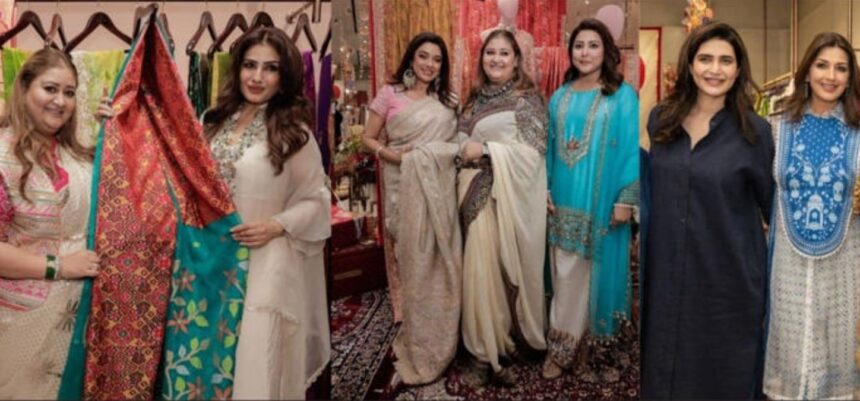
The festival also brought together personalities from different fields, including public figures, political circles and Bollywood.
Amruta Fadnavis has supported the saree-focused campaign, while celebrities including Padma Shri recipient Raveena Tandon, Sonali Bendre, Rupali Ganguly and Hina Khan have also been associated with the initiative.
Their participation has helped bring the traditional garment into contemporary public conversations around fashion and Indian identity.
Seema Singh herself has become an advocate for wearing sarees with confidence and contemporary styling, encouraging women to view the garment as something that can be both culturally rooted and modern.
Taking Indian Heritage to a Wider Audience
The larger idea behind Virasat extends beyond a single exhibition. It is an attempt to present Indian textile traditions through a platform that connects heritage with contemporary fashion.
The initiative also reflects the broader emphasis on taking India’s traditional craftsmanship to wider national and international audiences and creating greater visibility for artisans and craft communities.
Rather than looking outside the country for inspiration, the Virasat concept places India’s own textile history at the centre of the conversation.
From the intricate embroidery of the north to the distinctive weaving traditions of western and southern India, the country already possesses an enormous archive of fashion stories waiting to be explored.
More Than Fashion: A Statement About Heritage
Through Saree Utsav – Virasat and SS by Seema Singh, the focus extends beyond creating a fashion platform. The initiative puts the spotlight on the preservation of traditional crafts and recognition of the people who sustain them.
The saree, in this context, becomes more than an item of clothing. It becomes a link between artisans and consumers, between regional traditions and contemporary fashion, and between India’s past and its evolving cultural identity.
For Seema Singh, the message is ultimately simple: wearing a saree can also mean carrying forward a piece of India’s heritage.
As Indians put on sarees, they put on their heritage.