








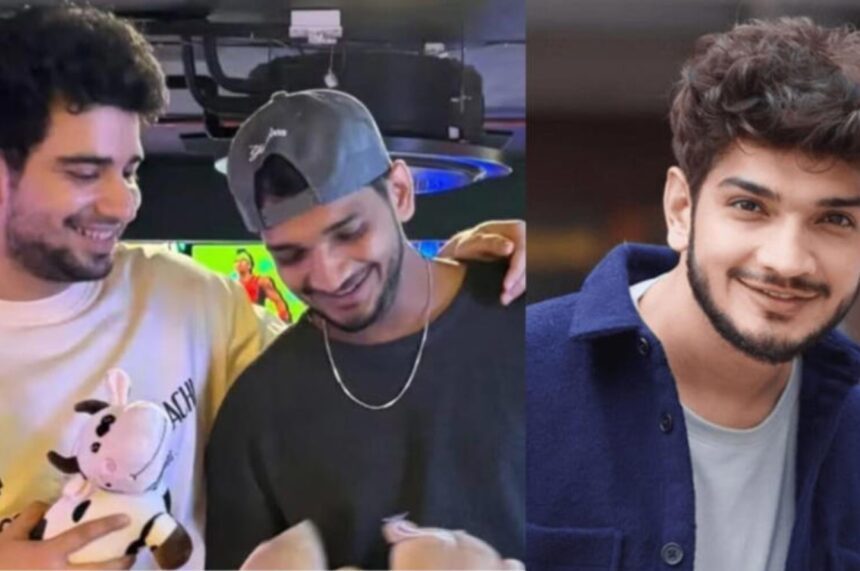
A members-only episode of India’s Got Latent featured a brief but widely discussed exchange in which comedian Samay Raina referred to his family’s connection to Kashmir before turning the moment into a light-hearted joke with fellow panellist Munawar Faruqui.
The conversation unfolded naturally during a discussion with a contestant and later shifted to Samay’s personal background, a subject he has spoken about publicly on several occasions.
Conversation Began with a Contestant’s Apple Orchards
The discussion started after contestant Vanika Raikta was asked about her family background by the judging panel, which included Samay Raina, Munawar Faruqui, Raghav Juyal, Niharika NM and Rohan Joshi.
Vanika shared that her family owns apple orchards in Shimla. Although a portion of the land had reportedly been sold by her brother, she said the family still owns several orchards, while both her parents work as government teachers.
See more of our coverage in your search results.
Add Hunterfly on GoogleHer remarks prompted a response from Raghav Juyal.
Raghav Juyal Mentioned Samay’s Kashmir Connection
Referring to the discussion about apple orchards, Raghav turned to Samay and asked whether his family had also owned apple orchards in Kashmir.
Samay replied that his family had once owned “much more,” a remark widely interpreted as referring to the displacement experienced by many Kashmiri Pandit families during the insurgency in the early 1990s.
The conversation briefly shifted from humour to a more reflective moment.
Samay’s Joke Prompted Laughter
As Raghav offered a reassuring pat on Samay’s back, Samay looked toward Munawar Faruqui and jokingly said, “Bol ab ispe” (“Say something about this now”).
See more of our coverage in your search results.
Add Hunterfly on GoogleMunawar immediately responded, “It wasn’t me,” drawing laughter from the panel and audience.
The exchange remained light-hearted despite touching on a sensitive historical subject.
Samay Has Spoken Publicly About His Family’s Experience
The reference was not the first time Samay Raina has discussed his family’s history.
See more of our coverage in your search results.
Add Hunterfly on GoogleIn previous public appearances, including his stand-up performances and podcast interviews, he has spoken about his family’s experience during the 1990 exodus of Kashmiri Pandits.
Samay has said that his family left Kashmir during the period of escalating militancy.
In an earlier interview on the Dostcast podcast, he also shared that members of the local Kashmiri Muslim community helped his grandfather and relatives leave safely during that difficult period.
According to Samay, his grandfather’s years of serving the local community as a doctor earned him goodwill that ultimately helped the family escape.
About the Kashmiri Pandit Exodus
The Kashmiri Pandit exodus refers to the large-scale displacement of many members of the Kashmiri Pandit community from the Kashmir Valley during the late 1980s and early 1990s amid rising militancy and violence.
The events remain a deeply sensitive chapter in India’s contemporary history and continue to be discussed through personal accounts, historical research and public debate.
Many families, including Samay Raina’s, have publicly shared their own experiences of displacement.
India’s Got Latent Season 2
India’s Got Latent continues to release new episodes featuring contestants alongside celebrity guest panellists.
Season 2 follows a bi-weekly release format and is available through Netflix as well as Samay Raina’s YouTube channel, with members-only content offering extended conversations and additional segments.
The show’s unscripted interactions have frequently generated discussion across social media.
HeZindagi Verdict
The exchange between Samay Raina and Munawar Faruqui blended humour with a brief personal reflection on an important part of Samay’s family history. While the moment ended with laughter, it also highlighted how comedians sometimes draw upon real-life experiences during unscripted conversations. Discussions surrounding the Kashmiri Pandit exodus remain historically significant and emotionally sensitive, making factual context essential when reporting such moments.