




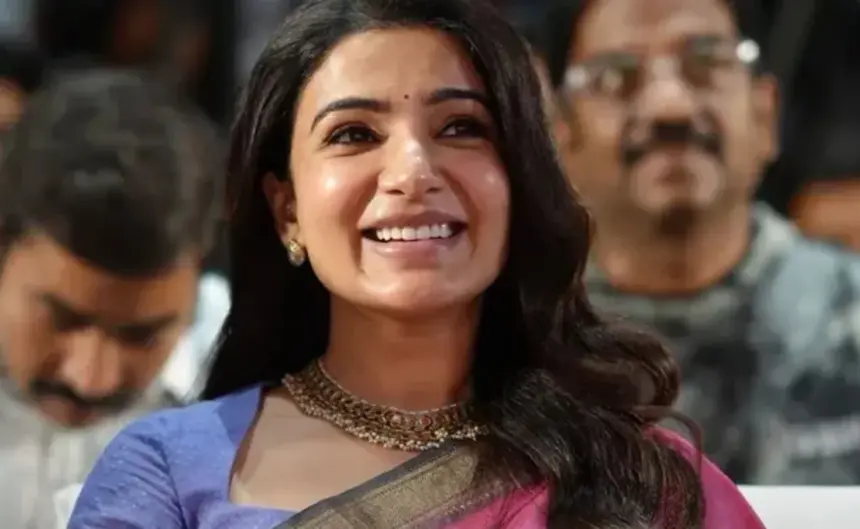
Samantha Ruth Prabhu has faced criticism on social media after promoting an AI platform while concerns over deepfakes, morphed images and the misuse of artificial intelligence continue to grow across the entertainment industry.
The discussion gained attention amid a wider debate over how generative AI should be used responsibly, particularly when celebrities are increasingly dealing with digitally altered images, videos and other forms of unauthorised content.
Samantha’s AI Promotion Draws Online Criticism
Samantha recently shared a social media post promoting ChatGPT. While generative AI tools are increasingly being used for tasks ranging from writing and research to productivity and creative work, the endorsement prompted a critical response from some users.
A section of netizens questioned whether promoting an AI platform was appropriate at a time when actors and other public figures are raising concerns about deepfakes and the unauthorised use of their identities.
One commenter argued that AI can be useful but said users should remain careful about becoming overly dependent on technology for everyday thinking, creativity and decision-making.
Another suggested that Samantha, given her public profile and previous advocacy around social causes, could use her platform to encourage greater awareness about responsible AI use.
One social-media user directly questioned the perceived contradiction, writing: “Actors fight every time a morphed pic comes out and still supporting AI is not ethically correct… Don’t you think?”
Another commenter simply wrote: “Totally disappointed that you would promote AI.”
The comments represent the views of individual social-media users and should not be interpreted as evidence of a broader consensus.
Deepfake Concerns Are Growing Across the Film Industry
The criticism comes against the backdrop of increasing concern within the entertainment industry about AI-generated and digitally manipulated content.
Jr NTR, for instance, recently reacted strongly to an AI-generated version of the Chuttamalle song and warned of legal action over objectionable content involving the actor. The incident added to broader conversations among celebrities about the potential misuse of generative AI.
For actors, the issue is particularly sensitive because AI tools can be used to reproduce or manipulate a person’s face, voice or likeness without permission.
Samantha’s Own Experience With Unauthorised Digital Content
The debate also has a personal dimension for Samantha.
The actor has previously approached the Bombay High Court over the alleged unauthorised use of aspects of her identity, including her name, image and voice, across digital platforms.
The court proceedings have highlighted the growing legal and privacy concerns surrounding the commercial or misleading use of a celebrity’s identity through digital technologies.
That background is one reason some social-media users connected Samantha’s latest AI-related promotion with the larger deepfake debate.
However, there is an important distinction between generative AI technology itself and the malicious or unauthorised use of that technology.
AI platforms can be used for legitimate purposes such as research, productivity, education, brainstorming and content assistance. Deepfakes and manipulated material, by contrast, can involve impersonation, privacy violations, misinformation or unauthorised commercial exploitation.
The controversy surrounding Samantha’s promotion therefore raises a broader question rather than establishing that using or promoting AI is inherently incompatible with opposing deepfakes.
Why Responsible AI Use Matters
The debate involving Samantha reflects a much larger challenge facing the entertainment industry.
As generative AI becomes more accessible, celebrities are increasingly having to contend with manipulated photographs, synthetic videos and cloned or altered voices. At the same time, the technology is becoming a useful tool for legitimate professional and personal applications.
The key issue is therefore increasingly about consent, transparency and responsible use.
For public figures, that distinction can be particularly important. Supporting legitimate AI applications does not necessarily mean endorsing the creation of unauthorised deepfakes or manipulated content. At the same time, public figures promoting AI products can reasonably expect questions about how the technology should be used and what safeguards are necessary.
Samantha’s latest social-media promotion has consequently become part of that wider conversation, with some users asking celebrities and technology companies to take a clearer position on responsible AI practices.
This article reports social-media reactions and the broader public debate. Individual comments cited above represent the views of those users and do not necessarily reflect the views of Samantha Ruth Prabhu or the publication.