


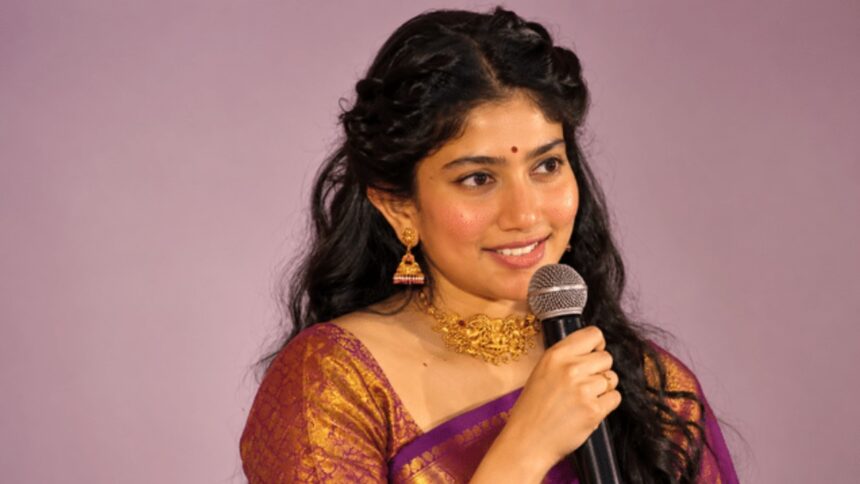
The actor’s comment that Ravana is “not all bad” came during a broader reflection on recognising and changing negative qualities within oneself.
Sai Pallavi’s remarks about Ravana have prompted differing responses online after her appearance at the Los Angeles premiere of Ramayana: Rise of a Legend.
Speaking about the lessons audiences could draw from the epic, the actor encouraged introspection. Her observation that Ravana is “not all bad” circulated alongside comments about identifying faults within oneself and making changes over time, according to published coverage.
What was the context of her statement?
Pallavi was discussing the Ramayana as both a screen adaptation and a text with personal significance for believers.
The reported remarks linked its characters to self-examination. Rather than ending with her description of Ravana, she went on to discuss recognising negative qualities and correcting them.
That surrounding context matters when interpreting the short phrase being shared. It supports a reading centred on personal reflection; it does not establish that she was endorsing Ravana’s actions.
Why did viewers respond differently?
NDTV’s coverage documented contrasting reactions. Some users objected to the wording, while others argued that the complete statement made her intended point clearer.
Those examples demonstrate disagreement among individual commenters. They do not establish what most viewers believe or quantify the scale of the reaction.
Describing the discussion as universal outrage—or universal support—would therefore go beyond the available evidence.
Her role in the adaptation
Pallavi plays Sita in the Nitesh Tiwari-directed film. Ranbir Kapoor portrays Rama, while Yash plays Ravana.
Published reporting identifies the Los Angeles event as a special screening at the David Geffen Theatre inside the Academy Museum of Motion Pictures.
Her remarks were made in that promotional setting. They should be distinguished from dialogue spoken by Sita in the film or an official explanation of how the adaptation portrays Ravana.
What the discussion does—and does not—establish
The exchange illustrates how a brief phrase can become the focus of attention even when it forms part of a longer answer.
Readers assessing the remarks should separate three things: what Pallavi reportedly said, how particular users interpreted it and what the film itself depicts. A promotional comment alone cannot settle the third question.
The available coverage supports a measured account: Pallavi discussed self-reflection through the epic, used wording that some viewers questioned and received differing responses online.