




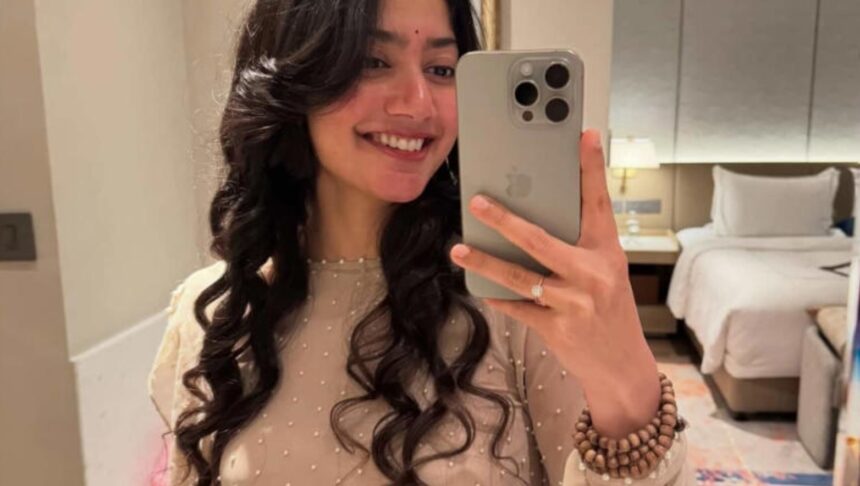
Actor Sai Pallavi, who will portray Goddess Sita in the upcoming film Ramayana, is admired not only for her performances but also for her grounded lifestyle and spiritual outlook. One detail that has frequently caught the attention of fans is the jaap mala she is often seen wearing around her wrist during public appearances.
While many people associate the beads with spirituality, a jaap mala carries deep symbolic significance in several Hindu traditions and is widely used as an aid during meditation and mantra chanting.
Here’s what a jaap mala represents and how it is traditionally used.
What Is a Jaap Mala?
A jaap mala is a string of beads traditionally used to count repetitions of a mantra during meditation or prayer.
See more of our coverage in your search results.
Add Hunterfly on GoogleThe standard mala consists of:
- 108 prayer beads
- One Guru (Meru) bead, which marks the beginning and end of a chanting cycle
The Guru bead is not counted as part of the mantra repetitions and is treated with special respect.
Jaap malas are commonly made from:
- Rudraksha beads
- Tulsi wood
- Sandalwood
- Crystal (Sphatik)
- Lotus seeds (in some traditions)
The choice of material often depends on personal spiritual practice and religious tradition.
The Spiritual Meaning Behind 108 Beads
According to traditional spiritual teachings, the number 108 holds symbolic importance across several Indian philosophical systems.
See more of our coverage in your search results.
Add Hunterfly on GoogleSpiritual teacher Bhavesh Bhimanathani, founder of Adiveda, explains that the circular design of the mala represents the continuous cycle of existence.
According to these teachings:
- The thread running through every bead symbolizes the eternal universal consciousness.
- Each individual bead represents different stages or lifetimes experienced by the soul.
- Continuous mantra chanting is viewed as a path toward greater spiritual awareness and self-realization.
These interpretations are rooted in traditional beliefs and may vary across different schools of Hindu philosophy.
See more of our coverage in your search results.
Add Hunterfly on GoogleWhy Do People Use a Jaap Mala?
A jaap mala serves as a practical tool during meditation by helping practitioners maintain focus without mentally counting each repetition.
Many people believe regular mantra chanting may support:
- Greater concentration
- Mental calmness
- Mindfulness
- Spiritual discipline
- Devotional practice
Rather than focusing on the number itself, the beads help create a steady rhythm during meditation.
Traditional Method of Chanting With a Jaap Mala
According to traditional guidance shared by Bhavesh Bhimanathani, practitioners generally follow these steps while using a jaap mala:
1. Sit Comfortably
Choose a clean, quiet place and sit on a mat or cushion with your spine naturally upright.
2. Face East (Optional Tradition)
Many traditions recommend facing east during meditation, though practices may vary.
3. Hold the Mala Near the Heart
The mala is traditionally held near the heart or chest rather than below the waist.
4. Avoid Using the Index Finger
While chanting, practitioners usually move the beads using the thumb and middle finger. The index finger is generally not used in many traditional practices.
5. Move One Bead Per Mantra
Each repetition of the chosen mantra corresponds to one bead.
6. Do Not Cross the Guru Bead
After completing all 108 beads, practitioners traditionally avoid crossing the Guru bead.
Instead, they reverse the direction of the mala and begin another round from the opposite side.
Common Practices During Jaap
Many practitioners also observe these traditional guidelines:
- Maintain a regular time for chanting each day.
- Practice with full attention and sincerity.
- Repeat a single mantra consistently rather than frequently changing it.
- Chant calmly and without rushing.
- Focus on the meaning and pronunciation of the mantra.
These customs vary among spiritual traditions, and individuals often follow the guidance of their teacher or religious community.
Sai Pallavi and Spiritual Simplicity
Although Sai Pallavi has not publicly detailed every aspect of her spiritual practice, her frequent appearance with a jaap mala reflects an appreciation for mindful living and devotional traditions.
Known for embracing simplicity in both her personal lifestyle and public image, the actor has often spoken about values such as humility, discipline and authenticity.
For many admirers, the mala has become another symbol of the grounded personality she is widely recognized for.
Hunterfly Take
The jaap mala is much more than a string of beads. Across generations, it has served as a meaningful aid for meditation, prayer and spiritual reflection.
Whether used for mantra chanting, mindfulness or personal devotion, its significance lies not in the object itself but in the intention and discipline of the practitioner.
As interest in meditation and traditional wellness practices continues to grow, understanding the cultural and spiritual context of the jaap mala helps preserve the deeper meaning behind a practice that has existed for centuries.
Frequently Asked Questions
Why does Sai Pallavi wear a jaap mala?
Sai Pallavi is often seen wearing a jaap mala, which many people associate with spiritual practice, meditation and devotional traditions. She has not publicly explained the specific reasons for wearing it.
What is the significance of 108 beads in a jaap mala?
In many Hindu traditions, the 108 beads symbolize spiritual completeness and are used to count mantra repetitions during meditation.
What is the Guru bead?
The Guru or Meru bead marks the beginning and end of a chanting cycle. Traditionally, practitioners do not cross it while chanting.
Which finger should be used while chanting with a mala?
Many traditional practices recommend using the thumb and middle finger to move the beads, while avoiding the index finger.
Can anyone use a jaap mala?
Yes. Many people use a jaap mala for meditation, prayer or mindfulness. Those seeking guidance on specific mantras or spiritual practices may choose to learn from a qualified teacher or within their religious tradition.