







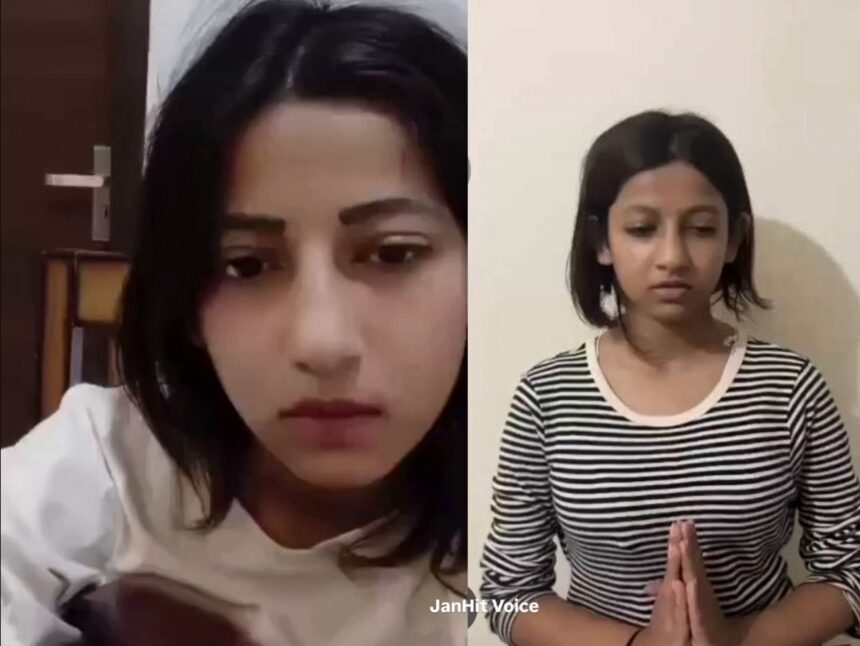
The internet rarely forgets a viral controversy, and the latest video attributed to Noida-based teenager Ruchika Singh has brought renewed attention to a debate that had appeared to subside.
Weeks after a public apology that followed widespread backlash over her alleged remarks during a protest, Singh has once again become the subject of intense online discussion. In a newly circulated video, she speaks about the consequences of the controversy and makes strong remarks directed at Prime Minister Narendra Modi.
The shift in tone—from an earlier expression of regret to a more defiant message—has generated sharply divided reactions online. Critics have questioned her latest statements, while others have raised concerns about the long-term effects of mass online scrutiny on a teenager.
The renewed controversy sits at the intersection of political expression, youth, social media virality and the often permanent nature of the digital record.
See more of our coverage in your search results.
Add Hunterfly on GoogleHow the Earlier Controversy Began
The controversy involving Singh emerged after videos from a protest at Jantar Mantar in New Delhi circulated widely on social media.
The clips allegedly showed Singh making abusive and derogatory remarks directed at Prime Minister Narendra Modi. The footage quickly triggered strong reactions online and led to complaints and reported legal action.
According to the details cited in reports surrounding the case, a Zero FIR was registered in Noida and the matter was subsequently transferred for further police action.
The controversy developed rapidly on social media, where short video clips and commentary spread widely before the complete circumstances surrounding the incident were available to many viewers.
Key Developments in the Controversy
- Late July 2026: Video clips from a protest circulated widely online.
- July 29, 2026: A Zero FIR was reportedly registered following complaints.
- Early August 2026: Singh issued a public apology and addressed the controversy.
- Late August 2026: A new video attributed to Singh began circulating online, triggering fresh debate.
The precise legal and procedural status of the matter should be verified through official police or court records before publication.
See more of our coverage in your search results.
Add Hunterfly on GoogleAn Earlier Apology Changed the Tone of the Debate
Following the initial backlash, Singh released an emotional apology video.
She reportedly referred to her age and the atmosphere surrounding the protest while expressing regret over the controversy.
The apology changed the tone of the public conversation, with some people arguing that a minor should be treated with greater restraint and that public criticism should not turn into sustained harassment.
See more of our coverage in your search results.
Add Hunterfly on GoogleOthers continued to question the original remarks and called for accountability.
The episode highlighted a difficult issue in the age of viral politics: how should society respond when a teenager’s actions become a national social media controversy?
‘I Have Nothing Left to Lose’: What the New Video Says
In the newly circulated video, Singh describes the impact that the controversy and subsequent public scrutiny have allegedly had on her life.
In the video, she says:
“I have nothing left to lose. I’ve lost everything.”
She also makes strong claims about the consequences she says she has faced since the earlier controversy.
The video has been widely discussed because its tone differs significantly from the earlier apology associated with the controversy.
Where the earlier public response focused on regret and remorse, the new video presents a more confrontational message.
However, the exact context, date and circumstances surrounding the latest video should be independently verified before it is presented as a definitive account of events.
A Divided Internet Responds
The latest video has produced sharply contrasting reactions across social media.
Some users have criticised Singh’s new statements and questioned the apparent shift from apology to defiance.
Others have argued that sustained online outrage can have serious consequences, particularly when the person at the centre of the controversy is a teenager.
The debate has also revived broader discussions about the difference between criticism and harassment in digital spaces.
A person may face legitimate criticism for public statements, but the scale and persistence of internet attention can create consequences that extend far beyond the original event.
Online commentary can remain searchable and shareable for years, even after the original controversy has faded from mainstream attention.
The Bigger Question: What Happens When a Teenager Goes Viral?
The Ruchika Singh controversy reflects a broader challenge facing young people in the social media era.
A single viral video can instantly transform a private individual into a national subject of debate.
Political arguments, public outrage, memes, commentary channels and social media algorithms can then amplify the controversy far beyond its original context.
For a teenager, the consequences may be especially complicated.
Young people are still developing their understanding of public responsibility, communication and the consequences of online expression. At the same time, social media offers little room for context once a clip becomes viral.
This does not remove accountability for public actions or statements. It does, however, raise important questions about proportionality, privacy and the long-term consequences of viral outrage.
Political Expression and the Digital Public Square
The controversy also demonstrates how rapidly political speech can move from an offline event to a nationwide digital debate.
A comment made during a protest can be recorded, clipped, reposted and discussed by millions of people within hours.
Once this happens, the original event becomes only one part of the story.
The online reaction itself can become a second controversy, involving questions about:
- Freedom of expression
- Political criticism
- Accountability for offensive speech
- The treatment of minors online
- Cyberbullying and harassment
- Doxxing and privacy concerns
- The permanent nature of digital content
These questions have become increasingly important as young people participate more actively in political and social discussions online.
From Viral Clip to Lasting Digital Footprint
The phrase “the internet never forgets” may be simplistic, but it reflects an important reality.
Digital content can be copied, archived and resurfaced long after an individual believes a controversy has ended.
An apology may remain online alongside the original video. Months later, a new statement can bring all previous content back into public circulation.
This cycle can make it difficult for the people involved to move beyond a viral controversy.
In Singh’s case, the latest video has revived public interest in the earlier episode and reopened debates that had previously begun to fade.
Whether the new controversy will result in further legal developments or remain primarily an online debate is unclear.
Why Context and Verification Matter
As the latest video continues to circulate, it is important to distinguish between verified facts, personal claims and social media interpretation.
Statements made by Singh in the video represent her own account and perspective unless independently corroborated.
Similarly, claims made by critics about her motives should not be presented as established fact without credible evidence.
In politically sensitive stories involving a minor, responsible reporting requires particular caution.
The public interest lies in documenting verified developments and explaining their broader significance—not in amplifying speculation.
The Debate Is Far From Over
Ruchika Singh’s latest video has ensured that the earlier controversy remains part of India’s wider online conversation.
Her apparent shift from an apology to a more defiant public position has divided opinion once again.
For some, the episode raises questions about accountability and the consequences of public speech.
For others, it illustrates the potentially severe impact of sustained digital scrutiny on young people.
And for many observers, it remains an example of how difficult it can be to separate a single viral moment from the person behind it.
As the story continues to develop, any further reporting should rely on verified primary sources, official records and complete video context rather than isolated clips or social media speculation.