





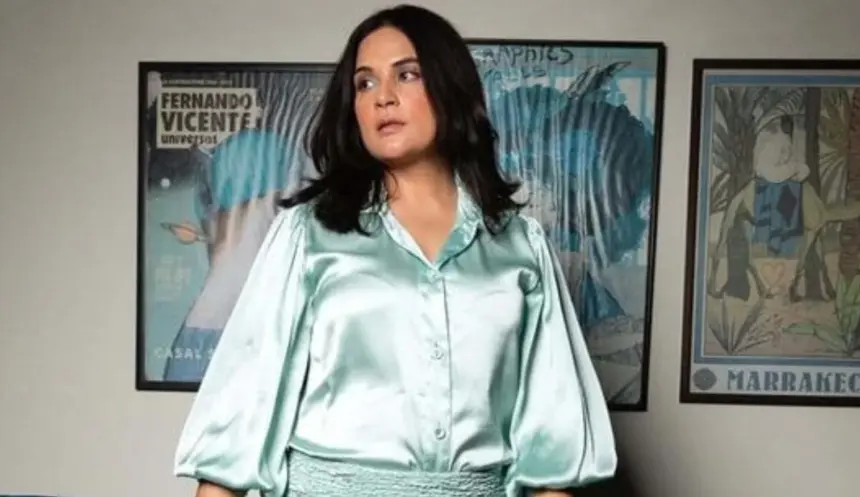
Actor Richa Chadha has criticised online trolls who target female celebrities over their appearance after motherhood, coming out in support of Katrina Kaif following body-shaming comments directed at the actor after she became a mother.
In an interview with India Today, Richa spoke about the scrutiny women face over their bodies and argued that social media users should not be allowed to dictate how women feel about themselves. The actor, who became a mother in 2024, also defended women in the film industry who balance motherhood with their professional commitments.
Her remarks come amid renewed discussion about the appearance-based criticism faced by actresses following pregnancy and childbirth. Katrina, too, has spoken about the importance of protecting one’s self-worth from online commentary.
Richa Chadha calls out trolls targeting Katrina Kaif
Speaking to India Today, Richa said women should not feel compelled to listen to people who criticise their bodies. She cited several established actresses, including Madhuri Dixit, Juhi Chawla, Rani Mukerji and Sonali Bendre, while arguing that women in the film industry have continued to pursue their careers alongside motherhood.
Richa questioned why people feel entitled to comment on the physical appearance of actors such as Katrina Kaif and Aishwarya Rai. She argued that such remarks contribute little to public discussion and deserve less attention in the media.
The actor also said she did not believe the criticism was representative of the film industry as a whole. Instead, she pointed to online behaviour by members of the public and expressed frustration with the personal attacks celebrities face on social media.
Her comments put the focus on a recurring issue in celebrity culture: women can face intense scrutiny over their appearance at a time when they are also navigating significant personal and physical changes.
Richa Chadha blames social media anonymity for online abuse
Richa also criticised the way social media can embolden users to post insulting remarks about public figures. She argued that anonymity can make some people more willing to direct abuse at celebrities than they might be in a face-to-face interaction.
“Industry is not like this. It’s common people who have been emboldened by the anonymity of social media,” she said in the interview, according to the supplied report.
She further condemned the sense of entitlement behind comments about actresses’ bodies, arguing that public visibility does not mean celebrities owe strangers an explanation or justification for their appearance.
Richa’s remarks reflect a broader debate about online accountability and the culture of commenting on public figures’ personal lives. Although celebrities often face public criticism as part of their profession, criticism of their work is different from personal attacks about their bodies or appearance.
Her argument is that such comments should not be treated as meaningful assessments of a woman’s worth, particularly when they target her after childbirth.
Katrina Kaif on protecting self-worth from social media criticism
Katrina has also spoken about the emotional impact of online commentary. At an event in the UK, she reportedly discussed the importance of not allowing social media narratives to determine a person’s self-worth.
“I think we really need to be careful in letting the narrative on social media affect our self-worth,” Katrina said, according to the supplied report.
She explained that allowing every criticism to dictate personal decisions could limit a person’s freedom to make choices and move forward in life. The actor added that public opinion can change, making it important to develop confidence that does not depend entirely on external approval.
“There are times when the world is going to celebrate you and other times when you have to be your own biggest cheerleader,” she said.
Katrina’s comments underline the pressure that can come with constant public visibility. Social media can offer actors a way to connect with audiences, but it can also expose them to harsh judgments from strangers who have little knowledge of their personal circumstances.
Her message encourages people to distinguish between constructive feedback and comments that are intended to shame or undermine them.
The scrutiny women face after motherhood
The discussion around Katrina and Richa highlights how motherhood can become another reason for women in the public eye to face scrutiny over their bodies and careers.
Pregnancy and childbirth bring individual physical experiences, and recovery does not follow one universal timeline. Yet public figures can find themselves judged against unrealistic expectations about how quickly they should look or behave after having a child.
Such commentary can reinforce the idea that a woman’s appearance is open to public evaluation, regardless of her achievements or personal circumstances. It can also shift attention away from her work and towards expectations that may have little relevance to her professional abilities.
Richa’s response challenges that focus by defending women’s right to live without being reduced to their appearance. Her comments also raise a wider question about why the bodies of female celebrities are so frequently treated as subjects for public debate.
Richa Chadha and Katrina Kaif’s message on body-shaming
While Richa directly criticised the people posting body-shaming comments, Katrina’s remarks focused on maintaining self-worth in the face of public judgment. Together, their comments draw attention to two sides of the same issue: the responsibility of people posting online and the pressure placed on those who are targeted.
Neither public recognition nor a career in entertainment removes a person’s right to privacy, dignity or respect. And while public figures may be accustomed to scrutiny, that does not make personal insults harmless or necessary.
The conversation is also relevant beyond celebrity culture. Body-shaming can affect people regardless of their profession or public profile, and the normalisation of appearance-based insults online can make such behaviour seem more acceptable than it is.
Richa’s criticism and Katrina’s message offer a reminder that a person’s body is not a measure of their worth. Motherhood, professional success and personal identity should not be reduced to the opinions expressed in social media comment sections.