







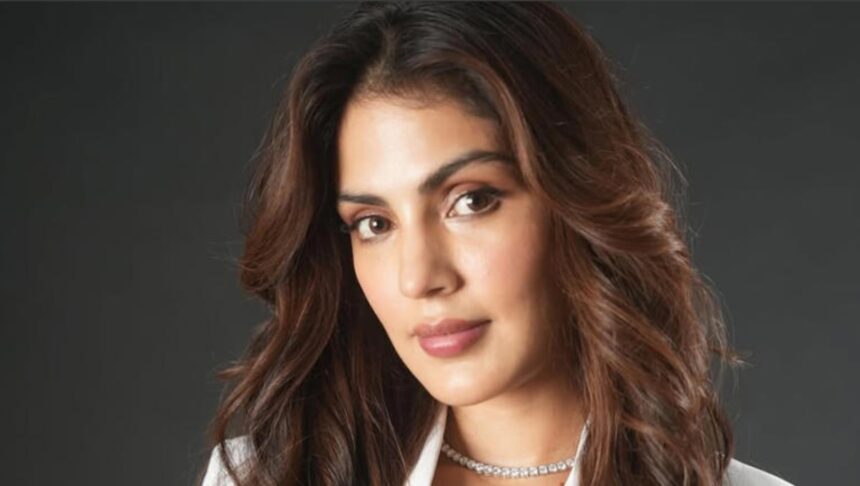
Rhea Chakraborty has opened up about one of the most difficult periods of her life, recalling the 28 days she spent in judicial custody in 2020 and the unexpected perspective she gained from the experience.
During a conversation with Tanmay Bhat, the actor spoke about her time in prison, the people she met there and how the experience changed the way she looked at society.
Rather than focusing only on the hardship of incarceration, Rhea said the experience challenged some of her assumptions about the people inside jail.
“I feel people inside jail are better than people outside jail.”
She explained that, in her experience, many women in the undertrial prison had not yet been convicted and that the environment removed many of the social distinctions people carry outside.
See more of our coverage in your search results.
Add Hunterfly on Google“There’s no hierarchy. Everyone’s equal, everyone’s a number, there’s no name,” she said.
Her comments offer a personal reflection on an experience that became one of the most closely followed chapters of her public life.
Rhea Says Prison Changed Her View of People
Rhea explained that entering prison exposed her to people she might otherwise never have encountered.
She said that among women in the undertrial prison, she found a sense of equality that was different from life outside.
Inside, according to her recollection, social status and professional identity did not carry the same significance.
Everyone was essentially treated according to the same institutional system.
See more of our coverage in your search results.
Add Hunterfly on GoogleFor Rhea, that experience appears to have challenged the assumptions she had carried about people who end up in prison.
She also pointed out that being an undertrial is different from having been convicted of a crime. People awaiting trial have not necessarily been found guilty.
Women Found Ways to Pass the Time
Not every memory Rhea shared was heavy.
See more of our coverage in your search results.
Add Hunterfly on GoogleShe recalled lighter moments among the women in prison, including singing and dancing to pass the time.
She also remembered the women preparing thecha, a spicy Maharashtrian preparation.
Those details gave her account a more human dimension, showing how people inside the prison created moments of normality despite their circumstances.
When the conversation turned towards prison food, Rhea responded with humour rather than giving a conventional account of the meals.
She joked about the subject while discussing her plans to write a book.
“Guys, I am writing this book, padh lena.”
When asked what she would call it, she offered the tongue-in-cheek title:
“The book is called Chudail ka badla.”
Her comments appeared to reflect the lighter, self-aware tone she sometimes brings when discussing difficult experiences.
Rhea Chakraborty’s Arrest in 2020
Rhea was arrested by the Narcotics Control Bureau (NCB) on September 8, 2020, in connection with a drugs investigation linked to the death of actor Sushant Singh Rajput.
She was accused in the drugs-related investigation of procuring drugs for Rajput.
Rhea remained in judicial custody for 28 days before being granted bail on October 7, 2020.
The arrest and subsequent legal proceedings attracted enormous media attention and significantly affected her professional and personal life.
Her latest comments revisit that period from the perspective of several years later.
Life After the Investigations
Rhea also spoke about how life changed after the investigations surrounding Sushant Singh Rajput’s death.
The CBI filed a closure report in March 2025, according to the information supplied for this article. The report concluded that Rajput’s death was a suicide and brought the agency’s investigation to a close.
Rhea later regained her passport and was able to travel abroad again.
She recalled the experience of travelling with her parents after the restrictions on her movement were lifted.
According to Rhea, even a routine immigration interaction felt unusual because she had become accustomed to being stopped or questioned.
“It felt strange to not be stopped at immigration, and being told, ‘Okay ma’am, you can go.’ I was like, ‘What do you mean?’”
The moment appears to have made her realise how dramatically ordinary aspects of her life had changed during the years surrounding the case.
She Also Noticed a Change in the Film Industry
Rhea said the experience affected her interactions within the entertainment industry as well.
She recalled entering rooms after her release and noticing that conversations would sometimes change once people realised she was present.
The observation reflects the wider impact that intense public scrutiny can have on a celebrity’s professional relationships.
For Rhea, returning to everyday professional life was therefore not simply a matter of going back to work. It also meant navigating an environment in which her name had become closely associated with one of the country’s most widely reported criminal investigations.
Rhea Chakraborty Returns to Reality Television
Rhea has continued working in entertainment following the years of legal and media scrutiny.
She is currently appearing in Karan Johar’s The Traitors 2, a reality series available to stream on Prime Video.
Her return to a high-profile entertainment project marks another phase in her professional journey.
The actress’s latest interview also suggests that she has had considerable time to reflect on the experiences that shaped the past several years.
A Different Perspective on a Difficult Chapter
Rhea Chakraborty’s account of prison is notable because it focuses not only on incarceration itself but also on what she says she learned from the people around her.
Her statement that people inside jail can seem “better” than people outside is clearly a personal observation rather than a general claim about prisoners or society.
She also emphasised the absence of social hierarchy she experienced inside the undertrial prison, where professional identity and public status mattered far less.
Years after her arrest, Rhea is now speaking about that period with a mixture of seriousness and humour.
Her comments show how an experience that once dominated her life continues to influence the way she thinks about people, freedom and ordinary moments.