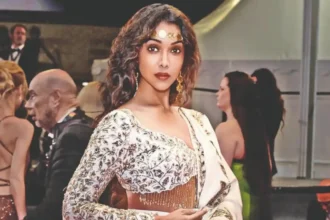






Radhika Apte has questioned the different standards applied to male and female actors in action films amid online criticism of Alia Bhatt’s appearance and casting in Alpha. The debate has renewed conversations about women’s representation, physical expectations and changing audience attitudes in Indian cinema.
The discussion around women in action cinema has taken another turn following criticism directed at Alia Bhatt over her role in Alpha. Actor Radhika Apte has reportedly challenged the reaction, drawing attention to what she sees as a persistent double standard in the way audiences judge male and female performers.
The issue goes beyond one film or one actor. It raises a broader question about whether women are expected to meet stricter physical and social expectations than their male counterparts when taking on demanding roles.
According to the account of Apte’s promotional interview, she questioned why female actors face such close scrutiny over their fitness and suitability for action-oriented characters while comparable concerns about male performers often receive less attention.
Her reported remarks have brought renewed focus to the challenges women face as they move beyond conventional roles in mainstream Indian entertainment.
Radhika Apte Questions Different Standards for Male and Female Actors
Action films often place physical performance, stamina and screen presence under the spotlight. However, the expectations surrounding these qualities can differ depending on whether the performer is a man or a woman.
The criticism surrounding Bhatt’s appearance in Alpha has highlighted this disparity. Female performers are frequently judged on several fronts at once, including their physique, age, appearance and perceived suitability for a particular character.
Apte’s reported comments challenge the idea that women must satisfy a narrow physical ideal before audiences accept them in action roles.
The discussion also raises questions about how action heroes are evaluated. While male actors may be accepted in a wide variety of physical forms, women can face intense scrutiny when they step into roles traditionally associated with male protagonists.
Such reactions can influence public conversations about casting and performance before audiences have fully considered the character or the story.
Why Alia Bhatt’s Role in Alpha Has Become a Talking Point
Alpha has attracted attention not only because of its action-oriented premise but also because of the discussion surrounding Bhatt’s casting.
Some of the online criticism reportedly focused on whether the actor was convincing in the role, while other comments questioned her suitability to portray a younger character.
These are separate issues. A discussion about age appropriateness or character development concerns the creative decisions behind a production. Criticism focused primarily on an actor’s appearance, however, can reflect broader assumptions about what an action heroine should look like.
Distinguishing between these arguments is important when assessing public reactions to a film.
The reported debate surrounding Alpha illustrates how conversations about casting can quickly extend beyond acting, direction and storytelling to include expectations about an actor’s body and personal appearance.
For filmmakers, the challenge is to create believable characters while allowing performers the freedom to take on roles that do not conform to established stereotypes.
Editorial note: The reported box-office total and specific casting details should be checked against reliable industry reporting before publication.
Women Are Taking on More Complex Roles in Indian Cinema
The discussion comes amid a wider shift in the kinds of characters being written for women in Indian films and streaming productions.
Female performers are increasingly appearing in stories built around crime, political conflict, action and moral ambiguity. Rather than serving only as supporting characters, women are taking on central roles that shape the direction of a story.
Projects such as The Family Man, which features Samantha Ruth Prabhu in its second season, have contributed to conversations about women playing complex characters in high-stakes narratives. The Malayalam film Lokah Chapter 1: Chandra, starring Kalyani Priyadarshan, has also drawn attention to a female-led superhero story rooted in Indian cultural influences.
These projects differ in genre and storytelling approach, but they demonstrate the range of roles available to female performers.
Their reception also points to an important distinction: representation is not simply about placing a woman at the centre of a story. It also involves giving her character meaningful motivations, agency and the ability to influence events.
As more women-led projects reach audiences, discussions about casting and characterisation are likely to remain an important part of the entertainment landscape.
Radhika Apte and Keerthy Suresh Prepare for Akka
Apte’s reported remarks emerged during a discussion involving actor Keerthy Suresh about the changing space available to women in Indian entertainment.
The two actors are associated with Akka, a crime thriller series described in the supplied report as being set in a kingdom governed by women. The story centres on a conflict involving Bhavani, a powerful matriarch, and Rudra, a rebel whose actions threaten the established order.
The reported ensemble includes Tanvi Azmi, B. Jayashree and Mahesh Manjrekar, with Dharmaraj Shetty named as the director.
The series is reported to be scheduled for release on Netflix on October 30, 2026. As that date approaches, the release schedule and official cast and production credits should be confirmed through Netflix or the production team before the details are published.
The premise offers another opportunity to explore female power, competing loyalties and conflict through a crime-driven narrative. Its reception may also contribute to the wider discussion about how audiences respond to women in unconventional roles.
The Bigger Conversation About Women in Action Cinema
The criticism of Alpha and Apte’s reported response point to a recurring issue in entertainment: women can face expectations that extend well beyond their performances.
An action role can reasonably invite questions about physical preparation, choreography, character credibility and the quality of the filmmaking. Those questions are part of evaluating a production. They become less constructive when the discussion centres on rigid assumptions about how a female actor should look.
The same distinction applies to casting decisions. Audiences can debate whether a performer suits a character without turning the conversation into a judgement about the actor’s appearance or whether women should occupy particular roles.
For the industry, the long-term challenge is to create characters whose credibility comes from writing, performance and direction rather than a single standard of physical appearance.
For viewers, the conversation offers an opportunity to assess action films on their storytelling and execution while recognising that female performers should be afforded the same range of creative possibilities as male actors.
As Indian cinema continues to experiment with female-led action and crime stories, the response to these projects will help shape future conversations about representation, casting and audience expectations.
Ultimately, the debate surrounding Alia Bhatt’s Alpha role is about more than one performance. It highlights the continuing tension between traditional expectations and the expanding space for women in Indian cinema.