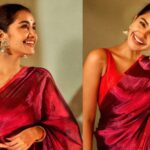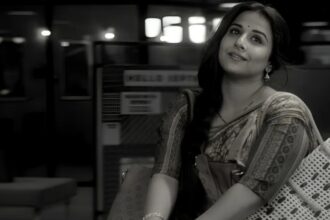






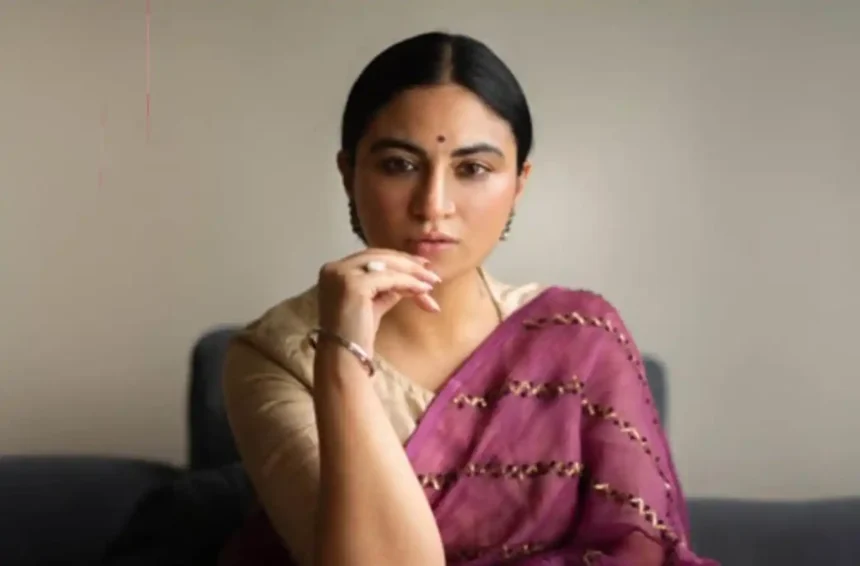
Priya Malik’s journey into poetry did not begin as performance or career planning. It began as a private act of self-expression during her childhood in Dehradun, where writing became a way to process emotions before the world could define them.
Over the years, that private practice evolved into a public artistic identity spanning spoken word poetry, television, acting, teaching and activism. From being a teacher in Australia and the first person of Indian origin on Big Brother Australia, to appearing on Bigg Boss and becoming a recognised spoken word performer, Malik’s career has moved through multiple public identities.
Yet she insists that the core of her work has remained unchanged.
“I’m a poet speaking my truth in the way I know how,” she says. “Everything else is just poetic justice.”
See more of our coverage in your search results.
Add Hunterfly on Google‘Writing Was the Only Room Where I Could Hear Myself’
Reflecting on her early years, Malik says writing began as a survival tool rather than an artistic ambition.
“At 12, I wasn’t trying to become a poet. I was trying to survive teenage heartbreak and longing,” she recalls. “Writing was the only room where I could hear my own voice without interruption.”
Growing up in Dehradun, she describes a childhood shaped by both encouragement and practicality, where ambition existed alongside everyday constraints.
Over time, migration, teaching in Australia, personal loss and reinvention shaped her understanding of belonging.
“The diaspora teaches you something strange,” she says. “Sometimes you become more Indian after leaving India.”
See more of our coverage in your search results.
Add Hunterfly on GoogleReality TV, Identity and Boundaries
Malik’s experiences on Big Brother Australia and Bigg Boss offered contrasting lessons about visibility.
She describes Big Brother as a lesson in representation and awareness of perception, while Bigg Boss taught her the importance of boundaries.
“Big Brother taught me visibility. Bigg Boss taught me boundaries,” she says.
See more of our coverage in your search results.
Add Hunterfly on GoogleReflecting on reality television, she adds, “Vulnerability without boundaries becomes entertainment.”
For Malik, identity cannot be reduced to edited footage or curated moments.
“Identity is not footage. Identity is what survives after editing,” she notes.
‘Visibility Without Truth Is a Very Lonely Room’
One of the most defining shifts in her career came when she stepped away from conventional acting in 2017 to pursue writing more fully.
She describes this as a turning point where creative clarity outweighed the comfort of visibility.
“There came a point where I realised I was spending more time helping someone else say lines than listening to my own voice,” she says.
“Visibility without truth is a very lonely room.”
Poetry, Gender and the Politics of Voice
Malik’s spoken word work, including Right To Pleasure, has often centred on consent, autonomy and female desire.
She notes that while conversations around female pleasure have evolved, social conditioning still persists.
“Women are still taught sacrifice before selfhood,” she says.
She argues that silence is often rewarded in society, while expression is misunderstood as difficulty.
“Difficult women are not difficult. They are often just audible,” she adds.
Motherhood and the Redefinition of Love
Motherhood, she says, has reshaped her understanding of love and emotional depth.
“Motherhood has dismantled my ego,” she reflects.
Where love once felt cinematic and intense, she now describes it as quieter and rooted in consistency.
“Love is repetition. Sleep deprivation. Fear. Forgiveness,” she says. “Showing up when nobody claps.”
Creativity, Collaboration and Integrity
Balancing activism and commercial work, Malik emphasises alignment over restriction.
“If a collaboration asks me to dilute my truth, I need to walk away,” she says. “But if storytelling has integrity, poetry belongs everywhere.”
She also highlights the importance of recognising creative work as labour that deserves compensation.
From Performance to Publication
With upcoming poetry collections in Hindi and English, Malik is expanding into publishing and mentorship through initiatives like Priya Ki Pathshaala.
She describes this phase as both “beautiful and terrifying,” as it shifts her role from performer to creator of spaces for others.
The Enduring Power of Live Poetry
In an era dominated by short-form digital content, Malik believes live poetry still holds unique emotional power.
“A reel can entertain you,” she says. “But a room full of strangers breathing together while someone tells the truth transforms you.”
Choosing Freedom Over Certainty
Looking back, Malik acknowledges that creative freedom has come at a cost.
“It has cost me certainty, approval, stability and predictability,” she says.
Yet she remains clear about her choice.
“There is a different kind of poverty in abandoning yourself. And I have lived long enough to know which one hurts more.”