






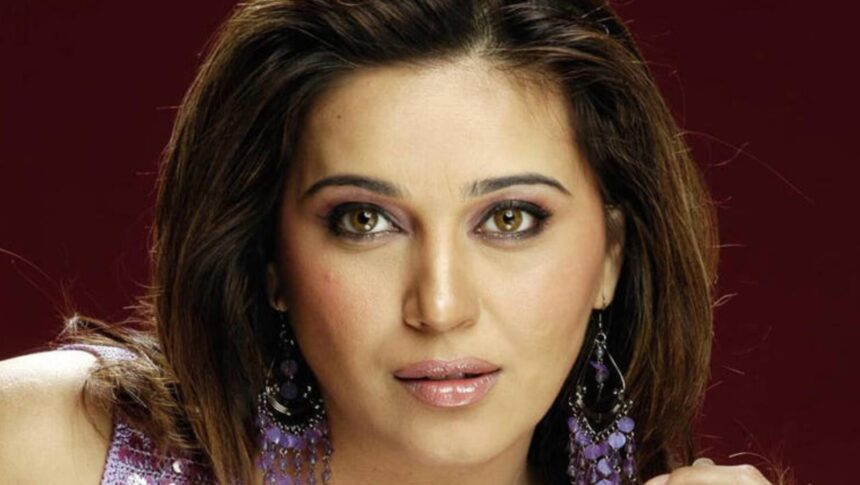
Niki Walia has reflected on her three-decade-plus journey in entertainment, recalling why she chose personal dignity over professional opportunities early in her career. The actor also spoke about her latest film Bhai Tera Star Hai, her long-running resemblance to Madhuri Dixit and her efforts to convince casting directors that she can play characters beyond the polished urban roles often offered to her.
For Niki Walia, a long career in showbiz has meant more than simply collecting film and television credits. The actor says some of her most important career decisions have involved knowing when to stand her ground.
From making her film debut with Mr Azaad to moving into television and later returning to films, Walia has built a career across different formats. In a recent conversation with Mid-Day, she looked back at the choices that shaped her journey and explained why she has never been comfortable compromising on her principles.
Niki Walia Calls Herself a ‘Rebel’
Walia described herself as something of an anomaly when she entered the industry.
See more of our coverage in your search results.
Add Hunterfly on GoogleAccording to the actor, she was outspoken about situations that made her uncomfortable even when she was a newcomer and understood that speaking up could potentially affect her professional opportunities.
Looking back, she said her decision to step away from films was partly connected to her unwillingness to accept behaviour she considered inappropriate or unacceptable.
“I was one of those anomalies, a rebel.”
Walia said she was vocal about her concerns at a time when maintaining a career could sometimes mean staying silent.
For her, however, professional success was not worth sacrificing her sense of dignity.
‘I Chose My Dignity Over My Career Path’
Walia recalled an incident from the sets of Mr Azaad, her early film with Anil Kapoor.
See more of our coverage in your search results.
Add Hunterfly on GoogleShe said that despite being around 20 and relatively new to the industry, she spoke publicly about feeling uncomfortable with how she was treated during the film.
The actor described the decision as a defining moment in how she approached her career.
“I chose my dignity over my career path.”
Walia also recalled expectations surrounding social interactions in the film business. She said she was uncomfortable with the idea of attending dinners with distributors simply because she was told such networking could help the film secure more territories.
See more of our coverage in your search results.
Add Hunterfly on GoogleShe described the experience as unpleasant and said she was unwilling to participate simply for professional gain.
Her recollections offer an insight into the boundaries she says she established early in her career.
Why Niki Walia Maintained Professional Distance From Anil Kapoor
Walia also looked back at working with Anil Kapoor in Mr Azaad.
Because Kapoor was considerably more established at the time, she said she remained conscious of the professional hierarchy between them.
Rather than developing a casual relationship with her senior co-star, Walia said she maintained a certain distance.
“He was much more senior than I, and I didn’t have that kind of rapport. I always kept my professional distance.”
She added that she was nervous around Kapoor at the time and therefore did not have the kind of informal on-set equation that some actors develop with their co-stars.
The Madhuri Dixit Comparison Has Followed Her for Years
Another subject that has repeatedly surfaced throughout Walia’s career is her perceived resemblance to Madhuri Dixit.
Walia said comparisons between the two actresses have been made so frequently that she has encountered them throughout much of her professional life.
She suggested that the comparison has not disappeared with time and that people continue to bring it up even today.
“There wasn’t a passing day of my life that I was not made aware, or someone told me, or I have read it somewhere. It is happening even today.”
Rather than making the comparison the centre of her identity, Walia appears keen to be recognised for the range of characters she can portray.
Niki Walia Wants to Move Beyond ‘Elite’ Roles
One of Walia’s biggest frustrations with the casting process is what she sees as a tendency to associate her appearance with a particular type of character.
The actor said she has repeatedly tried to convince casting directors that she should not be restricted to sophisticated, affluent or urban roles.
She is willing, she said, to undergo significant physical transformation if a character demands it.
“I have really struggled to make people understand that you cannot put me in a box.”
Walia also pointed to Amitabh Bachchan’s transformation for Paa as an example of how an actor’s appearance can be altered to suit a character.
Her argument is that if an established actor could undergo a major transformation for a role, there should similarly be room to transform her polished screen image into something more rural or unconventional.
“You can definitely change my elite and urban look to a rural look, that’s not hard.”
Niki Walia on Bhai Tera Star Hai
Walia’s latest role in Bhai Tera Star Hai gave her an opportunity to move in precisely that direction.
She plays Mandy, the wife of Sanjay Kapoor’s character, and described the character as loud, unapologetic and bold.
After nearly three decades in the industry, Walia said she was grateful for the opportunity to play a part that moved away from the image audiences may traditionally associate with her.
However, she also expressed disappointment that she felt the film did not receive the recognition it deserved.
Walia specifically expressed sympathy for Vivek Agarwal and Raghav Juyal, saying she felt bad that the film did not receive the response she had hoped for.
A Career Built on Staying True to Herself
Walia’s reflections present a career shaped as much by personal boundaries as by acting opportunities.
From speaking up as a young actor to resisting typecasting decades later, she says she has consistently wanted to make choices on her own terms.
Her latest comments also underline a continuing challenge for actors with established screen images: convincing the industry that familiarity should not determine the limits of their casting.
For Walia, the goal appears straightforward — to be given the opportunity to disappear into a character rather than repeatedly being asked to play versions of the image audiences already associate with her.