







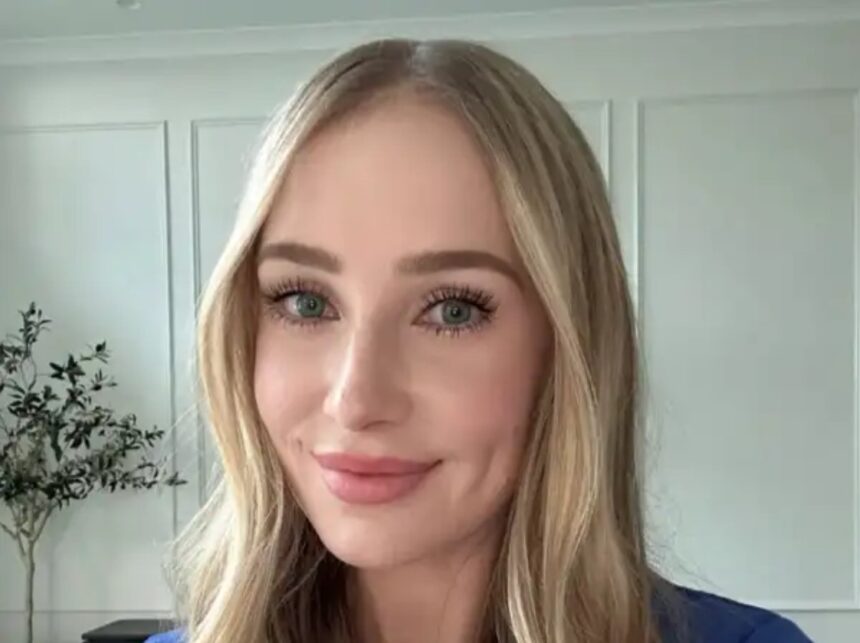
Contouring on fair skin has long been a beauty challenge. What is meant to enhance bone structure often ends up looking muddy, orange, or harsh—more like a makeup misstep than sculpted definition. Beauty expert and creator Lauren Curtis has recently revisited this problem, sharing how she refined her contour routine to suit her natural, untanned skin tone.
Her approach moves away from traditional bronzing techniques and instead leans into the science of light and shadow, prioritising realism, restraint, and thoughtful product selection over heavy application.
1. Prioritising Undertone Over Intensity
One of the most common mistakes with fair complexions is using contour shades that are too warm. Curtis explains that contouring only began to work for her when she stopped relying on products designed to imitate a tan.
On pale skin, warm tones often appear orange rather than shadow-like. To achieve a believable sculpt, the contour shade must replicate natural shadows, which are inherently cool-toned or grey. Choosing a cool-toned taupe instead of a golden bronzer allows for subtle optical shaping without visible colour distortion.
See more of our coverage in your search results.
Add Hunterfly on Google
2. Utilising Matte Finishes for Realism
Curtis is firm about one rule: contour should always be matte. While shimmer products work well for highlighting, they undermine the purpose of sculpting.
Real facial shadows absorb light—they do not reflect it. Matte powders allow contoured areas to visually recede, creating depth that appears natural rather than cosmetic. The result is definition that looks like part of the face’s structure, not a layer of makeup sitting on top.
3. Strategic Placement: Cool vs Neutral Warm Tones
The routine follows a carefully balanced dual-tone approach. Curtis applies cool-toned contour only where the face naturally hollows, such as under the cheekbones and along the sides of the nose. This enhances existing bone structure without exaggeration.
Slightly warmer—but still neutral—shades are reserved for the forehead and outer perimeter of the face. This placement mimics where sunlight naturally hits the skin, adding warmth without compromising the cool-toned shadows. The result is balance, preventing the complexion from appearing flat or “dirty.”
4. Building Definition Through Contrast, Not Product
Rather than layering darker pigment to increase definition, Curtis relies on contrast. By pairing contour with a lighter matte powder, she sharpens features through the interplay of light and shadow.
See more of our coverage in your search results.
Add Hunterfly on GoogleThis technique allows the face to appear sculpted using minimal product. Instead of building thickness, the routine leverages visual perception, keeping the makeup lightweight and refined.
5. Refining Features with Precision
Curtis extends her contour philosophy beyond the cheeks. For the nose, she follows the natural highlight along the bridge instead of drawing artificial lines, preserving realism.
On the eyes, a neutral matte shade is blended just above the crease and diffused upward to create a subtle lifted effect. These adjustments ensure that contouring feels cohesive across the face, with no single feature appearing overworked.
See more of our coverage in your search results.
Add Hunterfly on Google6. Verifying Results in Real-World Lighting
A final and essential step in Curtis’s routine is checking makeup in natural light. While contour may look seamless under studio lighting, it can appear exaggerated outdoors.
Curtis recommends continuous blending and lightly pressing a damp sponge over the skin to absorb excess powder. The goal is a finish where the makeup itself is nearly invisible, leaving only the impression of refined, natural structure.
Why This Routine Works
Lauren Curtis’s contour method succeeds because it respects the nuances of fair skin. By focusing on undertone accuracy, matte textures, controlled placement, and real-world lighting, her routine avoids the common pitfalls that make contour intimidating for pale complexions.
Rather than transforming the face, the technique enhances what already exists—subtle, believable, and modern.
FAQs
Q. Why does contour look orange on fair skin?
Warm bronzers clash with pale undertones, making contour appear orange instead of shadow-like.
Q. Is bronzer the same as contour?
No. Bronzer adds warmth, while contour creates shadow and structure.
Q. What finish works best for contouring fair skin?
Matte finishes are essential for realistic depth.
Q. What contour shade suits fair skin best?
Cool-toned taupe or grey-neutral shades mimic natural shadows most effectively.