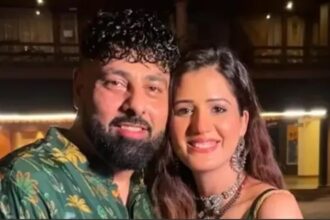









Kriti Sanon has opened up about a deeply personal decision she made several years ago: freezing her eggs.
In a candid conversation with Humans of Bombay founder Karishma Mehta, the actor explained why she decided to preserve her fertility options and how the experience changed the way she viewed marriage, motherhood and the pressure often associated with age.
Sanon said she did not want major personal decisions to be dictated by a perceived deadline. Instead, she wanted the freedom to decide whether and when she was ready for marriage or children.
For the actor, egg freezing provided what she described as a “safety net” and gave her a greater sense of peace of mind.
See more of our coverage in your search results.
Add Hunterfly on GoogleHer comments have also renewed public discussion around fertility preservation, reproductive choices and the social expectations often placed on women.
Why Did Kriti Sanon Freeze Her Eggs?
Sanon’s decision was primarily connected to her desire for greater flexibility over her future.
The actor explained that she did not want to feel compelled to marry or become a mother simply because she believed her biological clock was running out.
That distinction was important to her.
Marriage and parenthood, she suggested, should be decisions made when a person genuinely feels ready rather than milestones pursued because of social expectations or concerns about age.
See more of our coverage in your search results.
Add Hunterfly on GoogleBy freezing her eggs, Sanon felt she had created an additional option for the future.
The procedure did not mean that she had decided exactly when—or whether—she wanted to have children. Instead, it allowed her to preserve eggs for potential future use.
For Sanon, that possibility brought reassurance.
See more of our coverage in your search results.
Add Hunterfly on Google‘A Safety Net’ for the Future
During the conversation, Sanon described egg freezing as a form of security.
The decision gave her the ability to continue concentrating on her career and personal life without feeling that every passing year had to be measured against a deadline for motherhood.
She also acknowledged that fertility preservation can be expensive and said she considered herself fortunate to have been able to afford the procedure.
Her comments are significant because egg freezing is not equally accessible to everyone. The financial cost of consultations, medication, monitoring, egg retrieval and storage can make the process difficult for many people.
Sanon’s experience therefore also highlights the economic dimension of fertility preservation.
She Froze Her Eggs Before Mimi
Interestingly, Sanon underwent the procedure before beginning work on Mimi, the film in which she played a woman who becomes a surrogate mother.
The timing was partly practical.
For Mimi, Sanon had to undergo a significant physical transformation and gain approximately 15 kilograms for the role.
She had a break in her filming schedule during which she decided to undergo egg-freezing treatment.
The process, however, was not effortless.
Sanon has spoken about the physical and emotional difficulties associated with the treatment, including hormonal changes and mood fluctuations.
Despite those challenges, she ultimately considered the decision worthwhile.
What Happens During Egg Freezing?
Egg freezing, medically known as oocyte cryopreservation, is a fertility-preservation procedure in which mature eggs are retrieved from the ovaries and frozen for possible future use.
The process generally begins with ovarian stimulation.
A patient takes hormone medication—often through injections—for roughly 10 to 14 days, although the exact treatment schedule varies from person to person.
The medication encourages the ovaries to develop multiple follicles during a single menstrual cycle.
Throughout this period, doctors typically monitor follicle development through blood tests and ultrasound examinations.
When the eggs are considered mature enough for retrieval, another medication is used to help prepare for the procedure.
The eggs are then collected through an egg-retrieval procedure, generally performed under sedation or anaesthesia.
The mature eggs can subsequently be frozen using a rapid-freezing technique known as vitrification.
They can potentially be thawed at a later stage and fertilised through assisted reproductive treatment if the individual decides to attempt pregnancy.
Egg Freezing Does Not Guarantee a Future Pregnancy
One important point often lost in celebrity discussions about egg freezing is that freezing eggs is not a guarantee of having a baby later.
The procedure preserves eggs; it does not guarantee that those eggs will eventually result in a successful pregnancy.
Several factors influence the outcome, including the person’s age when the eggs were frozen, the number and quality of eggs retrieved, survival of the eggs during thawing, fertilisation rates and embryo development.
Age at the time of egg freezing is particularly important because fertility generally declines with age, and egg quality is affected over time.
Consequently, fertility specialists generally emphasise that egg freezing should be viewed as an option for fertility preservation rather than an insurance policy that guarantees future parenthood.
Why Age Matters in Fertility Preservation
A woman’s ovarian reserve and egg quality naturally change with age.
Although fertility varies significantly from one person to another, reproductive potential generally declines as women get older, with the decline becoming more pronounced in the later reproductive years.
This is one reason some women consider freezing eggs at a younger age.
The objective is to preserve eggs from an earlier stage when they may have a higher likelihood of being chromosomally normal compared with eggs retrieved later.
However, fertility preservation is an individual medical decision.
A person’s medical history, ovarian reserve, reproductive plans and age can all influence whether the procedure makes sense for them.
Anyone considering egg freezing should therefore discuss the potential benefits, limitations, costs and risks with a qualified fertility specialist.
The Physical Side of the Procedure
Egg freezing is often discussed in terms of future reproductive freedom, but the treatment itself can involve a demanding period.
Hormonal stimulation can cause temporary side effects, which may include bloating, breast tenderness, headaches, fatigue and mood changes.
Patients also have to attend monitoring appointments while the ovaries are being stimulated.
The egg-retrieval procedure itself is minimally invasive but still carries medical risks, as does ovarian stimulation.
One uncommon but potentially serious complication is ovarian hyperstimulation syndrome (OHSS), although modern fertility protocols and monitoring have reduced its frequency and severity.
The experience is different for every patient.
That is why Sanon’s account should be understood as her personal experience rather than a universal description of what everyone undergoing egg freezing will experience.
Kriti Sanon’s Decision and the Pressure Around Motherhood
Perhaps the most important part of Sanon’s comments concerns the social pressure surrounding women’s reproductive choices.
Women are often asked questions about marriage and motherhood at different stages of their lives.
For public figures, that scrutiny can become even more intense.
Sanon’s decision represents an attempt to separate personal readiness from external expectations.
Her message is not that every woman should freeze her eggs. Rather, her experience reflects one person’s decision to preserve an option that she valued.
That distinction matters.
Reproductive decisions are highly individual and can involve medical, financial, emotional and personal considerations.
Her Career Was Also an Important Factor
Sanon’s professional life has developed rapidly over the past decade.
As her film career expanded, the question of balancing professional ambitions with personal milestones became increasingly relevant.
Choosing egg freezing allowed her to approach the issue differently.
Instead of treating motherhood as something that had to happen according to a predetermined timeline, she could continue making career and personal decisions while knowing that she had taken a step to preserve some future reproductive possibilities.
This is one reason she described the decision so positively.
The procedure gave her a sense of control at a time when she was navigating a demanding career.
Why Her Revelation Matters Beyond Bollywood
Celebrity disclosures about fertility can have a wider cultural impact because they bring subjects that are often discussed privately into the public conversation.
Egg freezing was once relatively unfamiliar to the general public. It is now increasingly discussed as advances in reproductive medicine have made fertility preservation more visible.
Sanon’s comments may encourage people to learn more about the procedure, but they also underline the importance of understanding what egg freezing can and cannot do.
It is neither a guarantee of future motherhood nor a requirement for women who want to delay having children.
Instead, it is one medical option available to some people who want to preserve reproductive potential.
The Financial Question Cannot Be Ignored
Sanon also acknowledged an important aspect of the process: cost.
Egg freezing can involve substantial expenses, including fertility consultations, medication, monitoring, egg retrieval and ongoing storage.
Costs vary significantly depending on the clinic, location and treatment requirements.
For that reason, access to fertility preservation is influenced not only by medical factors but also by financial circumstances.
Sanon’s acknowledgment that she was fortunate to afford the procedure adds an important layer to the discussion.
It prevents the conversation from presenting egg freezing as an equally accessible choice for everyone.
What Egg Freezing Can—and Cannot—Offer
At its most basic level, egg freezing can offer a person the possibility of preserving eggs for potential future use.
That can provide psychological reassurance to someone who wants to postpone childbearing but is concerned about age-related fertility changes.
But it cannot eliminate biological uncertainty.
Some frozen eggs may not survive thawing. Some may not fertilise. Some fertilised eggs may not develop into viable embryos, and even a transferred embryo does not guarantee a successful pregnancy.
These limitations are why medical professionals generally describe egg freezing as fertility preservation, rather than guaranteed fertility insurance.
Sanon’s Experience Highlights Personal Choice
Sanon’s revelation ultimately brings the conversation back to personal choice.
She made a decision that suited her circumstances, career plans and feelings about future motherhood.
The important point is that she did not want marriage or children to become obligations dictated by a timeline.
Her experience also demonstrates why conversations about fertility should move away from simplistic ideas about what women “should” do at a particular age.
Some people may want children early. Others may want them later. Some may not want children at all. Others may explore fertility-preservation options.
There is no single timeline that applies to everyone.
The Bigger Conversation Around Women and the Biological Clock
The phrase “biological clock” has long been used in conversations about women’s fertility.
While age is undeniably an important factor in reproductive potential, using the concept as a source of social pressure can make personal decisions more difficult.
Sanon’s approach was to acknowledge the biological reality while taking a medical step that could potentially give her more flexibility.
Her decision does not remove the biological limitations of fertility, but it gave her a greater sense of agency over how she approached the future.
That distinction is central to understanding why she considers the procedure so valuable.
A Personal Decision, Not a Universal Prescription
Kriti Sanon’s story should ultimately be viewed as a personal account rather than medical advice.
Egg freezing can be an appropriate fertility-preservation option for some people, but it is not suitable or necessary for everyone.
The procedure involves medical treatment, financial costs and no guarantee of a future pregnancy.
Anyone considering it should speak with a qualified reproductive-medicine specialist who can assess individual circumstances and explain realistic outcomes.
Sanon’s revelation has value precisely because it opens a conversation—not because it provides a single answer.
Why Kriti Calls It a Gift to Herself
For Sanon, the greatest benefit appears to be the freedom the decision gave her.
By taking action before she felt pressured to make decisions about marriage or motherhood, she created an additional option for her future.
She could continue pursuing her career, live according to her own priorities and make personal decisions when she felt genuinely ready.
That sense of autonomy is ultimately what makes her description of egg freezing as a gift to herself so significant.
The procedure was not simply about preserving eggs. For her, it was about preserving choice.