






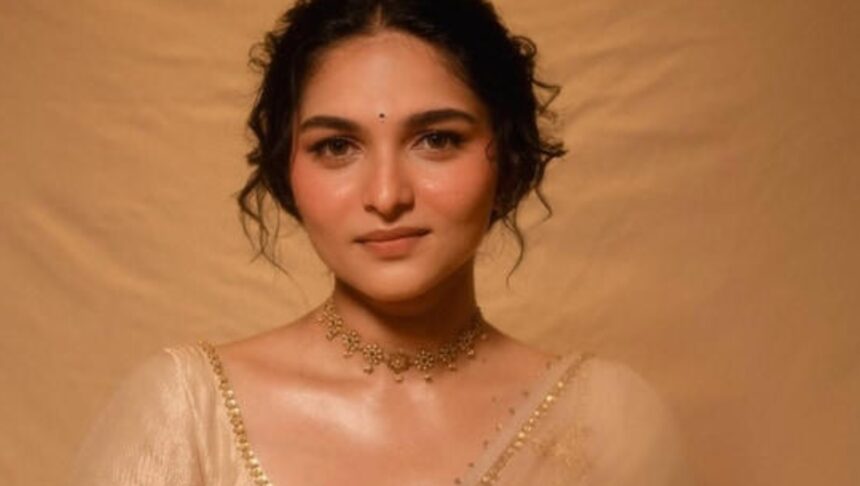
Kayadu Lohar has opened up about one of the more complicated conversations surrounding women in commercial cinema: the line between portraying a character and objectifying an actor.
The actor, who recently appeared alongside GV Prakash Kumar in the creature film Immortal, spoke about the subject during a conversation on Sudhir Srinivasan’s YouTube channel.
Asked about a scene in Immortal and whether she was comfortable with the way her character was presented, Kayadu said she was not opposed to every form of sensual or attention-grabbing portrayal. However, she drew a clear distinction between something that serves the character and a portrayal that exists primarily to objectify a woman.
Her comments also touched on the difficult conversations actors may have behind the scenes when they want to challenge how female characters are presented on screen.
See more of our coverage in your search results.
Add Hunterfly on GoogleKayadu Lohar Says She Is Not Comfortable With ‘Only Objectifying’ Women
Responding to a question about objectification in Immortal, Kayadu acknowledged that similar portrayals of women are common across films.
The actor said she is “definitely not okay with only objectifying” a woman, but added that her response can be different when a particular visual or scene is justified by the character and the story.
“If I feel like the character, it’s what it demands, it’s convincing enough for me, and for the story, then I think it’s okay with me to a certain point,” she said.
For Kayadu, the concern appears to be less about whether a character can be portrayed attractively and more about whether the woman is being reduced to her appearance.
She explained that she does not like the idea of a woman being included in a film simply for an objectifying role.
See more of our coverage in your search results.
Add Hunterfly on Google“You might gain attention, and you might gain a lot of fame. It might trend on Instagram, but I am not comfortable with that idea,” she said.
The actor added that she does not see herself agreeing to a project where objectification is essentially the character’s only purpose.
‘It’s the Most Difficult Conversation to Have’
The conversation became more pointed when the host observed that male characters are rarely subjected to the same kind of visual treatment that female leads experience in commercial cinema.
See more of our coverage in your search results.
Add Hunterfly on GoogleKayadu agreed and spoke about the challenges of raising such concerns within the filmmaking process.
“It’s the most difficult conversation to have,” she said.
According to the actor, questioning established practices can sometimes leave an individual feeling as though they are the only person pushing back.
“And yet, you feel like you’re the only one person fighting for it. And the others are just like, no, this is how it’s done,” she said.
For Kayadu, the answer is to remain firm about one’s boundaries.
“I think you need to stand your ground, and it’s high time for everyone to understand,” she added.
Her comments highlight a broader debate that has been taking place in Indian cinema for years: whether the visual treatment of female characters is necessary to the story or simply a conventional device used to attract attention.
Kayadu Says Audiences Are Also Changing
Kayadu also pointed to an apparent shift in how audiences discuss the representation of women on screen.
She referred to the backlash faced by a film over the way its female character was portrayed and suggested that viewers are increasingly questioning such depictions.
In the past, she said, filmmakers could argue that certain portrayals were being used because “this is what the audience loves.”
Kayadu acknowledged that there are sections of audiences who enjoy such portrayals. However, she believes the broader conversation is evolving.
“Largely now, the audience is changing their point of view about how the woman is shown in the film,” she said.
That shift could eventually influence how filmmakers approach female characters, particularly as viewers increasingly discuss representation on social media and other public platforms.
Where Kayadu Draws the Line
Kayadu’s comments do not suggest that she believes every glamorous, sensual or visually striking portrayal of a woman is automatically problematic.
Instead, she appears to be drawing a distinction between character-driven representation and objectification for its own sake.
For an actor, that distinction can be particularly important because a scene can have very different implications depending on its context within the story.
If a particular visual element contributes to the character, narrative or tone of a film, Kayadu said she can be comfortable with it to a certain extent. What she rejects is the idea of making a woman’s physical appearance her sole purpose within a film.
Her comments also underline the importance of actors being able to discuss boundaries and creative choices with filmmakers before and during production.
Kayadu Lohar’s Immortal Chapter
Kayadu Lohar recently starred in Immortal opposite GV Prakash Kumar.
Directed by Mariyappan Chinna, the creature film generated interest around its unusual premise, although it received a mixed-to-lukewarm response from critics and audiences.
Kayadu’s latest comments have now drawn attention to another aspect of the film—the way her character was visually presented.
Rather than simply dismissing the conversation, the actor used the opportunity to explain her position on objectification more broadly.
Her remarks ultimately point to a changing discussion in Indian cinema: women can be part of visually striking commercial films without their characters being reduced entirely to their bodies or appearance.