




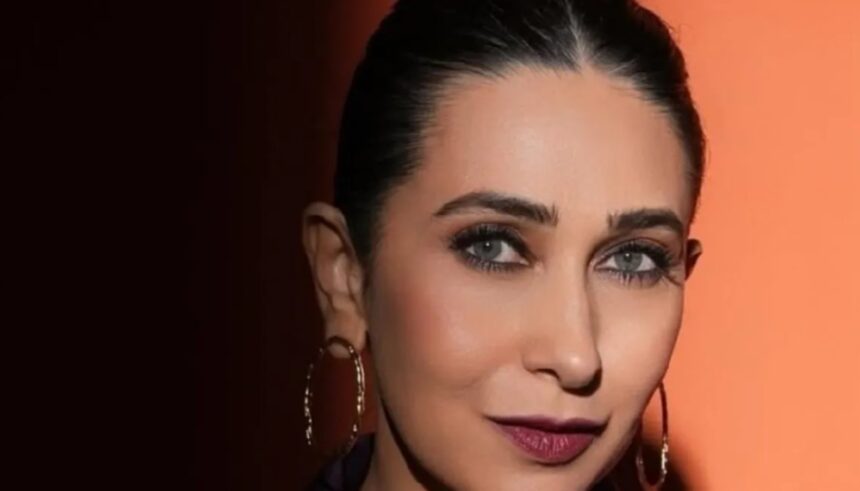
Karisma Kapoor believes Indian cinema is entering an exciting phase where female characters are no longer expected to be perfect. With her upcoming crime thriller Brown bringing her into the shoes of a troubled and deeply flawed protagonist, the actor says audiences are increasingly open to seeing women as complicated, vulnerable and imperfect human beings.
In Brown, Kapoor plays Rita Brown, a character far removed from the polished image traditionally associated with female leads. The actress says it was precisely this complexity that eventually convinced her to take on the project.
Karisma Kapoor Almost Said No To Brown
Kapoor revealed that she initially rejected the project after learning about the demanding shooting schedule. The production required her to spend several weeks in Kolkata, something she was reluctant to commit to given how selective she has become about her work.
“I initially said no to ‘Brown.’ They told me we would have to shoot in Kolkata for 50 or 60 days. I said, ‘Firstly, I don’t do much work. Secondly, there’s no way I’m going for so many days.’”
However, the actress eventually agreed to listen to the script after repeated requests from the creative team. Once she understood Rita’s character, her hesitation disappeared.
See more of our coverage in your search results.
Add Hunterfly on Google“Once I heard the character, I just couldn’t say no. She’s a woman who’s literally broken. She’s raw and vulnerable, but she also has beautiful shades.”
For Kapoor, the opportunity to portray someone so unlike herself made the role even more interesting.
Rita Brown Is Far From A Conventional Female Lead
One of the defining aspects of Brown is its decision to present Rita without the conventional polish often associated with leading actresses.
Kapoor said director Abhinay Deo had a clear vision for how the character should look and behave. Her transformation involved more than simply removing makeup; even small physical details were designed to communicate Rita’s troubled state of mind.
“It was very clear what director Abhinay (Deo) wanted me to portray. From her body language to the way she looks without makeup, right down to her lips turning purple from smoking too much, everything was carefully thought out.”
The details help establish Rita as a woman shaped by difficult circumstances rather than a character created to fit an idealised image of femininity.
‘We’re Finally Showing Complete Human Beings’
Kapoor believes this approach reflects a larger transformation in storytelling.
See more of our coverage in your search results.
Add Hunterfly on GoogleAccording to the actress, the shift is not limited to Indian cinema. Across global entertainment, audiences are increasingly being introduced to protagonists whose personalities contain contradictions, weaknesses and difficult choices.
“Not only is there a global shift, but we’re finally showing complete human beings. We’re not showing just one aspect of a person. We’re showing what somebody can actually go through and whether they survive that or not.”
The rise of streaming platforms has also created additional room for such storytelling. OTT projects can explore characters over longer narratives and often allow writers to move beyond conventional hero-versus-villain structures.
Karisma Kapoor Says Strong Female Characters Aren’t New
While Kapoor welcomes the current wave of layered female protagonists, she does not agree that strong roles for women are entirely a recent phenomenon.
See more of our coverage in your search results.
Add Hunterfly on GoogleThe actress points to several landmark characters from Hindi cinema to explain her argument. She believes every generation has produced memorable women who were determined, resilient or emotionally complex, even if the way their stories were told has changed.
“We cannot say that there haven’t been strong characters in Hindi cinema. I would say from Mother India to now, there have been so many. Each generation, each decade has had certain very strong characters.”
For Kapoor, the difference today lies partly in the freedom to explore sides of women that earlier mainstream storytelling may have left untouched.
“Maybe we are seeing a very different human side today, which we can explore on OTT platforms today.”
From Fiza To Zubeidaa, Kapoor Remembers Her Own Strong Characters
Karisma’s own filmography provides several examples of her willingness to move beyond conventional commercial roles.
She became one of the defining stars of the 1990s through popular entertainers such as Raja Hindustani, Hero No. 1 and Biwi No. 1. At the same time, she took on dramatically demanding parts in films including Fiza, Shakti: The Power and Zubeidaa.
Speaking about Fiza, Kapoor recalled playing a determined young woman searching for her brother. In Shakti: The Power, her character fights to protect and reclaim her child, while Zubeidaa explored the life of a woman caught between personal desires and social expectations.
“Even if you take me for example, there was Fiza, a girl, a determined girl looking for her brother, the loved brother and sister. Or even if you see a film like Biwi No. 1, which is in a fun space. These all have been determined women in their own way.”
She also cited Shakti and Zubeidaa as examples of roles that allowed her to explore different dimensions of female experience.
“Shakti, for that matter. She was a woman fighting to get her child back or Zubeidaa, which would be called a biopic. It was made back then in the 2000s.”
Why Karisma Kapoor Finds This A Good Time For Women In Cinema
Despite her belief that powerful female characters have always existed, Kapoor sees today’s filmmaking environment as particularly exciting.
The actress says contemporary writers are creating roles that allow performers to explore characters with greater psychological depth rather than simply playing one identifiable trait.
“I think it’s a great time in filmmaking and cinema when such interesting characters are being written. They’re roles that female actors can really sink their teeth into and enjoy because they’re allowed to be totally human.”
That idea appears to be central to her decision to take on Brown. Rita is not designed to be aspirational in the traditional sense. She is vulnerable, damaged and complicated, but those imperfections are what make her compelling.
For Karisma Kapoor, the evolution of female characters is therefore not necessarily about replacing the strong woman with a new version of strength. It is about allowing women on screen to be contradictory, flawed, resilient, vulnerable and human—all at once.
And with Brown, Kapoor appears ready to explore precisely that space.