








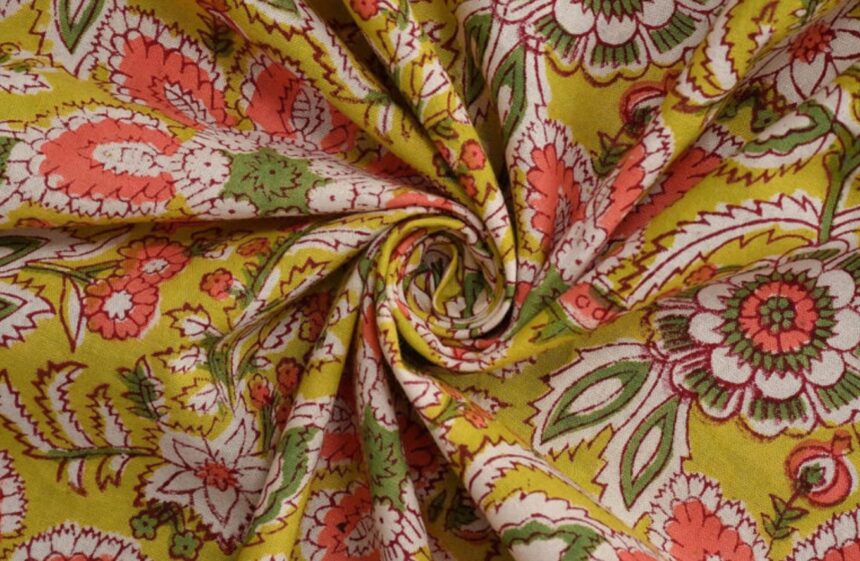
Among India’s most celebrated textile traditions, Kalamkari stands apart for its remarkable blend of artistry, storytelling, and natural science. Recognized for its intricate hand-drawn motifs, mythological narratives, and striking black outlines, the centuries-old craft continues to thrive in parts of Andhra Pradesh and Telangana through techniques that have remained largely unchanged for generations.
What makes Kalamkari especially fascinating is that its signature colours are not produced in modern laboratories. Instead, artisans rely on ingredients commonly found in kitchens, farms, and local markets—transforming simple natural materials into durable pigments that can survive decades.
A Textile Tradition Rooted in Nature
The word Kalamkari is derived from two terms: kalam, meaning pen, and kari, meaning craftsmanship or work. True to its name, the art form involves hand-drawing detailed patterns on fabric using a specially crafted bamboo pen.
Historically, Kalamkari served as a visual storytelling medium, depicting scenes from epics such as the Ramayana and Mahabharata, along with floral designs, temple art, and regional folklore.
See more of our coverage in your search results.
Add Hunterfly on GoogleToday, the craft appears on sarees, dupattas, wall hangings, home décor pieces, and contemporary fashion collections, yet the foundation of the process remains deeply connected to nature.
The Secret Begins Before the Painting
Long before an artist draws the first line, the cotton fabric undergoes a critical preparation process.
Artisans soak the cloth in a mixture of buffalo milk and myrobalan fruit, locally known as karakkaya. This stage serves an important scientific purpose.
The treatment acts as a natural mordant—a substance that helps dyes bond permanently with textile fibres. Without this step, colours would fade quickly, bleed into one another, or fail to adhere properly to the fabric.
This preparation creates the stable foundation needed for the multiple dyeing and painting stages that follow.
See more of our coverage in your search results.
Add Hunterfly on GoogleHow Rust and Jaggery Create Kalamkari’s Black Lines
One of the most distinctive features of Kalamkari art is its deep black outlining.
Rather than using synthetic ink, artisans prepare a traditional solution known as kasim. The mixture is created by fermenting iron scraps, old nails, or iron filings in water combined with jaggery.
Over days or even weeks, natural fermentation produces iron acetate, resulting in a rich black liquid.
See more of our coverage in your search results.
Add Hunterfly on GoogleUsing a bamboo pen, artists carefully dip the kalam into this solution and hand-draw every outline, border, and intricate detail.
The process requires exceptional precision, as each line is drawn freehand without the assistance of digital tools or printing techniques.
A Colour Palette Sourced From Nature
Kalamkari’s beauty extends far beyond its black outlines. Its vibrant colours also originate from natural sources that artisans have relied upon for centuries.
Some traditional colour sources include:
- Pomegranate rind and turmeric for shades of yellow
- Indigo plants for deep blues
- Madder root for rich reds
- Natural plant extracts and minerals for additional tones and variations
Each colour is carefully applied in stages, often requiring repeated washing, drying, and dye-setting processes to achieve the desired intensity.
Why River Water Matters
An often-overlooked element of Kalamkari production is water.
After certain dyeing stages, fabrics are traditionally washed in flowing river water. This practice helps remove excess dye while allowing colours to set naturally within the fibres.
Sun-drying follows many of these washes, with sunlight playing a role in stabilizing and enhancing the final appearance of the colours.
The combination of natural ingredients, water, air, and sunlight demonstrates how closely the craft remains connected to environmental processes.
A Sustainable Art Form for Modern Times
As consumers increasingly seek environmentally conscious products, Kalamkari has gained renewed relevance.
The traditional process relies largely on biodegradable materials and plant-based colour sources rather than synthetic chemical dyes. The handcrafted nature of the art also reduces dependence on industrial manufacturing methods.
For many artisans, preserving these techniques is about more than maintaining a craft—it is about protecting cultural heritage while promoting sustainable production practices.
Why Kalamkari Continues to Endure
In an age dominated by digital printing and mass-produced textiles, Kalamkari continues to captivate collectors, designers, and art enthusiasts around the world.
Every piece reflects hours of manual work, generations of inherited knowledge, and an extraordinary understanding of natural chemistry.
The next time you notice the bold black outlines of a Kalamkari saree, dupatta, or artwork, remember that those lines may have begun with something as simple as rusting iron, jaggery, buffalo milk, and a bamboo pen.
It is a reminder that some of the most enduring artistic traditions are built not only on creativity but also on centuries of practical scientific wisdom passed from one generation to the next.