






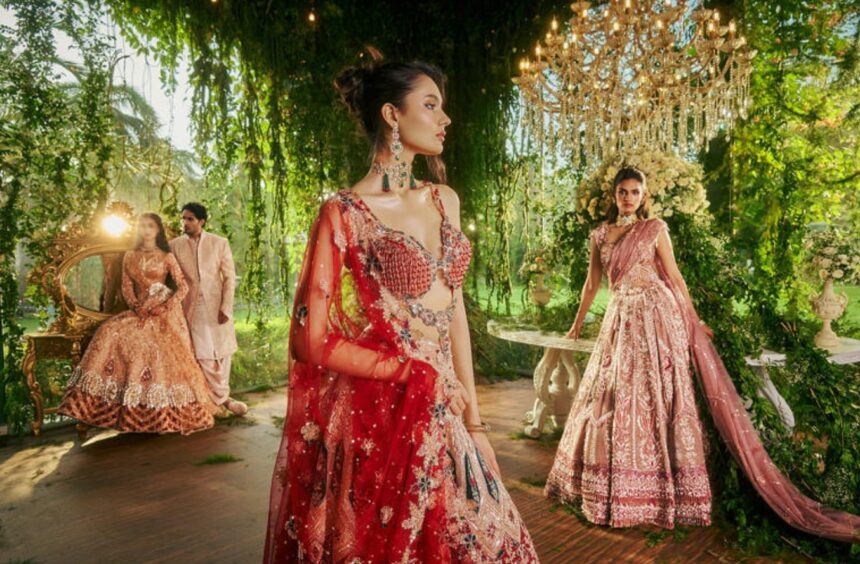
For designers Jigar and Nikita, bridal couture is not simply about preserving tradition—it is about carrying its spirit forward. Their latest eponymous collection, Chardi Kala, draws from the Punjabi philosophy of optimism, resilience and an ever-rising spirit, translating those ideas into contemporary bridal fashion.
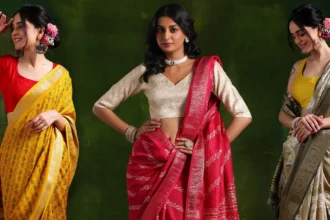
The collection combines handcrafted embroidery, intricate artisanal techniques, modern silhouettes and a globally influenced design language. At its core is the idea that heritage does not belong exclusively to the past; instead, it can evolve with the people who wear it.
A recurring peacock motif brings another layer of meaning to the collection. Traditionally associated with beauty, grace, prosperity and new beginnings, the peacock has been reinterpreted through dimensional embroidery and handcrafted detailing.
From bridal ensembles to contemporary menswear, Chardi Kala brings together Indian craftsmanship and modern design while retaining the celebratory spirit of the wedding wardrobe.
See more of our coverage in your search results.
Add Hunterfly on GoogleTranslating Chardi Kala Into Bridal Couture
For Jigar, the philosophy behind the collection found expression through colour, movement and symbolism.
“We translated Chardi Kala through joyful colours, fluid movement and symbols of hope—from peacocks and blooming florals to our signature deer logo in flight. Every element reflects optimism, growth and the spirit of always rising,” he explains.
Rather than relying solely on traditional bridal codes, the designers have used these symbols as part of a more contemporary visual vocabulary.
A Collection for the 2026–27 Bride and Groom
Nikita believes today’s couples are increasingly interested in fashion that allows them to express their individual identities while remaining connected to tradition.
“Today’s couples want to celebrate without losing their individuality. Chardi Kala reflects that perfectly—traditional at heart, but joyful, expressive and effortlessly contemporary,” she says.
See more of our coverage in your search results.
Add Hunterfly on GoogleThat philosophy is reflected in the collection’s mix of familiar Indian craftsmanship and more relaxed, modern silhouettes.
Giving the Peacock Motif a Contemporary Identity
The peacock is one of the defining visual elements of Chardi Kala, but Jigar says the designers deliberately moved away from a conventional interpretation.
“We reimagined it through dimensional embroidery, appliqué, sculptural cutwork, pearls, crystals, and unexpected placements across corsets, belts, and architectural silhouettes,” he says.
See more of our coverage in your search results.
Add Hunterfly on GoogleThe motif therefore becomes more than a decorative element, appearing across unexpected parts of the garments and interacting with their structured forms.
Balancing Bridal Grandeur With Comfort
For contemporary wedding wardrobes, visual drama is increasingly being paired with wearability. Nikita says comfort was therefore considered alongside the collection’s elaborate craftsmanship.
“We focused on strategic embroidery placement, lightweight fabrics, and engineered silhouettes to create maximum visual impact without unnecessary weight. Luxury should feel as good as it looks,” she says.
This approach allows the pieces to retain the richness expected of couture while avoiding unnecessary heaviness.
Rethinking Contemporary Menswear
Chardi Kala also extends its design philosophy to menswear. Instead of relying exclusively on conventional sherwanis and structured traditional silhouettes, Jigar says the collection explores movement, layering and fluidity.
“We moved beyond rigid traditional silhouettes with fluid drapes, tonal embroidery, luxurious silks, satin, statement belts, and layered forms—creating menswear that feels regal, modern, and distinctly personal,” he says.
The result is a menswear vocabulary designed for grooms who want ceremonial dressing to feel individual rather than prescribed.
What Inspires Jigar and Nikita?
For Nikita, inspiration comes from a wide range of visual and human experiences.
“Nature, architecture, craftsmanship, travel, and most importantly, people. We are inspired by the stories and emotions that make every celebration unique,” she says.
That emphasis on personal stories is particularly relevant to bridal couture, where clothing often becomes part of the memories surrounding a major life milestone.
What’s Next for the Label?
The designers say their future collections will continue to explore the intersection of heritage and contemporary Indian couture.
Jigar teases “more storytelling, unexpected silhouettes, innovative craftsmanship and modern heirlooms,” adding that the label will continue “pushing the boundaries of what Indian couture can be.”