




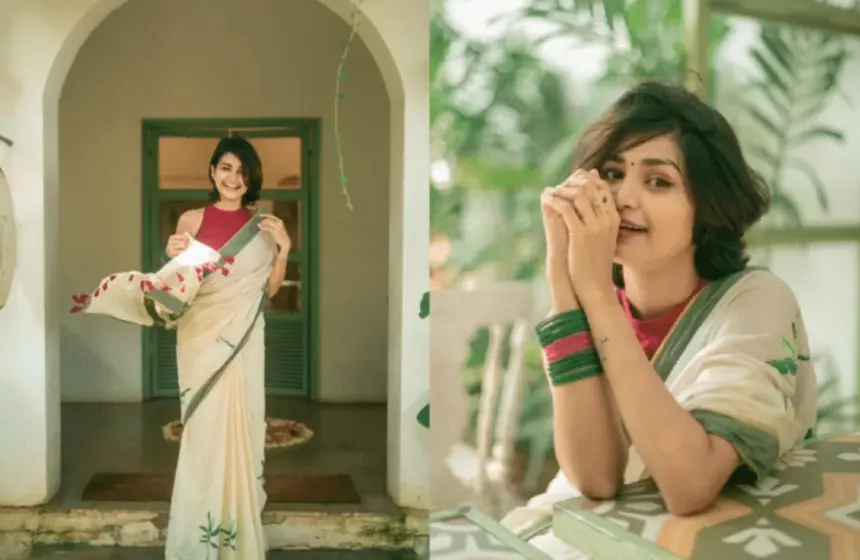
An ivory saree adorned with delicate green floral motifs and a contrasting border offers an elegant approach to traditional dressing, blending classic South Indian styling with contemporary versatility.
Some fashion combinations make an impression without depending on elaborate embroidery, dramatic silhouettes or heavy accessories. An ivory saree with a contrasting green border is one of them.
The softness of ivory provides an understated foundation, while green introduces a refreshing contrast. When delicate floral motifs are added to the fabric, the result is a saree that feels graceful, traditional and suitable for a variety of occasions.
This combination draws inspiration from the restrained colour palettes found in South Indian textile traditions, where elegant borders and carefully considered details often play an important role in the overall appearance.
Whether styled for a festival, a family gathering, a cultural celebration or a daytime event, an ivory saree with green detailing offers several possibilities.
Its appeal lies in the balance between simplicity and visual interest.
The Timeless Appeal of an Ivory Saree
Ivory has remained a familiar colour in Indian ethnic fashion because of its versatility and softness.
Unlike bright white, ivory often carries subtle cream or warm undertones, creating a gentler appearance that pairs well with both muted and vibrant colours.
In a traditional saree, this neutral base allows borders, patterns and accessories to become more noticeable.
An ivory saree can be styled with gold jewellery for a festive look, pearls for understated elegance or colourful accessories for a contemporary finish.
The fabric also influences its character.
A lightweight cotton saree may feel relaxed and practical for daytime wear, while a silk saree with a decorative border can create a more formal appearance.
The beauty of the colour is that it allows the wearer to experiment with styling without losing the outfit’s classic appeal.
A Green Border Adds Contrast and Character
The green border is the defining feature of this particular saree combination.
Against an ivory base, the colour introduces depth without overpowering the fabric.
A deep emerald or bottle-green border can create a rich festive appearance, while softer leaf-green or sage tones may give the saree a more delicate character.
The width of the border also changes the overall impression.
A narrow border produces a clean, minimal finish that suits understated styling.
A wider contrasting border creates a stronger visual statement, particularly when paired with a matching blouse.
The combination works because the two colours complement rather than compete with each other.
Ivory provides a calm background, allowing green to bring focus to the saree’s edges and decorative details.
Delicate Floral Motifs Bring a Fresh Touch
Floral motifs can add visual interest to a saree without making it look overly embellished.
In this design concept, small green floral patterns introduce texture and detail across the ivory fabric.
The result is a softer alternative to dense embroidery or heavily ornamented occasionwear.
Floral motifs are particularly effective when their scale complements the width of the saree’s border.
Small, evenly spaced patterns can create a subtle appearance, while larger floral designs offer a more decorative effect.
The technique used to create the motifs matters as well.
Printed, embroidered and woven floral patterns have different textures, costs and maintenance requirements.
Since the exact construction of the referenced saree has not been established, its motifs should not be described as handwoven or hand-embroidered without confirmation.
Why Ivory and Green Work Beautifully in South Indian Styling
Ivory and green are well suited to styling inspired by South Indian saree traditions.
The colour combination brings together a neutral foundation and a nature-inspired accent, allowing the outfit to feel elegant without relying on extensive decoration.
Kerala’s traditional kasavu sarees, for example, are especially recognised for their light-coloured bases and distinctive zari borders.
However, an ivory saree with a green border should not automatically be identified as a traditional Kerala kasavu saree.
Textile traditions across southern India vary in their weaving methods, fibres, borders, motifs and regional associations.
The broader inspiration lies in the appreciation of graceful draping, expressive borders and thoughtful accessories.
For a culturally rooted look, traditional jewellery, jasmine flowers and a carefully arranged saree drape can create a polished appearance.
For a more contemporary interpretation, the same saree can be paired with a tailored blouse, minimal jewellery and sleek footwear.
Best Blouse Colours for an Ivory Saree With Green Border
The blouse can completely change the character of an ivory-and-green saree.
Choosing the right colour and neckline helps create a coordinated look while allowing the saree’s border to stand out.
1. Deep Green Blouse for a Traditional Finish
A blouse in emerald, forest or bottle green is one of the most natural combinations.
Matching the blouse to the border brings consistency to the outfit and creates a balanced appearance.
A simple round-neck or elbow-sleeve design can reinforce the saree’s traditional character.
2. Ivory Blouse for Minimal Elegance
An ivory blouse creates a softer, monochromatic foundation.
This styling approach allows the green border and floral motifs to become the main points of contrast.
It can work particularly well for daytime gatherings and events where restrained dressing is preferred.
3. Gold Blouse for Festive Celebrations
A muted gold blouse can add warmth to an ivory saree.
When paired with a green border, gold creates a festive combination that can be complemented by traditional jewellery.
Choosing a subtle gold finish rather than an extremely reflective fabric may help preserve the outfit’s understated character.
4. Contrast Blouse for a Contemporary Look
For those who enjoy experimenting, a complementary accent colour can introduce a modern twist.
Deep maroon, muted rust or soft olive may work depending on the exact shade of green.
The most effective choice is one that creates contrast without competing with the saree’s motifs.
Jewellery Ideas to Complete the Look
Jewellery plays an important role in traditional saree styling, but an ivory-and-green combination does not necessarily require elaborate accessories.
For a classic South Indian-inspired appearance, gold-toned earrings and a traditional necklace can create a festive finish.
Temple-inspired jewellery can be particularly suitable for cultural functions and family celebrations.
Jhumkas are another versatile option.
A medium-sized pair can add character while keeping the styling relatively simple.
Pearl jewellery offers a softer alternative, complementing the ivory fabric without introducing a strong additional colour.
For a modern look, a single statement necklace or a pair of sculptural earrings may be enough.
The goal is to maintain balance between the saree’s border, its floral detailing and the chosen accessories.
Hairstyles That Complement an Ivory and Green Saree
A saree’s appearance can change significantly depending on the hairstyle.
For a traditional look, a neatly arranged low bun with jasmine flowers can create a graceful finish.
The floral accessory introduces a familiar element of South Indian festive styling.
A long braid can also complement the outfit, particularly for cultural celebrations and daytime functions.
For a contemporary appearance, soft waves or smooth, open hair may feel more relaxed.
A low ponytail is another practical choice, especially when paired with statement earrings.
The ideal hairstyle depends on the occasion, personal preference and neckline of the blouse.
How to Style the Saree for Different Occasions
One of the advantages of an ivory saree with a green border is its adaptability.
For festive occasions: Pair the saree with a green or gold blouse, traditional earrings and a neatly arranged pallu. A simple bindi can complete the appearance.
For family gatherings: Choose a comfortable blouse, light jewellery and practical footwear. Keep the drape secure while allowing natural movement.
For daytime celebrations: Minimal accessories and natural-looking makeup can complement the lighter colour palette.
For cultural events: A traditional hairstyle, modest gold jewellery and classic saree draping can highlight the outfit’s heritage-inspired character.
For contemporary occasions: Experiment with a structured blouse, sleek bun or statement earrings while keeping the rest of the styling restrained.
These variations allow the same saree to serve different purposes without requiring a completely new outfit for every occasion.
Choosing the Right Fabric for Comfort and Occasion
A saree’s fabric affects its appearance, movement and ease of wear.
Cotton can be suitable for warm weather and extended daytime use, although different weaves vary in texture and weight.
Silk can provide a more structured drape and a luxurious finish, making it a familiar choice for celebrations.
Linen and linen blends may offer a relaxed appearance, while certain lightweight blends provide softer movement.
Buyers should not assume that every ivory saree with a green border uses the same material.
The fibre composition, weave, lining requirements and care instructions should be checked before purchasing.
An especially sheer ivory fabric may require a suitable underskirt or lining arrangement to achieve the desired appearance.
Comfort, breathability and maintenance deserve as much consideration as colour and design.
How to Care for an Ivory Saree With Green Detailing
Light-coloured sarees require some additional attention because stains and colour transfer may be more visible.
Before washing the garment, check the manufacturer’s care instructions.
Where washing is permitted, use a method suitable for the fabric and avoid harsh detergents that may affect delicate fibres or decorative finishes.
A green border may release dye if it is not colourfast, so testing or seeking professional cleaning advice can be important.
Avoid soaking the saree without checking whether the fabric and dyes are suitable for that treatment.
For delicate silk or heavily decorated sarees, professional cleaning may be preferable.
When storing the garment, keep it clean, completely dry and protected from prolonged exposure to direct sunlight.
Silk sarees may also benefit from occasional refolding to reduce long-term creasing along the same lines.
Following fabric-specific instructions helps preserve both the ivory base and the contrasting green details.
Why Simple Sarees Deserve a Place in a Versatile Wardrobe
A well-chosen saree does not have to be reserved for a single celebration.
An ivory saree with green detailing can be restyled using different blouses, jewellery and hairstyles.
This versatility can make it a practical addition to an ethnic wardrobe.
Rather than buying an entirely new ensemble for each event, wearers can create different looks with accessories and garments they already own.
A traditional green blouse may work for a festival, while an ivory blouse can create a more understated appearance.
The same saree can therefore offer a range of styling possibilities.
Its neutral foundation also makes it easier to coordinate with existing jewellery and accessories.
An Elegant Combination That Never Feels Overdone
An ivory saree with a green border demonstrates the lasting appeal of thoughtful colour combinations.
The ivory base creates softness, the contrasting border provides definition and the delicate floral motifs introduce decorative interest.
Together, these elements produce a look that is rooted in traditional Indian aesthetics while remaining adaptable to modern styling.
Whether paired with traditional gold jewellery, jasmine flowers and a classic blouse or reimagined with contemporary accessories, the combination offers considerable versatility.
For anyone seeking ethnic wear that feels graceful without excessive embellishment, an ivory-and-green saree is a timeless option worth considering.
Have a story tip or feedback? Write to [email protected].