





From bespoke designer ensembles to an artistically ambitious home in Goa, Ishita Muppana’s approach to luxury reflects her appreciation for individuality, craftsmanship and creative freedom.
In a fashion landscape increasingly influenced by social media trends and carefully curated aesthetics, Ishita Muppana approaches personal style differently. Rather than allowing established fashion conventions to define her wardrobe, she takes an active interest in creating pieces that reflect her personality.
In an interview with HELLO! India, Muppana opened up about her relationship with fashion, her fascination with customised jewellery, the influence of her grandmother and her plans for a distinctive home in Goa.
Her approach offers an interesting perspective on contemporary luxury, where personal expression can be just as important as designer labels.
Ishita Muppana’s Approach to Maximalist Fashion
Born in Hyderabad and raised in Vijayawada, Muppana was described in the interview as a 23-year-old mother with a particular interest in bespoke fashion and interior design.
Her wardrobe brings together expressive silhouettes, elaborate embellishments, precious gemstones and unconventional combinations. However, her appreciation for maximalism extends beyond simply wearing statement pieces.
For Muppana, participating in the creative process is an important part of developing her personal style. She collaborates with designers, shares visual references and contributes ideas that influence the appearance of commissioned garments.
This approach reflects a broader understanding of fashion as a medium for individuality rather than a collection of prescribed trends.
A Goa Home That Celebrates Creative Individuality
Muppana and her husband, Vasprad Muppana, are developing their first home in Goa, according to the interview.
Working with interior designer Laila Malpani, she has envisioned a residence that brings together different artistic influences instead of following a single decorative theme.
The project reportedly incorporates contributions from several prominent names in Indian fashion, art and interior design.
Designer Rimzim Dadu is creating a ceiling artwork, while Goa-based artist Siddharth Kerkar has worked on a hand-hammered metal feature for the bar. The interiors also include work associated with Vikram Goyal and Klove Design Studio.
Sabyasachi wallpapers and licensed upholstery introduce another layer of decorative character.
Rather than maintaining identical colours, materials and visual references throughout the residence, Muppana is exploring how different rooms can develop their own identities while remaining connected through an overall sense of balance.
Her plans illustrate how maximalist interiors can combine artistic experimentation with thoughtful spatial design.
From Chanel to Hermès: The Evolution of Her Personal Style
Muppana’s fashion preferences have evolved alongside her understanding of individuality.
During her conversation with HELLO! India, she recalled an earlier fascination with Chanel, particularly the fashion house’s feminine silhouettes, tweed fabrics and pearl accessories.
Her growing appreciation for Hermès reflects an interest in more understated sophistication and confident dressing. Sabyasachi also remains among her preferred fashion names.
Although these fashion houses represent different design philosophies, Muppana’s interest in each suggests that personal style does not necessarily need to fit within a single aesthetic category.
Her wardrobe appears to accommodate both decorative extravagance and restrained elegance, depending on the occasion and her preferences.
How Ishita Muppana Collaborates With Fashion Designers
One of the more distinctive aspects of Muppana’s relationship with fashion is her involvement in developing customised garments.
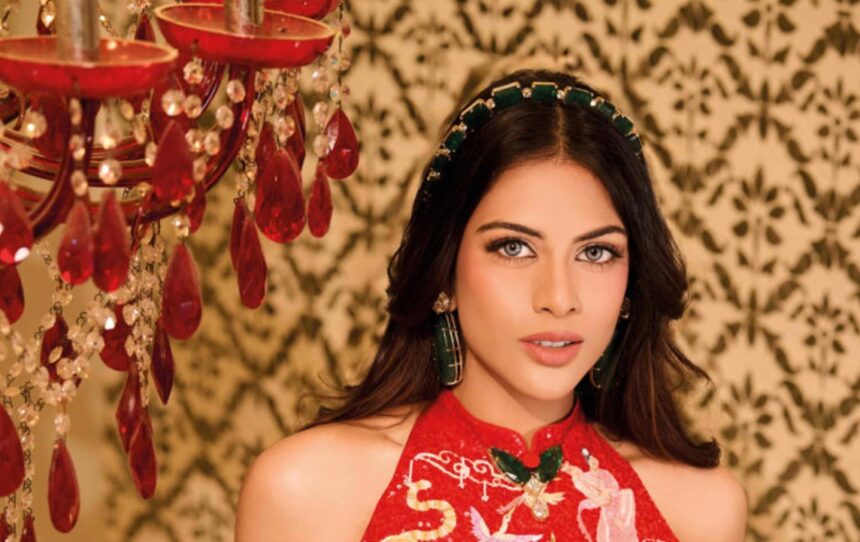
For the HELLO! India photoshoot, she collaborated with designer Ashdeen Lilaowala on a red ensemble incorporating tiger and dragon motifs alongside gold detailing.
According to the interview, Muppana contributed sketches and visual references that helped establish the garment’s design direction.
Her wedding wardrobe involved a similar process. She worked with Falguni Shane Peacock to commission a ballgown-inspired lehenga for her sangeet celebration.
Such collaborations highlight the possibilities of bespoke fashion, where a client’s preferences can influence everything from the silhouette and decorative motifs to the selection of materials.
Unlike conventional ready-to-wear purchases, commissioned couture provides greater scope for creative participation, although it can also involve additional time, fittings and expense.
Statement Jewellery With Personal Meaning
Muppana’s appreciation for jewellery extends across diamonds, emeralds, rubies, paraíba gemstones and conch pearls.
Her approach places considerable emphasis on the individual character of a piece rather than conventional matching rules. She enjoys experimenting with combinations and is open to mixing different metals.
In the interview, she identified her engagement ring as the jewellery item she would most want to preserve.
Her relationship with inherited jewellery, however, differs from her approach to contemporary commissions.
One particularly meaningful possession is her mother’s traditional gold jada, a decorative ornament associated with braided hairstyles. Muppana intends to preserve the heirloom for a future family wedding rather than substantially altering its original design.
This distinction reveals two complementary aspects of her jewellery philosophy: creative experimentation with new pieces and respect for objects carrying family history.
The Grandmother Who Influenced Her Creative Journey
Muppana credits her maternal grandmother with helping shape her understanding of beauty, clothing and craftsmanship.
As a child, she observed her grandmother selecting fabrics, experimenting with embellishments and developing garments that reflected her individual preferences.
These experiences introduced Muppana to the possibilities of creating clothing rather than simply purchasing finished designs.
The influence remains visible in her appreciation for traditional pattu silk sarees, customised embroidery and garments developed through personal collaboration.
Designer Ashdeen Lilaowala also reportedly named a saree Lakshmi in recognition of Muppana’s maternal grandmother.
Her story demonstrates how fashion knowledge can be passed between generations through everyday experiences, family traditions and shared creative interests.
Fashion Inspiration Beyond the Runway
Cinema has also influenced Muppana’s appreciation for expressive dressing.
Among the films she discussed were 27 Dresses, Confessions of a Shopaholic and The Devil Wears Prada. However, The Great Gatsby made a particularly lasting impression through its extravagant costumes and celebration of dressing up.
Rather than reserving expressive fashion exclusively for major celebrations, she embraces the idea that clothing can bring enjoyment to ordinary experiences.
Her preferences also extend beyond elaborate occasion wear. In the interview, she described a combination involving solitaire jewellery, a Loewe tank top, flared jeans from Good American and comfortable footwear.
The combination illustrates how statement accessories can introduce luxury and personality into relatively simple everyday clothing.
Why Personal Style Matters More Than Passing Trends
Muppana’s fashion philosophy places importance on comfort, longevity and individual expression.
Although she appreciates luxury fashion, her approach does not appear to depend entirely on following the latest seasonal trends. Instead, she considers how clothing and accessories fit into her broader personal aesthetic.
This perspective offers several practical lessons for fashion enthusiasts:
- Select clothing that reflects personal preferences rather than temporary social media trends.
- Invest in versatile garments that can be styled for different occasions.
- Experiment with jewellery to introduce personality into familiar outfits.
- Preserve meaningful family heirlooms and explore ways to incorporate them into contemporary styling.
- Prioritise comfort alongside visual appeal.
- Consider thoughtful alterations or customisation when ready-made garments do not meet individual requirements.
Personal style does not necessarily require an extensive luxury wardrobe. The same principles can be applied through tailoring, creative accessory combinations and thoughtful use of existing clothing.
Could Ishita Muppana Pursue a Career in Design?
With interests spanning fashion, jewellery, interiors and furniture, Muppana has expressed openness to exploring design professionally in the future.
However, she has not committed to a specific career direction in the supplied interview.
Her enthusiasm for collaborating with established designers and developing personalised concepts suggests that creative work could become an important part of her future plans.
For now, her interests continue to span several disciplines, allowing her to experiment without restricting herself to a single design identity.
A Personal Interpretation of Contemporary Luxury
Ishita Muppana’s approach to fashion and interiors brings together traditional Indian craftsmanship, international luxury fashion, family influences and contemporary artistic experimentation.
What distinguishes her perspective is the emphasis on participating in the development of the objects she wears and surrounds herself with.
From preserving inherited jewellery to commissioning couture and imagining a home filled with distinctive artworks, her choices illustrate a personal interpretation of luxury shaped by creative involvement and emotional significance.
Her story also serves as a reminder that developing an individual aesthetic does not require adherence to one particular fashion movement. Personal style can evolve through experience, curiosity and the freedom to experiment.
Have a story tip or feedback? Write to [email protected].