





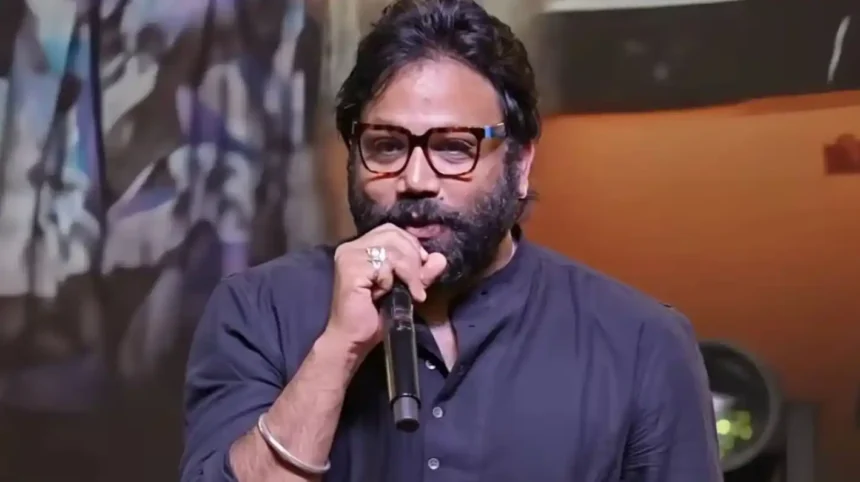
Filmmaker Sandeep Reddy Vanga is widely seen as a disruptive force in Indian cinema, yet a growing industry debate now questions whether the director is truly evolving — or simply repeating a highly recognizable creative formula.
The intense buzz around the first look of Spirit, starring Prabhas, has only intensified this discussion. Social media exploded following the reveal, with fans celebrating Prabhas’s aggressive transformation and commanding screen presence. But beneath the excitement, some industry voices are asking tougher questions.
A Familiar Visual Language?
According to a senior producer from the Telugu film industry, Vanga’s films increasingly appear built around the same visual and emotional architecture.
“Most of Sandeep’s films are A-rated and follow a similar template,” the producer explains. “The hero usually has a thick beard, long hair, dark glasses and an intensely violent personality. Smoking, drinking, physical injuries, rage, and explicit intimacy are constant elements. These visual traits have become too familiar. Beyond this repetition, there is not much imagination left.”
See more of our coverage in your search results.
Add Hunterfly on GoogleThe producer warns that while this template currently works, audiences may eventually grow tired of seeing the same emotional beats delivered in slightly different settings.
Comparisons with Ram Gopal Varma
The debate becomes sharper when comparisons with Ram Gopal Varma enter the conversation.
“Sandeep often calls himself RGV’s disciple,” the producer notes. “But RGV explored an extraordinary range — from Rangeela to Satya, from Company to Sarkar. He mastered variety and knew how to underplay heroism. In that respect, Vanga still has a long way to go.”
Will ‘Spirit’ Break the Pattern?
After creating a troubled surgeon in Arjun Reddy and a volatile gangster in Animal, Vanga now turns his attention to a police officer in Spirit (also known as Aajanubavudu). The film is said to portray an upright and uncompromising law enforcer — a shift that could signal creative growth.
Producer Lagadapati Sridhar believes the director may surprise skeptics.
See more of our coverage in your search results.
Add Hunterfly on Google“Sandeep would have designed a multilayered role for Prabhas that goes beyond routine police portrayals,” Sridhar says. “I expect something far more complex than the standard cop narrative.”
Audience Acceptance of Vanga’s Style
Addressing the criticism of repetition and the frequent charge of promoting toxic masculinity, Sridhar remains pragmatic.
“Sandeep is a master storyteller. Some of his films do promote toxic masculinity, but audiences have embraced them. There is a section of viewers who enjoy such raw, aggressive narratives — and he has delivered exactly what they want. The box-office numbers prove that.”
See more of our coverage in your search results.
Add Hunterfly on GoogleFrom Arjun Reddy to Animal: A Director Who Took Risks
Recalling his personal association with the filmmaker, Sridhar reveals he was among the first to hear the script of Arjun Reddy.
“I was completely bowled over by the hero’s aggressive characterization. I felt instantly that it would work in Bollywood, though I was hesitant about its Telugu release because of my conservative mindset. Sandeep moved ahead and proved himself in both Telugu cinema and Hindi cinema with fearless execution.”
Breaking the Traditional Hero Template
Sridhar concludes by placing Vanga alongside filmmakers like Ram Gopal Varma and Anurag Kashyap — directors who pushed dark characters into the mainstream.
“They broke the traditional hero mould of being soft, lovable and morally flawless. Their heroes are disturbing, flawed and intense — and yet they made massive box-office records.”
Final Take
Whether Sandeep Reddy Vanga is repeating a formula or refining a signature style remains open to interpretation. What is undeniable is that Spirit now carries enormous expectations — not just as Prabhas’s next big-screen spectacle, but as a crucial test of whether Vanga can evolve beyond his own creative comfort zone.